0% read
Last updated:
Byungha Kang
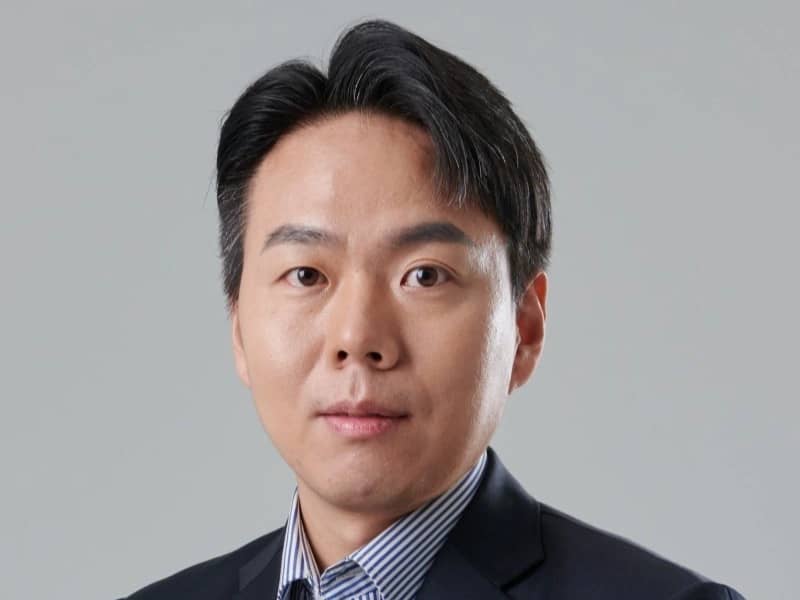
Byungha Kang (Korean: 강병하) is the Managing Director and Head of Strategic Planning at Meritz Securities. He is a key figure in bridging traditional finance (TradFi) and the digital asset sector in South Korea, leading his firm's initiatives in Security Token Offerings (STOs), Real-World Asset (RWA) tokenization, and institutional adoption of blockchain technology.[1][2]
Education
Kang holds both a Master of Arts in Finance and a Bachelor of Science in Mechanical Engineering from Seoul National University (서울대학교).[2]
Career
Byungha Kang began his career in traditional finance, working as a Senior Associate at Samsung Securities from 2011 to 2015, which served as a basis for working with digital assets. He subsequently joined the Meritz Financial Group, where he served as a Senior Portfolio Manager at Meritz Fire & Marine Insurance from 2015 until 2022.[2]
In 2022, Kang transitioned into the digital asset industry, becoming the Chief Investment Officer (CIO) for the digital asset company Wavebridge. During his three-year tenure as CIO, he focused on investment strategies and market analysis within the cryptocurrency space.[1][2]
In 2025, Kang was appointed Managing Director (상무보) and Head of Strategic Planning at Meritz Securities. In this senior role, he is responsible for leading new business development, with a specific mandate to build out the firm's digital asset capabilities by leveraging his experience across both traditional finance and the crypto sector.[1]
Leadership in Digital Assets at Meritz Securities
As Head of Strategic Planning, Kang spearheads Meritz Securities' expansion into blockchain-based finance, focusing on institutional strategies, market structure, and new product development. He has expressed that traditional financial companies can contribute their strengths in issuance, trading, and management to the emerging security token market.[3][1]
Security Token and RWA Initiatives
Kang is the public-facing executive for Meritz Securities' entry into the tokenized securities market. Under his guidance, the firm aims to become a first-mover in the South Korean STO space by acting as both an issuer and a distributor. A key part of the strategy involves tokenizing traditionally illiquid assets, such as corporate private placement bonds, to enhance liquidity and open the market to a wider range of investors through fractional ownership and secondary trading.[4][5]
Kang has publicly stated his view that while the number of tokenizable assets was limited in 2025, the future trend will involve the tokenization of real-world assets like real estate and ships. He predicts that traditional securities, including stocks and bonds, will eventually be issued directly on the blockchain.[6]
Regulatory Framework and Implementation
South Korea’s amended Electronic Securities Act and Financial Investment Services and Capital Markets Act establish the legal basis for token securities by recognizing distributed ledgers as securities account books. The framework is scheduled to take effect on February 4, 2027.[10]
In its September 2026 roadmap, the Financial Services Commission outlined a staged approach. The initial phase covers tokenized institutional-only private money market funds (MMFs) and bonds, unlisted shares issued through a trust structure, and publicly offered fractional-investment securities. Subsequent phases are intended to extend tokenization to more public securities and ultimately support on-chain settlement using stablecoins; later stages depend on implementation and market readiness. The roadmap provides regulatory context for Meritz’s and Kang’s work on token securities and RWA initiatives.[10]
Strategic Partnerships
To build out its digital asset infrastructure, Meritz Securities has established a number of strategic partnerships under Kang's leadership.
- Koscom: In October 2025, Kang announced a Memorandum of Understanding (MOU) between Meritz Securities and Koscom, the IT solutions subsidiary of the Korea Exchange (KRX). The collaboration aims to jointly research, develop, and operate a security token platform business. On the partnership, Kang commented, "This MOU represents a shared commitment to a more necessary, safer, and fairer capital market." He noted the synergy would combine Meritz's "customer-centric capabilities and willingness to supply venture capital" with Koscom's "digital infrastructure."[7][1]
- STO Consortium: Meritz Securities has also formed a wider STO consortium with key domestic and international partners. The consortium includes Polygon Labs, which provides technical cooperation for building the STO platform on the Polygon blockchain, and Bitgo, a digital asset security firm, to ensure an institutional-grade security framework. Other partners include the domestic blockchain firms Iggu-gu Company, DSignall, and Andus.[3][4]
- Ripple: On October 14, 2026, Meritz Securities and Ripple announced a strategic partnership to explore introducing Ripple Custody and Ripple’s tokenization infrastructure into Korean capital markets. The work is to begin within Meritz’s existing securities business and current regulation, with cooperation potentially widening in stages as Korea’s digital-asset framework develops. Kang said the partnership lays a foundation for combining Ripple’s global infrastructure with Meritz’s capital-markets capabilities.[11]
Public Advocacy and Commentary
Kang is an active commentator on financial policy in South Korea. He uses his personal blog and LinkedIn profile to provide analysis on the digital asset industry and broader financial topics. He has publicly advocated for legislative progress on a comprehensive Security Token Offering (STO) bill, stablecoin regulations, and the introduction and approval of a Bitcoin spot ETF in the Korean market.[1]
He views stablecoins as a foundational infrastructure for the future of finance, particularly for their application in payment and settlement systems.[1]
In an August 20, 2026 interview, Kang described digital assets as moving toward institutional participation and real financial demand. He argued that financial firms should consider both tokenized products and the blockchain-based distribution and settlement infrastructure that supports them. He said Meritz would expand its token-securities activity in stages, initially focusing on non-standard securities and potentially extending to conventional securities as regulation allows. He also discussed how blockchain and AI agents could improve payment and settlement and automate transaction execution, error-checking, and KYC processes.[12]
At a September 28, 2026 National Assembly seminar, Kang emphasized global interoperability in domestic RWA infrastructure. He discussed tokenization’s potential to broaden access to assets and investors, including through assets such as data infrastructure, commodities, mines, and carbon credits.[13]
Public Appearances
Byungha Kang is a frequent speaker and panelist at major financial technology and blockchain conferences, where he shares a traditional finance perspective on the digital asset ecosystem.
- Korea Blockchain Week (KBW) 2025: In September 2025, Kang was a featured speaker at KBW. He participated in a panel discussion regarding the potential launch of a Bitcoin spot ETF in Korea, alongside representatives from Samsung Asset Management and Mirae Asset Management. He also contributed to related events including KBW Impact, the Stable Coin Summit, and East Point.[8][1]
- World Crypto Forum (WCF): At the WCF in October 2025, Kang delivered a presentation titled "Future of Digital Assets," in which he identified Stablecoins, RWAs, and "Super Platforms" as strategic pillars for financial institutions. He also joined a panel discussion on the topic of "Institutional Adoption in Digital Assets."[1][6]
- Digital Asset Policy Seminar: In August 2025, Kang was a panelist at a policy seminar focused on digital asset legislation and capital strategies. He participated in a discussion on the policy effects of institutionalizing stablecoins from a capital reshoring perspective.[3]
- Hashed Open Research & KODA Conference: Kang was a speaker and panelist at a conference themed "Vision of the Hybrid Finance Era." He shared insights on digital asset strategies for Korean financial firms and discussed practical methods for RWA adoption.[1]
- Global Blockchain Business Council (GBBC): Meritz Securities, under Kang's strategic direction, has engaged with the GBBC, participating in roundtables and discussions concerning capital market standards and regulatory frameworks for digital assets in Korea.[9]
- National Assembly RWA Seminar: On September 28, 2026, Kang participated in the seminar “After STO: Exploring Legislative Challenges for Real-World Asset Tokenization,” where he presented on global financial institutions’ and Korean securities firms’ RWA strategies.[13]
Military Service
From 2006 to 2008, Kang served in the Republic of Korea Air Force (ROKAF), where he held the rank of First Lieutenant.[2]
See something wrong?