0% read
Last updated:
Kieran Mesquita
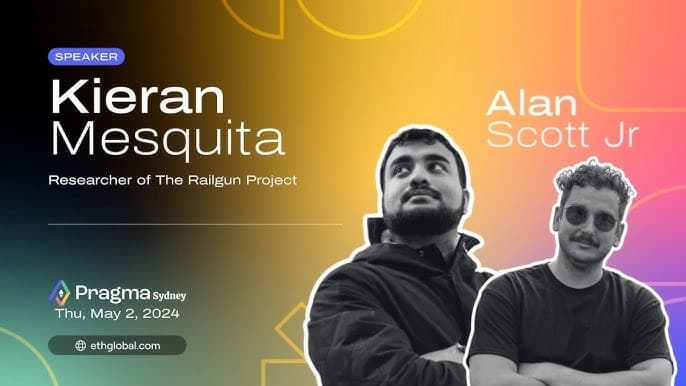
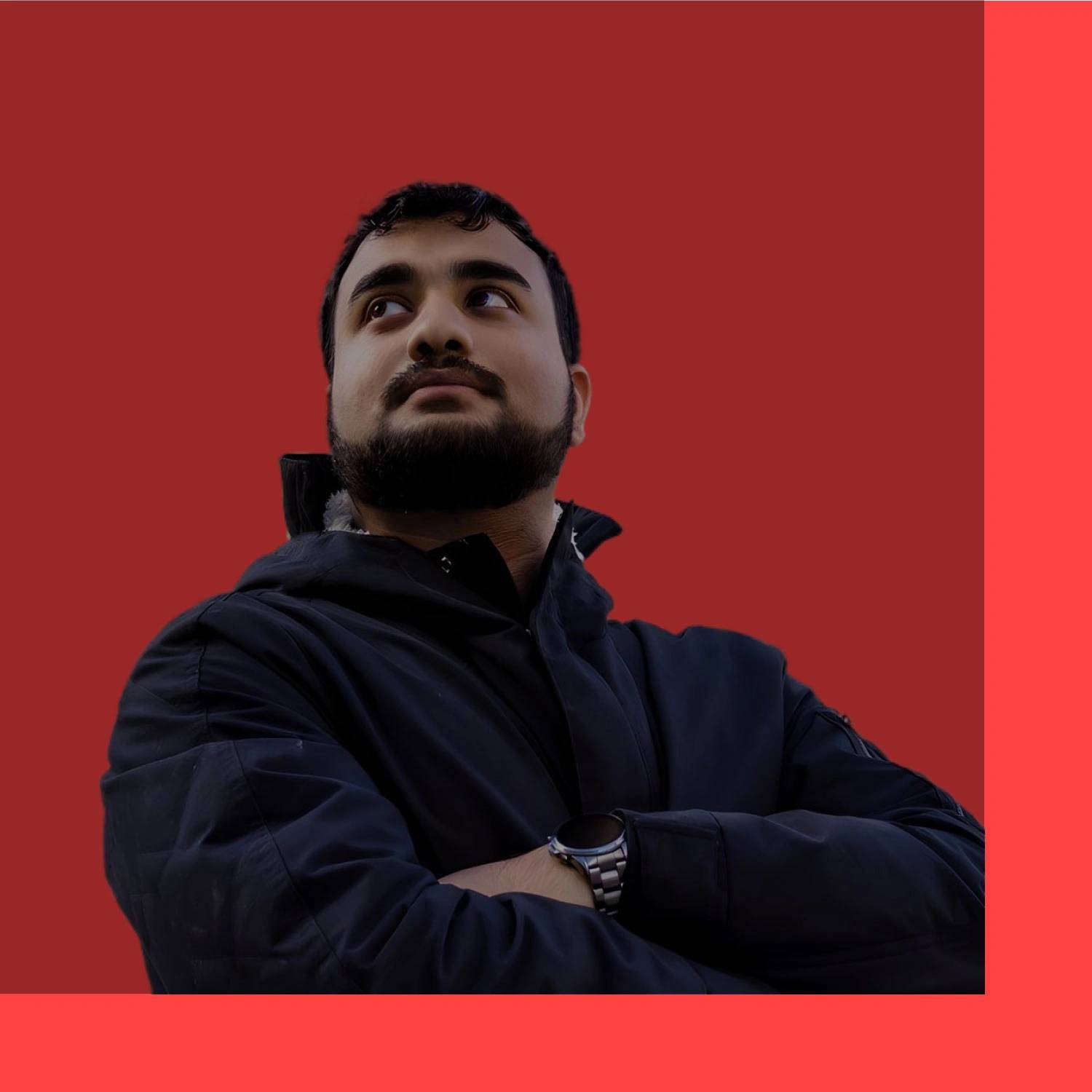
Kieran Mesquita is a technologist and developer in the blockchain industry who serves as the chief technology officer of the Railgun project. Also known by the alias Kai, his work focuses on cryptographic systems, zero-knowledge proofs (ZK-proofs), and cross-chain infrastructure. [3]
Career
Mesquita has been involved in the blockchain and cryptographic systems space since the early 2010s, with experience in protocol design and distributed systems. He began as a Bitcoin miner in 2010. From 2018 to 2019, he worked as a solutions architect at BlockBoxx. Following this, he took on leadership roles at UnityChain, serving as chief technology officer from 2019 to 2021 and later as a technical advisor until 2025. Between 2020 and 2021, Mesquita was also the chief executive officer of Common Fund.
Since 2021, he has been an independent open-source developer, contributing to blockchain infrastructure and cryptographic systems. During this period, he became the chief technology officer of Railgun, where he leads the development of the protocol's cryptographic architecture. His responsibilities include its zero-knowledge proof systems, cross-chain functionality, and decentralized protocol design. [4]
Work on Railgun
As CTO, Mesquita's work is centered on the Railgun protocol, a decentralized privacy system that operates as a middleware layer on public blockchains. Railgun is not a separate blockchain but a system of smart contracts deployed on existing networks like Ethereum, BNB Smart Chain, Polygon, and Arbitrum. The protocol uses zero-knowledge cryptography, specifically zk-SNARKs (Zero-Knowledge Succinct Non-Interactive Arguments of Knowledge), to enable private transactions. This allows users to conduct on-chain activities without revealing details such as the sender, recipient, asset type, or transaction amount.
The system functions through three main processes: [2]
- Shielding: A user deposits assets from their public wallet address into Railgun's shared private smart contract pool. This action moves the funds into the privacy system.
- Private Transactions: Once assets are shielded, the user can send, trade, or otherwise interact with decentralized applications privately. Balances are managed as encrypted Unspent Transaction Outputs (UTXOs) stored in on-chain Merkle trees. ZK-proofs are used to verify that a user has sufficient funds for a transaction without revealing their identity or balance.
- Unshielding: A user can withdraw their assets from the private pool back to any public address.
To further obscure a user's identity, the protocol supports the use of relay or broadcaster wallets. These third-party wallets submit transactions to the blockchain on a user's behalf, paying the required gas fees. This mechanism disconnects the user's public address from their private transaction activity, enhancing anonymity. The protocol is governed by a decentralized autonomous organization (DAO) through its native token, RAIL, which is used for voting on protocol upgrades and parameter changes. [2]
Interviews
On-Chain ZK Privacy
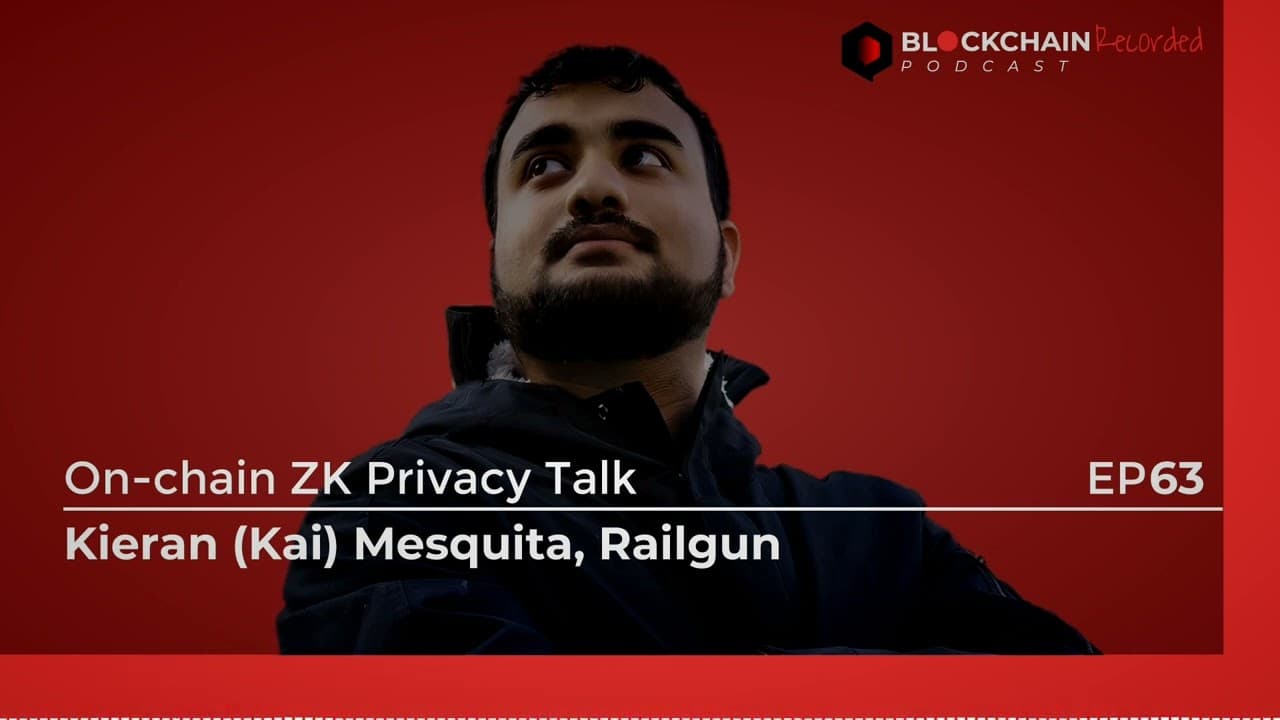
On the Blockchain Recorded podcast, host Nina Cerar interviewed Mesquita, also known as Kai, a contributor to the Railgun project, which enhances privacy in the blockchain ecosystem. Kai shared his journey into the crypto space, initially viewing it as a form of "magic internet money" but later recognizing the critical importance of privacy, especially in light of various data breaches. He explained how Railgun uses zero-knowledge proofs to ensure user privacy on public blockchains like Ethereum, enabling individuals to interact without revealing transaction details. Kai noted that while discussions about privacy often tend to be binary, a nuanced conversation is necessary for effective regulation and user understanding. He emphasized the importance of privacy-enabling technologies and the role they could play in the broader adoption of decentralized finance (DeFi) applications. The episode concluded with a call for ongoing discourse and collaboration among privacy-sector stakeholders to address challenges and foster innovation. [3]
Presentations
Spotlight Speech
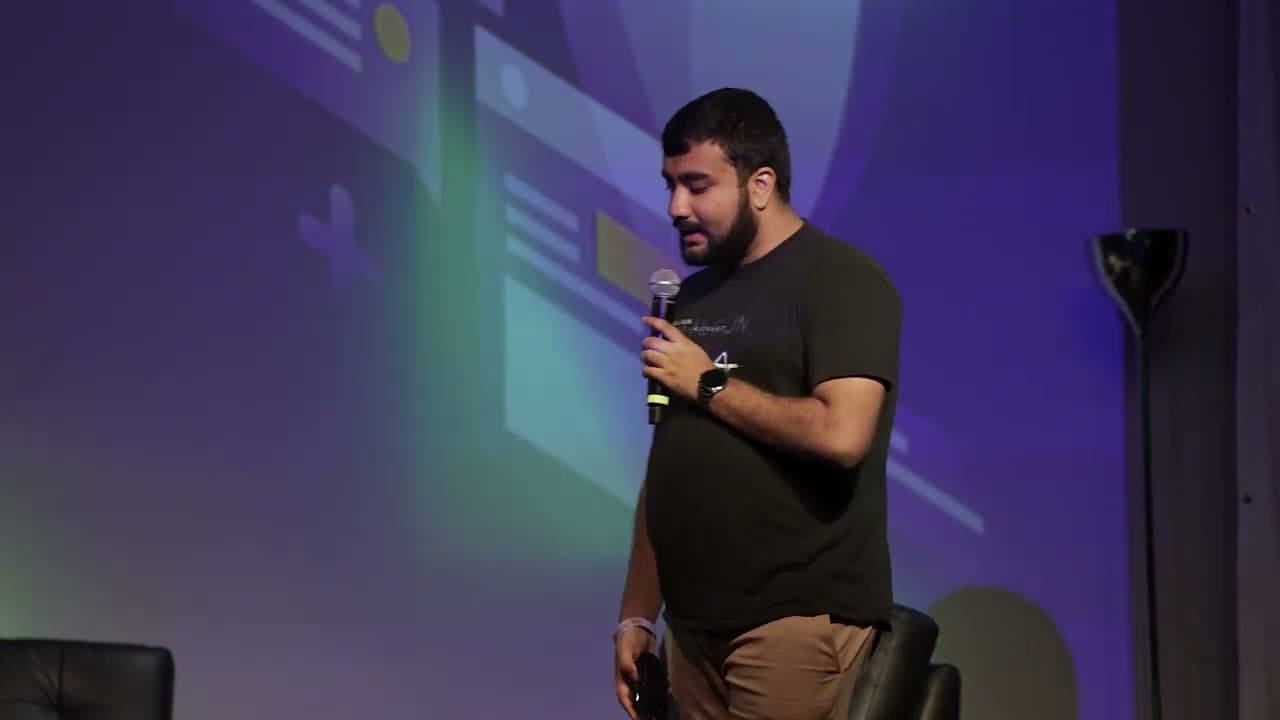
At DeFiCon 2022 in August, Mesquita, a Protocol Architect at RAILGUN, delivered a spotlight speech on extending Ethereum with meta transactions. He explained that Ethereum's native transactions primarily require a public-private key pair and some ETH for gas fees. Still, meta transactions allow for a wider variety of transaction types to be executed using a standard Ethereum transaction as a carrier. Mesquita demonstrated how meta transactions could implement multi-signature wallets and enhance transaction privacy using zero-knowledge proofs (snarks). He elaborated on the structure of a meta transaction, detailing its components, including the data, financial incentives for relaying, and transaction requirements. The presentation also addressed potential challenges such as gas volatility, mempool attacks, and transaction reuse in meta-transaction systems, emphasizing the importance of security measures to prevent malicious alterations and ensure the integrity of submitted transactions. [5]
Panels
Infrastructure vs. Applications
At the Ethereum Cypherpunk Congress in November 2024, Mesquita participated in a panel discussion led by Michelle Lai (Electric Coin), which focused on the shift from privacy infrastructure to end-user applications in the crypto space. Lai drew an analogy to the technological advancements that enabled the 1969 moon landing, suggesting that a similar passion for problem-solving and profit-seeking has shaped the current landscape, which is dominated by infrastructure investments. Panelists, including Nathan Ginnever (Enclave), Garrett Macdonald (Permanent Ventures), Aidan Hyman (Chainsafe), and dapplion (Sigma Prime), introduced themselves as contributors to various decentralized technologies and shared insights on the ongoing challenges and market forces pushing application development to the forefront. They explored whether infrastructure developers could better create user-friendly applications, emphasizing that while progress was being made, many foundational components still needed improvement. The discussion highlighted the importance of user trust in infrastructure, the need for collaboration rather than competition, and the potential role of venture capital in fostering decentralization. Ultimately, the panel reiterated the goal of building applications that meet real user needs while considering the balance between visibility and trust in the infrastructure underlying these technologies. [6]
See something wrong?
Average Rating
Based on over 1 ratings
How was your experience?
Give this wiki a quick rating to let us know!
Edited By
On April 6, 2026. 17:47 UTC
Edit summary:
Added wiki page for Kieran Mesquita