Jack Clark
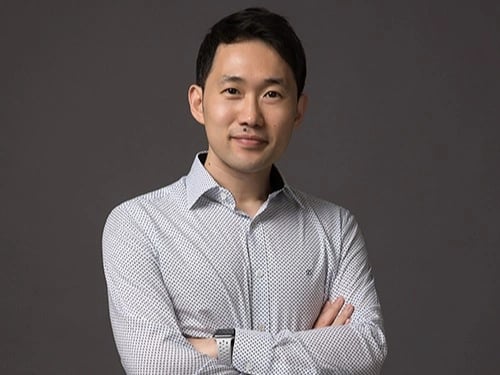
Jack Clark is the co-founder and Head of Public Benefit at Anthropic, an AI research and safety company, and the director of The Anthropic Institute, Anthropic's internal research organization focused on the societal impacts of advanced AI.[11][4]
Early Life & Education
Jack Clark was born and raised in Brighton, England. He pursued higher education at the University of East Anglia, where he majored in English literature and creative writing.[1] His educational background in the humanities may seem unconventional for a leader in the tech industry, but Clark credits it with providing him the analytical skills necessary to navigate the complex narratives and ethical implications surrounding AI technologies.
Career
Journalism
Jack Clark began his career as a technology journalist, working as a researcher and reporter at Adfero and later reporting for ZDNet UK and The Register on technology, finance, and enterprise computing topics. He then joined Bloomberg News as a technology reporter covering areas including artificial intelligence, cloud computing, and enterprise software.[2]
In 2016, he left Bloomberg News to move into work in the AI sector.[2]
OpenAI
Clark joined OpenAI in October 2016 in a Strategy & Communications role.[2] In October 2018, he was appointed Policy Director.[6] His responsibilities included communicating technical developments in artificial intelligence to policymakers, translating technical AI research into language suitable for regulatory frameworks, conducting research on AI evaluation, measurement, and analysis, managing an interdisciplinary team, and providing testimony before the United States Congress on matters related to artificial intelligence.[2][6]
Anthropic
In January 2021, Clark co-founded Anthropic with six former OpenAI researchers. He initially served as Co-Founder and Head of Policy, where his work related to artificial intelligence policy, governance, and safety, including oversight approaches and policy frameworks associated with AI development. In March 2026, he transitioned to the role of Co-Founder and Head of Public Benefit and became director of The Anthropic Institute, a unit that draws on Anthropic's research to study the societal and economic impacts of frontier AI systems and to inform external stakeholders about associated risks and governance challenges.[4][12]
Import AI
Since August 2016, Clark has written Import AI, a weekly newsletter focused on artificial intelligence research, industry developments, and public policy.[6][3] The newsletter summarizes developments in AI research and business, is described as a widely read newsletter about artificial intelligence, and is distributed to readers interested in the field.[6]
Policy and AI Governance
Clark serves as a member of the OECD working group on AI classification and definition and is a co-chair of the AI Index at Stanford University. In 2026 public interviews, he argued that powerful AI systems are becoming more capable by the day and that policymakers should prepare for associated risks.[13][14] Clark has expressed support for exploring policy tools such as a regulatory "kill switch" or other mechanisms that could slow or halt AI development if needed, and has contended that such regulation is easier to implement while there are only a small number of frontier AI developers.[13][14] He also participates in public discussions on artificial intelligence through interviews, publications, and Import AI, addressing topics related to AI policy, governance, and safety.[10][9][8][7][6][5] In his capacity as Co-Founder and Head of Public Benefit at Anthropic and director of The Anthropic Institute, Clark continues to shape international AI governance debates through research on the societal impacts of frontier AI and through roles with bodies such as the AI for Good Global Commission.[4][11][3][2][1]
Interviews
In 2026, Clark discussed AI risks, potential safeguards, and the need for democratic oversight in appearances on NPR’s Morning Edition and in a BBC News video interview, where he outlined policy options for managing powerful AI systems and limiting accidental or uncontrolled deployment.[13][14] Clark's interviews and public talks, including those with Anthropic and external media outlets, reflect his ongoing role in shaping public debate and policy discussions on AI safety and governance as Anthropic's Co-Founder and Head of Public Benefit and director of The Anthropic Institute.[4][12]
Views on AI Policy and the Future of Artificial Intelligence #01
In a 30 September 2024 Anthropic YouTube interview, Clark discussed the relationship between advanced AI systems, public policy, and governance, emphasizing the need for institutions to adapt as capabilities increase.[15] He described how AI systems differ from conventional software, used analogies such as “silicon countries” and “rogue states” to illustrate potential geopolitical dynamics, and argued that governments should coordinate across institutions and design oversight mechanisms that operate on faster machine timescales.[15]
AI and Public Policy #02
In a 24 June 2026 ReasonTV interview, Clark discussed applications of AI in education, administration, and scientific research, along with challenges such as hallucinations, sycophantic model behavior, military uses, and the prospect of recursive self-improvement.[16] He emphasized multi-stakeholder governance and a mix of regulatory tools to manage risks, expressed uncertainty about the scale of long-term job displacement, and highlighted initiatives such as the Claude Corps as examples of programs intended to channel AI capabilities toward public-benefit uses.[16]