Subscribe to wiki
Share wiki
Bookmark
Douglas Colkitt
The Agent Tokenization Platform (ATP):Build autonomous agents with the Agent Development Kit (ADK)
Douglas Colkitt
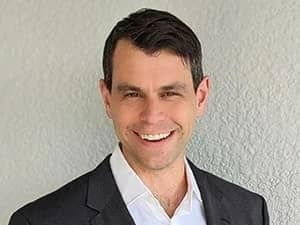
Douglas Colkitt is a quantitative finance veteran, protocol designer, and entrepreneur in the decentralized finance (DeFi) industry. He began his career in high-frequency trading at Citadel Securities before transitioning to DeFi, where he is the founder and chief executive officer of Ambient Finance (formerly Crocodile Labs), the development company behind the decentralized exchange of the same name. Colkitt is also a founding contributor to the Fogo blockchain and a frequent public commentator on DeFi market structure, risk management, and protocol security. [4]
Education
Colkitt attended the University of Pennsylvania, where he earned a Bachelor of Science (BS) in Computer Science, graduating in 2008. [1]
Career
Colkitt began his career in traditional finance at Citadel Securities, where he worked as a quantitative researcher in the high-frequency trading group from 2008 to 2010. Following this role, he spent over a decade as a quantitative trader, focusing on statistical arbitrage, market making, and electronic market structures. This period of his career was centered on execution mechanics and liquidity provision within traditional financial markets.
He later moved into the decentralized finance sector, applying his quantitative background to roles as an arbitrage trader and a Maximal Extractable Value (MEV) searcher. In this capacity, he worked on identifying profit opportunities related to the specific ordering of transactions within blockchain blocks. This transition marked a shift from traditional high-frequency trading toward the technical infrastructure of digital asset markets.
In 2021, Colkitt established Crocodile Labs, serving as the company's chief executive officer. The firm developed a decentralized exchange protocol, originally called CrocSwap, which was designed to incorporate electronic market structure concepts into automated market making. Both the company and the protocol were eventually rebranded to Ambient Finance, with the project focusing on the technical mechanics of decentralized liquidity and trading.
By August 2025, Colkitt's work included the development of a perpetuals exchange on the FogoChain testnet. He is also identified as a founding contributor to the Fogo blockchain project. His ongoing work continues to involve the integration of high-performance trading infrastructure with decentralized protocols and blockchain-based financial tools. [1] [3]
Interviews
$JELLY Attack
In March 2025, Colkitt appeared on Unchained to discuss a market manipulation incident involving Hyperliquid, in which the protocol intervened to prevent an estimated $15 million loss linked to trading activity in the Jelly Jelly memecoin. Colkitt outlined how a whale exploited low liquidity to distort prices, leading to losses in Hyperliquid’s automated market maker vault, and examined the platform’s decision to manually delist the asset and force liquidations. The interview addressed criticism that the intervention conflicted with decentralization principles, alongside arguments that it was necessary to protect retail users and preserve market integrity. Colkitt also discussed broader implications for decentralized exchanges, including risk management practices, liquidity design for volatile assets, competitive dynamics with centralized exchanges, and the need for clearer liquidation rules to reduce the likelihood of similar events. [5]
AMMs vs DEXs
In October 2023, Colkitt appeared on the Bell Curve podcast alongside Eugene Chen of Ellipsis Labs to discuss liquidity models in decentralized finance. The conversation examined the structural differences between automated market makers and central limit order books, focusing on accessibility, market maker sophistication, and the trade-offs between simplicity and competitive strategy. Colkitt characterized AMMs as liquidity mechanisms designed for broad participation, while CLOBs were discussed as systems requiring advanced expertise, with Chen noting that the distinction between the two models was narrowing as protocols adapt to changing market conditions. The discussion also addressed the impact of gas costs on liquidity provision and trading activity, the potential for more complex liquidity strategies through smart contract design, and the likelihood that hybrid market structures would become more common over time. [6]
See something wrong?
The Agent Tokenization Platform (ATP):Build autonomous agents with the Agent Development Kit (ADK)