Decentralized Prediction Market
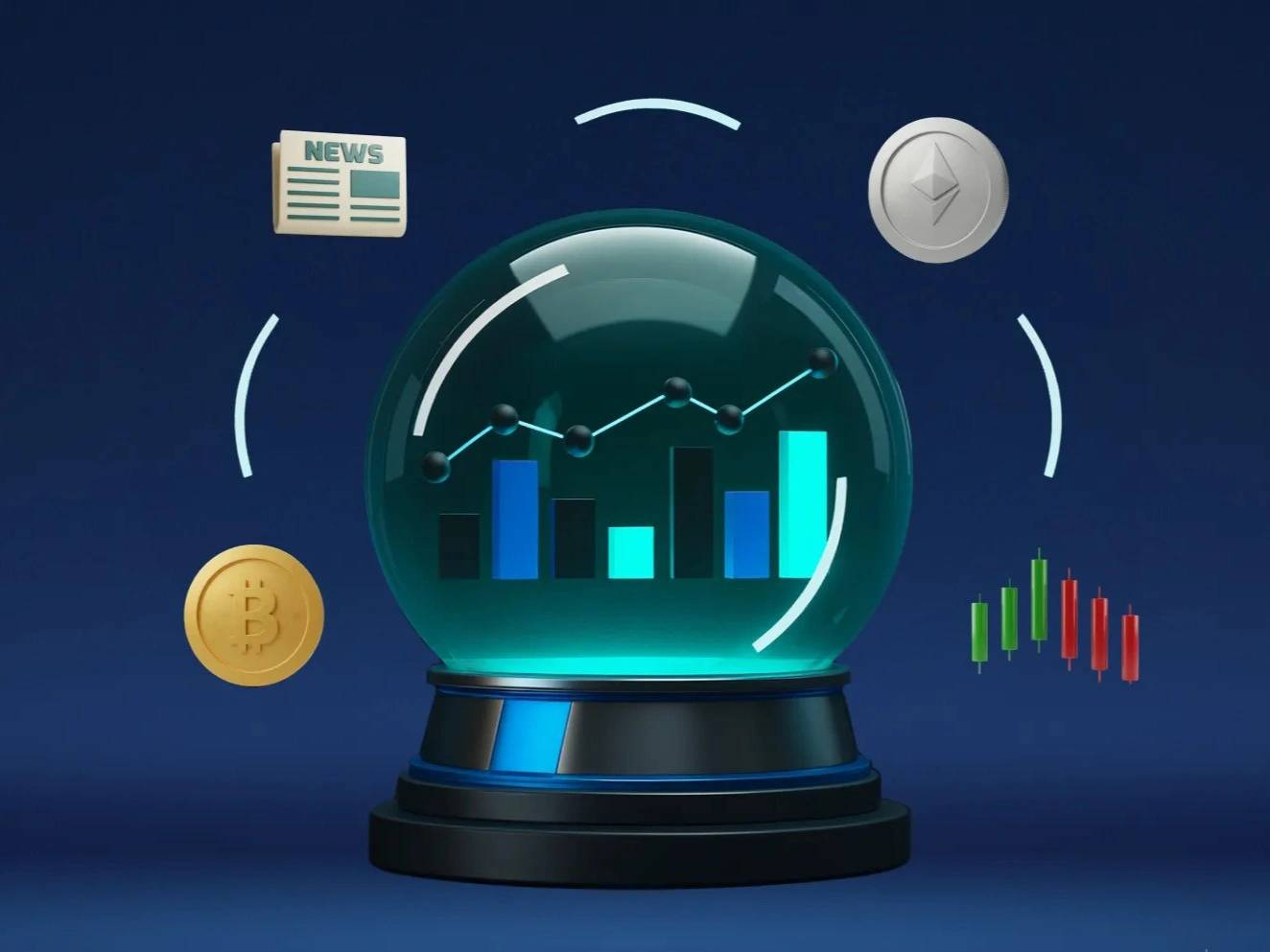
A Decentralized Prediction Market (DPM) is an exchange built on blockchain technology that allows participants to trade on the outcomes of future real-world events. [1] [2] These platforms operate as information aggregation tools, where the market price of a share representing a specific outcome reflects the collective belief about its probability. [3] By using smart contracts instead of a central intermediary, DPMs facilitate the creation, trading, and settlement of event-based wagers in a transparent, globally accessible, and censorship-resistant manner. [4]
Overview
Decentralized Prediction Markets are designed to harness collective intelligence by creating a financial incentive for participants to reveal and back their true beliefs about future events. [4] The underlying principle, related to the Efficient Market Hypothesis, suggests that the prices of tradable shares will quickly incorporate all available information, making the market an effective real-time forecasting tool. [5] Participants buy and sell shares tied to "Yes" or "No" propositions, or to one of several possible outcomes. If their prediction is correct, their shares pay out at a fixed value; if incorrect, the shares become worthless. [1]
The topics for prediction can span a wide range of categories, including political elections, sports results, economic indicators, scientific developments, and crypto-specific events like network upgrades. [3] The decentralized architecture, built upon public blockchains like Ethereum, Polygon, and Solana, ensures that all transactions and market rules are transparent and auditable, distinguishing these platforms from opaque, traditional betting systems. [6]
How They Work
The operation of a decentralized prediction market is governed by a series of automated, pre-defined rules encoded in smart contracts.
Core Mechanism
The lifecycle of a prediction market typically follows several key steps:
- Market Creation: A user creates a new prediction market by deploying a smart contract. This contract defines the specific, objectively verifiable real-world event to be predicted, the set of possible outcomes, and the resolution source for determining the final outcome. [2]
- Outcome Shares: The smart contract mints a set of cryptographic tokens, known as outcome shares, for each possible result. In a standard binary market (e.g., "Will Candidate A win the election?"), this creates "YES" shares and "NO" shares. A complete set, consisting of one share of every possible outcome, is designed to have a constant total value, typically redeemable for $1. [7]
- Trading: Participants buy and sell these outcome shares using cryptocurrencies, often stablecoins like USDC, USDT, or DAI to avoid price volatility. [4] The trading activity, driven by supply and demand, causes the price of each outcome share to fluctuate. [2]
- Resolution and Settlement: Once the event concludes, an oracle reports the verified outcome to the smart contract. The contract then automatically executes the settlement. Shares corresponding to the true outcome become redeemable for the full value (e.g., $1), while all other shares become worthless. [1]
Pricing as Probability
A central feature of prediction markets is that the market price of an outcome share is a direct, real-time indicator of its perceived probability. Share prices typically range from 1.00. For example, if a "YES" share for an event is trading at 0.30, reflecting a 30% perceived probability. This dynamic allows anyone to gauge market sentiment at a glance. [3]
Payout Structures
There are two main models for distributing winnings among participants:
- Fixed Payout: This is the most common method. Winnings are locked in when a position is taken. Each share for a correct prediction resolves to a fixed value (e.g., $1), regardless of how many other participants also predicted correctly. [4]
- Pari-Mutuel Payout: In this model, all wagers are placed into a collective pool. After the event, the entire pool is divided among those who made the correct prediction. The individual payout per winner depends on the number of other winners; fewer winners result in a larger share of the pool for each. The platform Hedgehog Markets is noted for using this model. [4]
Technological Foundations
DPMs are built on several key Web3 technologies that enable their trustless and automated operation.
Smart Contracts
Smart contracts are self-executing contracts with the terms of the agreement coded directly onto the blockchain. They are the backbone of DPMs, automating critical functions without needing an intermediary. Their responsibilities include defining market terms, holding participant funds in escrow, matching buyers and sellers (or interacting with a liquidity pool), and executing payouts automatically upon verification of the outcome. [3] [2]
Blockchain and Self-Custody
All transactions and market rules are recorded on a public, immutable blockchain, providing a high degree of transparency and security. [2] This architecture also enables self-custody, meaning users retain control over their funds in their personal cryptocurrency wallets and interact with the platform's smart contracts directly. This reduces the counterparty risk associated with centralized platforms, which require users to deposit funds into company-controlled accounts. [4]
Oracles
Since blockchains cannot natively access external, real-world data, they rely on services called oracles to report the outcomes of events. An oracle acts as a bridge, securely feeding off-chain information (like an election result or a sports score) to the smart contract to trigger its settlement. The reliability of the oracle is paramount; a compromised or faulty oracle can lead to incorrect market resolution and undermine the integrity of the platform. This vulnerability is known as the "Oracle Problem." Various DPMs use different oracle solutions, such as UMA's optimistic oracle used by Polymarket or Chainlink used by Overtime. [6] [4]
Trading Mechanisms
DPMs employ different models to facilitate the trading of outcome shares:
- Automated Market Makers (AMMs): Platforms like Polymarket and Polkamarkets use AMMs to provide continuous liquidity. Instead of matching individual buyers and sellers, traders interact with a pool of assets governed by an algorithm. The main drawback for those who provide assets to these pools (liquidity providers) is the risk of impermanent loss. [1] [4]
- Order Books: Platforms like Augur and Overtime use a traditional order book model. This system matches specific buy orders with corresponding sell orders at an agreed-upon price. Trades only execute when there is a direct counterparty. [1]
History and Evolution
The concept of prediction markets in the crypto space began with early protocols like Augur and Gnosis on the Ethereum blockchain. [5] These platforms helped establish the core models for decentralized, on-chain event betting. The risks of centralized platforms were highlighted by the 2022 collapse of the cryptocurrency exchange FTX, which had offered popular prediction markets on events like the U.S. presidential election. The exchange's bankruptcy left these markets unsettled, underscoring the value of decentralized, trustless alternatives where user funds are not held by a central operator. [4]
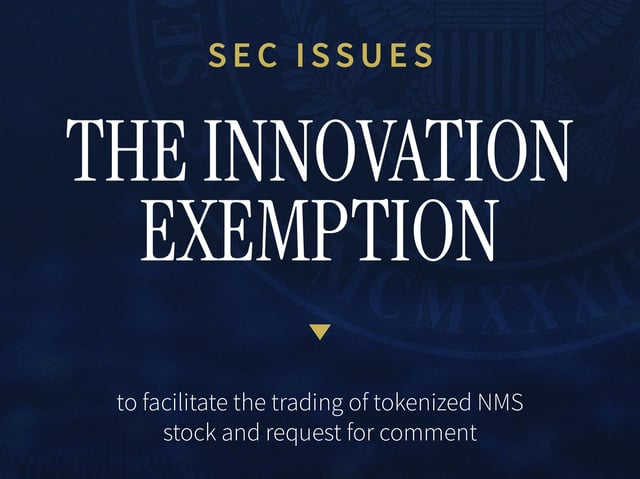
The market began a new phase of evolution in late 2025 with the entry of major regulated and corporate players, signaling a convergence of traditional finance and decentralized technology. On December 1, 2025, Kalshi, a CFTC-regulated exchange, announced it had launched tokenized versions of its event contracts on the Solana blockchain, bridging its centralized, regulated offerings with on-chain liquidity. [7] Just two days later, on December 3, 2025, sports merchandise and gaming giant Fanatics launched Fanatics Markets, a centralized prediction market app, in 10 U.S. states. [5]
Ecosystem and Major Platforms
The DPM ecosystem includes user-facing platforms as well as underlying infrastructure protocols that allow developers to build their own applications.
DPM Platforms
- Polymarket: A prominent platform running on the Polygon network, known for its high liquidity on a wide variety of markets related to politics, current events, and crypto. It operates using the USDC stablecoin and an AMM model. [1]
- Augur: One of the earliest DPM protocols on Ethereum. It uses an order-book model for trading and features its own native token, REP (Reputation), which holders stake to report on market outcomes. [1]
- SX Network: A long-running platform on a custom EVM blockchain that has been operating since 2019, with all betting actions recorded on-chain. [4]
- Overtime: A Web3 sportsbook built on the Thales protocol, running on Optimism, Arbitrum, and Base. It uses an order-book model and specializes in sports betting. [4]
- TotemFi: A "non-punitive" prediction market where participants do not lose their initial stake for incorrect predictions, instead earning collaborative rewards. [3]
Infrastructure Protocols
- Azuro: An infrastructure layer designed to simplify the creation of prediction market applications. It features a "Liquidity Tree" model to optimize capital efficiency and reduce slippage for traders. Azuro has raised $11 million from investors including Gnosis. [4]
- Monaco Protocol: A decentralized protocol on Solana that provides a shared backend and global liquidity pool for prediction market apps built on it. It is non-custodial and designed to prevent front-running in live betting. [4]