0% read
Last updated:
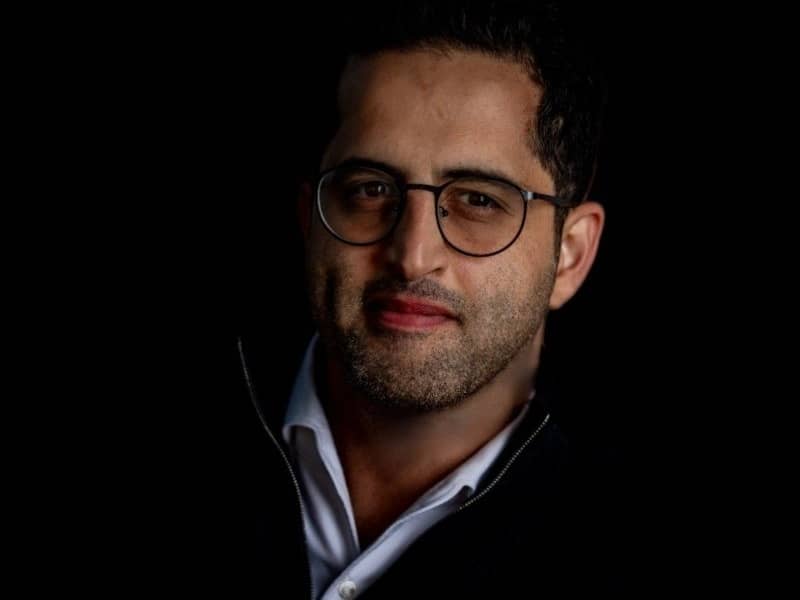
Bam Azizi
Bam Azizi is the chief executive officer and co-founder of Mesh, a San Francisco–based crypto payments network he started in 2020 with Adam Israel.[1][2] He holds a PhD in computer science from the Technical University of Munich and previously co-founded the cybersecurity company NoPassword, which was acquired by LogMeIn in 2019.[3] His career spans roughly two decades across semiconductor engineering, robotics research, security and cryptography, and financial technology, with a stated specialization in modular and object-oriented software design.[4]
Early Life and Education
Azizi was born in Iran during the Iran–Iraq war, a biographical detail he recounted in a CNBC "Fortt Knox" conversation.[7] He pursued his advanced studies in Germany, earning a Doctor of Philosophy (PhD) in computer science at the Technical University of Munich, enrolled from 2010 to 2015 and completing the degree in 2015.[4][5]
During his doctoral years he spent 2014 to 2015 as a visiting researcher in computer science at The Johns Hopkins University in Baltimore, Maryland.[4] His academic and research background combined work in cryptography, network security, machine learning, and robotics, fields that later informed his focus on authentication and financial infrastructure.[4] He speaks English, German, and Persian.[4]
Career
Early Engineering and Research
Bam Azizi worked as a senior software engineer at Medal from January 2006 to October 2010. In October 2010, he joined the Technical University of Munich in Germany, where he worked as a software engineer in a university laboratory until October 2011. He then worked as a software architect at Infineon Technologies from October 2011 to October 2012, which served as a basis for later work with digital assets.
From October 2012 to April 2015, Azizi was a research scientist at the SZI Robotic Research Lab in Washington, D.C., while conducting doctoral research.
NoPassword
Azizi co-founded NoPassword in April 2013, a computer and network security company headquartered in Sunnyvale, California. He served as its chief technology officer until February 2019.
NoPassword developed technology for passwordless authentication. Profiles of Azizi have attributed approximately 2,000 integrations to the company's authentication platform. In 2019, NoPassword was acquired by LogMeIn, a software company whose operations included the password manager LastPass.
LogMeIn
Following the acquisition of NoPassword, Azizi joined LogMeIn as a director in February 2019. He remained in the position until April 2020 and was based in the San Francisco Bay Area. He left LogMeIn in 2020 and subsequently co-founded Mesh.
Mesh
Azizi co-founded Mesh in 2020 with Adam Israel and became chief executive officer in May of that year. Israel serves as chief operating officer. The company's legal entity is Mesh Connect, Inc., headquartered at 2325 3rd Street in San Francisco, with related entities including MeshPay UK Ltd.
Mesh provides infrastructure for cryptocurrency payments and conversions and connects exchanges, wallets, and financial services platforms through its application programming interface. According to the company, its operations include more than 100 team members across the United States, Europe, India, and Latin America. Mesh opened an office in Bangalore, India, in December 2025.
According to Adam Israel, Mesh initially operated as a business-to-consumer product before shifting its application programming interface toward business-to-business payment infrastructure. The company's SmartFunding technology supports transactions in which a consumer can use one crypto asset while the merchant receives settlement in a stablecoin or fiat currency.
Mesh's products include Mesh Pay, Mesh Deposit, Mesh Verify, Mesh Payouts, the Mesh AI Wallet, and an enterprise Developer API. Mesh Pay is used for merchant cryptocurrency acceptance with stablecoin settlement, while Mesh Verify provides wallet ownership verification. Mesh Payouts supports stablecoin settlement in assets including USDC, USDT, and PYUSD.
Mesh investor materials state that the company supports more than 300 platforms and exchanges and reaches more than 900 million users globally. Rob Hadick, a partner at Dragonfly, has stated that Mesh processes nearly $10 billion in monthly payment volume. The figure was reported in coverage of the company's Series C financing by Bloomberg and Yahoo Finance and referenced by CoinDesk. Mesh lists PayPal, MetaMask, Revolut, Shift4, and Paxos among its partners.
TechCrunch reported that Mesh had more than 1,000 customers and approximately $1 billion in annualized payment volume as of September 2022. Latka estimated the company's revenue at $1.3 million in February 2021, $4 million in October 2023, and $5 million in October 2024.
During Azizi's tenure as chief executive officer, Mesh introduced several products and integrations. In May 2025, the company launched an Apple Pay integration for cryptocurrency payments. It added support for PayPal USD (PYUSD) and Ripple USD (RLUSD) during 2025, introduced the Mesh AI Wallet at the TOKEN2049 conference in October 2025, and entered into a partnership with Paxos for cryptocurrency deposits in December 2025.
In September 2026, Mesh added support for Robinhood Chain, Hedera, and Doma Chain and announced partnerships with Flex and Bybit Pay. The company received the Best Cryptocurrency Application for Financial Institutions award at the 2026 Finovate Awards.
Funding
Mesh raised capital through multiple funding rounds during Azizi's tenure. Publicly reported funding totaled more than $200 million as of January 2026.
The company raised $5.5 million in a seed round in January 2021 led by Streamlined Ventures and approximately $12.83 million in a subsequent seed round in June 2022. In September 2023, Mesh raised $60 million in a Series A round. PayPal Ventures led a $6.5 million strategic investment in February 2024.
In March 2025, Mesh raised $82 million in a Series B round led by Paradigm. The financing also included PYUSD settlement. A venture round in August 2025 included participation from Uphold, PayPal Ventures, and Coinbase Ventures.
In January 2026, Mesh raised $75 million in a Series C round led by Dragonfly Capital. The financing valued the company at $1 billion post-money, following a pre-money valuation of $925 million.
Investors across Mesh's funding rounds have included Paradigm, Coinbase Ventures, SBI Investment, Moderne Ventures, Liberty City Ventures, Consensys, Galaxy Ventures, Samsung Next, WndrCo, and other institutional and corporate investors. More than twenty institutional investors have participated across the company's funding rounds.
Advisory Work
From January 2022 to September 2023, Azizi served as an advisor to PawCo Foods, a San Francisco company founded in 2021 that produces plant-based pet food.
Personal Investments
Azizi has also participated in investments outside Mesh. Crunchbase attributes five investments and two founded organizations to him. His recorded investments include a seed round in Fin.com, a Series A investment in Trace Finance, a funding round in Morpho, and pre-seed rounds in Haven. [1] [2] [3] [4] [5] [6] [7] [8] [9] [10] [11]
Interviews
Bam Azizi on Mesh Connect’s Evolution #01
On April 17, 2025, Bam Azizi, co-founder and CEO of Mesh Connect, was interviewed by Miguel Armaza on the Fintech Leaders YouTube channel. The discussion covered the development of Mesh Connect, including its transition from a consumer application to a business-to-business (B2B) financial technology company and its subsequent focus on stablecoin payment infrastructure.

Azizi described Mesh's initial product as a consumer application designed to connect accounts from cryptocurrency platforms and other financial services in a single interface. According to his account, the product required functionality beyond read-only access, including trading, writing, and asset transfers. Mesh subsequently developed its own connectivity infrastructure and later introduced B2B products. Azizi stated that the B2B offering attracted five customers on its first day after being launched on Product Hunt, after which the company discontinued its consumer product and concentrated on B2B services.
The interview also covered Mesh's transition toward stablecoin-related payment applications. Azizi described the stablecoin market as consisting of multiple networks, chains, financial institutions, wallets, exchanges, and issuers. He characterized Mesh's function as an orchestration layer connecting these components and supporting transactions across different systems. He also described payment and cross-border transactions as use cases for the company's infrastructure.
According to Azizi, one payment scenario involves users holding cryptocurrency assets while merchants receive stablecoins. In this model, an intermediary infrastructure layer can facilitate the conversion between the assets held by the user and the stablecoin received by the merchant. He also discussed the use of stablecoins for international transactions, including transfers between parties located in different countries.
Azizi discussed product development and artificial intelligence during the interview. He described AI tools as capable of automating tasks such as code maintenance, documentation, and other repetitive development activities. He also stated that these tools can allow individuals with limited software development experience to participate in product creation.
The interview addressed user experience in cryptocurrency applications. Azizi cited processes such as copying wallet addresses, selecting assets, and choosing tokens as examples of interactions that can create additional complexity for users. He argued that improving these interfaces should be an area of development for the cryptocurrency industry.
Regulation was also discussed, particularly the GENIUS Act and its implications for stablecoin payments. Azizi expressed support for the legislation and stated that regulatory requirements could provide financial institutions with clearer parameters for using stablecoins. He described regulatory frameworks as requirements that infrastructure providers such as Mesh could incorporate into their products.
Azizi also discussed Mesh's fundraising history. He stated that the company had raised approximately $130 million in total, including approximately $82 million in its Series B round. According to Azizi, the Series B financing was completed in less than one month following earlier fundraising periods that had taken considerably longer. He attributed the timing of the round to existing relationships with investors, market conditions, and interest from multiple investors. [12]
Financial Infrastructure and Agentic Commerce #02
On October 1, 2026, Bam Azizi, CEO and co-founder of Mesh, appeared on SiliconANGLE theCUBE as part of NYC Wired: Mixture of Experts. The discussion covered cryptocurrency payments, financial infrastructure, stablecoins, security, decentralized identity, and transactions involving artificial intelligence agents.

Azizi described Mesh as a company focused on simplifying the movement of digital assets across different blockchains, tokens, currencies, exchanges, and wallets. He explained that the company provides an interface through which businesses can integrate multiple forms of cryptocurrency transactions without developing separate connections to each underlying service. He compared this approach with the role of payment infrastructure providers in traditional financial systems.
According to Azizi, the expansion of blockchain networks has resulted in a fragmented environment containing multiple blockchains, tokens, and currencies. He stated that Mesh addresses this fragmentation by providing infrastructure for different types of money movement, including consumer payments, cross-border transactions, business payments, and peer-to-peer transfers. He also estimated that a future tokenized economy could represent approximately $100 trillion in market value, based on the potential tokenization of real-world assets.
Security was another topic discussed in relation to Mesh's infrastructure. Azizi stated that the company uses a pass-through architecture that does not retain user information. According to his description, information is transmitted between users and business customers without being stored by Mesh. He associated this architecture with reducing the amount of information that could be exposed in a security breach.
Azizi also described Mesh Identity, a decentralized identity system intended to allow information such as KYC records, token information, and platform connections to be transferred between supported services. He stated that the system is designed to reduce the need for users to repeat authentication procedures when moving between platforms.
The discussion also addressed the use of artificial intelligence agents in financial transactions. Azizi stated that access to contextual information by AI agents should be accompanied by authorization mechanisms and security controls. He described a model in which users determine which information an agent can access and which entities can receive that information. He further identified transactions between AI agents as a possible area of development for future commerce.
Stablecoins were discussed as another area of cryptocurrency infrastructure. Azizi characterized stablecoins as digital assets designed to maintain a value associated with fiat currencies while operating on blockchain networks. He identified speed, global transfer capabilities, and transaction costs as characteristics relevant to their use in payments. He also attributed their regulatory treatment to their relationship with existing currencies and referred to recent United States legislation concerning stablecoins and other digital assets.
Regarding Mesh's business activities, Azizi stated that the company primarily works with businesses serving consumers, including companies such as PayPal and Revolut. He described applications involving cryptocurrency purchases, transfers, and other forms of consumer payment. He further stated that the continued presence of multiple blockchains, tokens, and financial systems creates demand for infrastructure that connects these different networks.
Azizi also discussed the integration of financial infrastructure into enterprise systems. He stated that companies using Mesh would otherwise need to develop and maintain comparable connections to multiple networks and services themselves. He described the continued fragmentation of the digital-asset ecosystem as a factor affecting the development of such infrastructure and linked this fragmentation to the company's approach to financial connectivity. [13]
See something wrong?