Rob Hadick
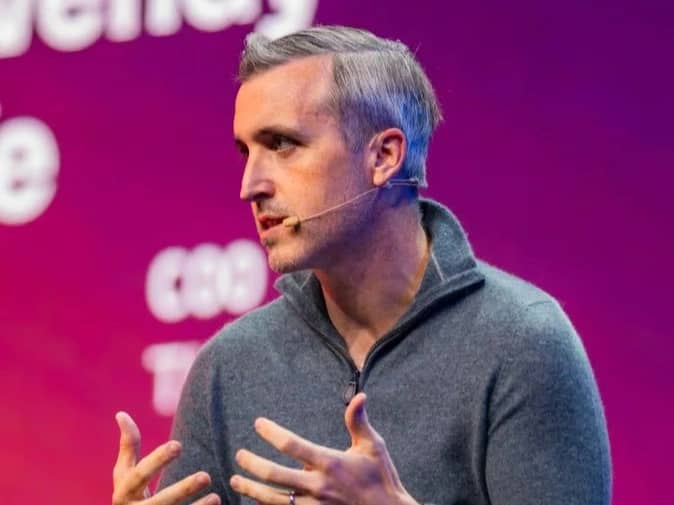
Rob Hadick is a General Partner at Dragonfly, a global venture capital firm that specializes in the cryptocurrency industry. He is recognized for his investment theses in the digital asset sector, particularly his detailed analysis of the stablecoin ecosystem. His career bridges traditional finance, with experience at firms like Goldman Sachs and PJT Partners, and crypto-native investing, where he helped establish the web3 practice at GoldenTree Asset Management before joining Dragonfly. [1] [2]
Education
Hadick attended the University of Pennsylvania's The Wharton School, where he earned a Bachelor of Science (B.S.) in Finance between 2013 and 2017. During his undergraduate studies, he also attended a summer school program at The London School of Economics and Political Science (LSE) in 2015. [2]
Career
Early Career in Finance
Hadick began his career in traditional finance with a summer analyst position in the investment banking division at Goldman Sachs in 2016. Following his graduation in 2017, he joined PJT Partners as an Investment Banking Analyst in New York. During his three years at the firm, from June 2017 to August 2020, he advised on a number of large and complex mergers and acquisitions (M&A) and restructuring transactions. [2] [1]
Transition to Digital Assets
In August 2020, Hadick transitioned from investment banking to asset management, joining GoldenTree Asset Management in New York. At the alternative asset management firm, which had approximately $50 billion in assets under management at the time, he was instrumental in launching the crypto and web3 investing practice. He worked there until March 2022, focusing on multi-stage public and private investments into crypto protocols and companies. This role marked his formal entry into institutional digital asset investing. [2] [3]
Dragonfly
Hadick joined Dragonfly as a General Partner in March 2022. [2] At the global, crypto-focused venture firm, he invests in cryptocurrency companies and protocols across various sectors, including infrastructure, fintech, and consumer applications at both seed and venture stages. As a key member of the partnership, he is involved in shaping the firm's investment strategy, including its fourth fund, which was announced in February 2026. Dragonfly's portfolio includes investments in companies such as Polymarket, Ethena, Avalanche, Compound, and Matter Labs. [3] [4]
Investment Philosophy at Dragonfly
Hadick has publicly articulated his investment philosophy, which emphasizes a focused, long-term, and fundamentals-driven approach to venture capital in the crypto industry.
Concentrated Investment Strategy
In an interview regarding Dragonfly's fourth fund in February 2026, Hadick stated that the firm was becoming "more concentrated than ever." He explained this strategy was designed to allow the firm to dedicate more time and resources to a smaller number of companies with the highest potential. He was quoted as saying, "We really want to spend our time with the teams that we think can have these 100x outcomes and be really instrumental in shaping the next 10 years of this industry." [5]
Market Cycle Approach
Hadick has expressed a preference for investing during market downturns, or "crypto winters," which he views as favorable environments for long-term investors. He believes that bear markets filter out short-term speculators, resulting in a "builder-focused market." Speaking in early 2026 on the firm's experience, he said, "We actually have been through a number of cycles now as a partnership... During the ‘22 or ‘23 time, it was very quiet. Some of the tourists had exited and it was more of a builder-focused market. We love that market." This perspective aligns with his firm's strategy of focusing on infrastructure and applications with long-term viability. [5] [4]
Focus on Fundamentals
Hadick advocates for a return to an investment an alysis that prioritizes fundamental value and real-world utility over speculation. In January 2025, he commented on the market sentiment, stating his belief that the market was shifting away from speculative meme coin trading. He said, "Strongly believe the market is about to quickly snap back to a 'fundamentals & real world use cases matter' mindset. The nihilism of rotating memes every 15 mins is exhausting and there is just too much momentum behind stables, RWAs, AI, edge compute, networking, etc to ignore." [2]
Views and Public Commentary
Hadick is an active commentator on cryptocurrency trends, frequently sharing his analysis through articles and on his X (formerly Twitter) account, . [6] His commentary prominently features deep dives into the stablecoin market, tokenization, and prediction markets.
Stablecoin Ecosystem Analysis
Stablecoins are a primary area of focus for Hadick's public research. He argues that their most significant impact will be on transforming business-to-business (B2B) and cross-border payments rather than on consumer applications. His core thesis is that stablecoins provide a superior alternative to legacy payment rails like SWIFT by significantly reducing costs, settlement times, and counterparty risk. [7]
In a December 2024 article titled "Stablecoin Payments: Who Actually Wins?", Hadick presented a detailed framework for analyzing the value chain of the stablecoin payments market. He categorized the market into seven distinct layers, assessing the potential for each to accrue value and build sustainable businesses. [8]
His seven-layer framework includes:
- 1. Settlement Rails: He projects this layer will see a "winner-take-most" dynamic, favoring purpose-built payment-focused blockchains or Layer 2 solutions over general-purpose chains. He believes these specialized rails will become "incredibly valuable."
- 2. Stablecoin Issuers: While acknowledging that issuers like Circle and Tether are the current beneficiaries, he argues they must evolve from asset managers into payment companies by improving infrastructure, compliance, and banking integrations to maintain their lead.
- 3. Liquidity Providers: Hadick views this segment, which includes OTC desks and exchanges, as "extremely commoditized with minimal pricing power," where value will consolidate among a few large, established players.
- 4. Value Transfer / Money Services: These "stablecoin orchestration" platforms, which manage compliance and banking relationships, can build strong businesses with "moderate pricing power" and become crucial supplements to traditional payment service providers.
- 5. Aggregated APIs / Messaging Platforms: He is skeptical of platforms that simply wrap other services' APIs, arguing that the "Plaid for stablecoins" analogy is flawed because blockchains inherently solve many of the data access problems that Plaid addressed for traditional banking. He predicts these will be "squeezed" on margins.
- 6. Merchant Gateways / Ramps: He views B2C gateways as a "losing category" due to intense competition from established payment giants who can easily integrate stablecoin options. However, he sees a potential niche for B2B gateways that offer specialized treasury management features.
- 7. Stablecoin-Powered Fintechs and Applications: He describes this space as a "knife fight" due to the low barrier to entry. He believes success will depend on traditional fintech strengths like strong distribution and product differentiation, making it difficult for new startups to compete against established brands.
Tokenization and Real World Assets (RWAs)
Hadick has identified himself as a long-term bull on the potential of tokenized real-world assets. However, as of mid-2025, he cautioned that near-term market expectations for the sector might be overly optimistic, suggesting a more patient outlook is required for the technology to mature and gain widespread adoption. [2]
Prediction Markets
He is a vocal supporter of the prediction market platform Polymarket. He has highlighted its direct distribution model as a key competitive advantage over rivals like Kalshi, which he believes gives it a superior position in the market. [2]
Public Appearances and Media
Hadick is a frequent speaker at financial and technology conferences, where he discusses crypto venture capital, decentralized finance, and digital asset infrastructure. He has been a featured speaker at events including the SALT Conference, the Rosenblatt Securities Fintech Summit, and the Emergence Symposium. [1] [3] [9]
His analysis and commentary on the cryptocurrency market are often featured in major financial news outlets, including Fortune, Yahoo Finance, Blockworks, and The Block. Beyond speaking engagements and media features, he publishes his own in-depth analyses on platforms like Medium. [5] [8]
Interviews
Growth Investing After FTX #01
On February 2, 2023, Rob Hadick, General Partner at Dragonfly, appeared on the Fundamental Value podcast hosted by Joshua Frank of The Tie to discuss growth-stage crypto investing and market conditions following the collapse of FTX.
Speaking from his perspective, Hadick described his transition from traditional finance, including experience at Goldman Sachs, into digital asset investing. He explained that early exposure to Bitcoin in 2014 and the development of Ethereum in 2016–2017 shaped his view that blockchain-based systems could introduce trust-minimized financial infrastructure and reduce inefficiencies in traditional markets.
Hadick outlined Dragonfly’s investment approach as focused on backing technologists and founders building foundational infrastructure and applications. In his role, he concentrates on later-stage investments and special situations that may require traditional finance expertise. According to him, the firm emphasizes governance, rigorous due diligence, product-market fit, and distribution capabilities rather than competing on speed or elevated valuations.
He identified several sectors that, in his view, present long-term growth potential, including scalability solutions such as zk-rollups, wallet usability and account abstraction, custody and security infrastructure, smart contract-based trading systems, on-chain data analytics, identity frameworks, interoperability tools, and tokenization of real-world assets. Hadick stated that evaluating such businesses requires triangulating multiple data sources, including on-chain metrics, developer activity, user adoption, and broader macroeconomic indicators, rather than relying exclusively on public market comparables.
Regarding the impact of FTX’s collapse, Hadick estimated that approximately 20–25% of crypto companies were materially affected, either directly through exposure or indirectly through reduced liquidity and lower transaction volumes. He argued that the event reinforced the importance of disciplined valuation practices and governance oversight. In his assessment, later-stage valuations had compressed significantly—potentially by more than 60% in some cases—while seed-stage rounds had declined less sharply.
Hadick also commented on allocator sentiment. While acknowledging increased caution among limited partners, he stated that many institutional investors continued to view digital assets as a long-term structural theme. He noted ongoing development efforts by large corporations in areas such as gaming, payments, and tokenized assets, suggesting that builder activity had remained resilient despite market volatility.
In discussing fundamentals for digital assets, Hadick described a framework that combines quantitative metrics—such as developer engagement and usage data—with qualitative judgment about long-term adoption and technological relevance. He emphasized that no single metric is sufficient and that valuation in crypto requires probabilistic scenario analysis.
Looking ahead, Hadick expressed the view that the market could recover as macroeconomic conditions stabilize. He anticipated a future in which crypto-native firms and traditional financial institutions coexist, with decentralized finance infrastructure potentially complementing centralized systems. According to him, decentralization, identity systems, and improved usability remain central themes for the next phase of industry development. [10]
Stablecoins and Market Structure Discussion on Stable School #02
On October 2, 2025, Rob Hadick participated in episode #24 of the Stable School podcast, hosted by Raza, Head of Growth at Scroll. The discussion addressed stablecoins, financial market structure, and developments in onchain finance.
Hadick described stablecoins as core infrastructure within blockchain-based financial systems. He stated that stablecoins facilitate payments, liquidity provision, and decentralized finance activity, and indicated that broader onchain markets rely on their operational reliability and liquidity.
During the interview, Hadick referenced his professional background, including experience covering financial technology while at Goldman Sachs in the period following the 2008 financial crisis. He noted that the introduction of Ethereum and smart contracts influenced his perspective on blockchain applications in financial services.
The conversation also examined the concentration of crypto-related activity in New York. Hadick attributed this trend to the city’s established financial institutions, trading firms, and capital markets infrastructure. He indicated that proximity to these institutions has contributed to increased venture activity in stablecoin-related projects.
Discussing investment considerations at Dragonfly Capital, Hadick identified compliance frameworks, banking integration, and end-user infrastructure as areas of focus. He stated that intermediary software layers have become more standardized and that long-term business models may depend on control over regulatory processes and liquidity access.
Hadick differentiated between fiat-backed payment stablecoins and asset-referenced or yield-oriented structures used primarily in decentralized finance. He referenced Ethena as an example of a model that incorporates centralized exchange liquidity alongside onchain mechanisms. According to Hadick, this structure allowed for a larger operational capacity compared to approaches that rely exclusively on onchain derivatives markets.
Regulatory developments were presented as a factor influencing institutional participation. Hadick referred to legislative initiatives in the United States, including the GENIUS Act, and stated that statutory clarity may affect how banks and payment service providers interact with stablecoin infrastructure.
Beyond retail and business payments, Hadick discussed the concept of “collateral mobility.” He described a framework in which tokenized collateral can be transferred, reassigned, or liquidated across counterparties without traditional settlement delays. He stated that such mechanisms could alter repo markets, over-the-counter trading, and credit arrangements by reducing settlement frictions.
Hadick further indicated that wider acceptance of stablecoin infrastructure by financial institutions could coincide with expansion in tokenized credit and real-world asset issuance. He characterized stablecoins as a settlement layer that may support additional financial instruments if integrated into existing market structures.
The interview presented these positions as reflective of Hadick’s analysis of current market conditions and Dragonfly Capital’s stated investment focus. [11]