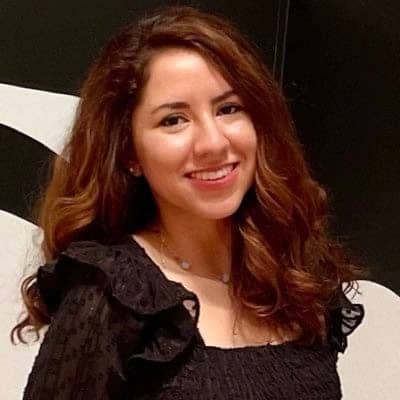
Tamara Szulc
Tamara Szulc is a legal and policy professional involved in cryptocurrency advocacy, blockchain law, and community engagement initiatives. She has worked with organizations including Stand With Crypto, LexDAO - The Decentralized Legal Guild, and D. CLARK LAW. [5]
Education
Szulc earned her Bachelor’s in Sociology from Vanguard University of Southern California and her JD from Emory University School of Law. [4]
Career
Szulc began her professional career at Vanguard University of Southern California, where she worked as both a teaching assistant and an institutional research assistant from 2016 to 2018. Her responsibilities included conducting data analysis, preparing institutional reports, leading study sessions, and grading assignments. In 2017 and 2018, Szulc also served as an undergraduate research fellow with the Global Center for Women and Justice, conducting sociological research on women veterans. In 2018, she completed a policy and legislative affairs internship with the County of Orange. From 2019 to 2021, she worked as a mergers and acquisitions analyst at Harvey & Company LLC, participating in buy-side acquisition and advisory work.
In 2022, Szulc became involved in legal and blockchain-related roles through internships and educational programs. She completed internships with the Superior Court of Fulton County and ByteBao, and participated in the Hispanic National Bar Association's intellectual property law program. During the same period, she joined LexDAO - The Decentralized Legal Guild as a guild member and participated in the Web3 fellowship program at Spawn. From 2022 to 2023, Szulc served as director of operations at Around the Blockchain News, where she worked on cryptocurrency law and policy news content and AI-related tools. In 2023, she completed the Web3 Scholar program at SheFi and participated as a venture capital fellow with SomosVC. She also held concurrent positions as chief of staff at Web3 Familia, analyst at Rayo Capital, and associate at D. CLARK LAW between 2023 and 2024. Since May 2025, Szulc has served as community coordinator at Stand With Crypto. [1]
Panels
Crypto & Public Interest
At the Pacific Blockchain Summit 2025, Szulc participated in a panel discussion with Iris Ikeda, Reba Beeson, and Tatyana Cerullo on cryptocurrency policy, public-interest issues, and participatory approaches to regulation. The panel examined developments in United States crypto regulation, including discussions surrounding stablecoin legislation, congressional policy debates, and coordination between federal and state regulatory frameworks. Speakers also discussed international regulatory approaches, including digital asset initiatives connected to the Marshall Islands and Hawaii’s financial technology sandbox program.
During the discussion, panelists addressed the roles of advocacy organizations, digital asset infrastructure providers, and policymakers in shaping oversight and adoption of cryptocurrencies. Szulc discussed grassroots engagement and community participation in cryptocurrency advocacy efforts in the United States, while other speakers focused on regulatory experimentation, digital asset platforms, and legal frameworks for decentralized organizations. The panel concluded that public participation, regulatory clarity, and coordination between industry and government would continue to influence the development of cryptocurrency policy and financial technology systems. [2]
Tech, Community, and Policy
At Rare Evo 2025, Szulc participated in a panel discussion alongside Veronica Hash, Elizabeth Hansson, and Rick Tapia examining the intersection of cryptocurrency technology, community organizing, and public policy in the United States. The speakers discussed topics including legal compliance for blockchain companies, bipartisan approaches to crypto legislation, regulatory clarity for stablecoins and decentralized finance, and the role of state-level advocacy in areas where federal regulation remained limited. Szulc focused on grassroots engagement within the crypto sector, including community participation motivated by financial access, education, and public involvement in policymaking. The panelists emphasized coordination between lawmakers, industry participants, legal professionals, and advocacy groups, and encouraged greater participation through outreach to legislators, attendance at public events, and involvement with advocacy organizations. [3]