0% read
Last updated:
Patrick Wilson
Patrick Wilson is the Chief Legal Officer at Solana Policy Institute (SPI), where he plays a crucial role in shaping regulatory policy related to the digital assets sector. His work involves engaging with prominent regulatory bodies such as the SEC, CFTC, and Treasury, ensuring compliance and advancing the Institute's policy objectives. [1] [2]
Early Life and Education
Patrick Wilson pursued his legal education at Cornell Law School, earning his J.D. between 2008 and 2011. Prior to his legal studies, he obtained a Bachelor of Science degree from the Georgia Institute of Technology, where he studied from 2004 to 2008. [2]
Career
Wilson began his legal career as a Judicial Law Clerk at the U.S. Circuit Court of Appeals, serving from September 2011 to August 2012. He joined White & Case LLP in October 2012 as an Associate in the Litigation practice, where he worked until August 2014. He later became an Associate at Skadden, Arps, Slate, Meagher & Flom LLP, holding the position from August 2014 to January 2020. During this period, his work included litigation, regulatory investigations, and enforcement matters, which served as the basis for later work with blockchain.
In January 2020, Wilson joined Lyft as Counsel, remaining with the company until July 2021. He then joined Coinbase as Senior Counsel before being appointed Associate General Counsel in August 2022. He held that position until March 2023 and was a member of the company's Regulatory Litigation team.
Blockchain and Digital Assets
Wilson joined Flow in March 2023, serving in a legal role until August 2024. He subsequently joined Uniswap Labs, where he worked in the legal department from August 2024 to September 2025, including serving as Head of Litigation. His responsibilities included litigation and regulatory matters related to blockchain and digital assets.
Since September 2025, Wilson has served as General Counsel at the Solana Policy Institute. His responsibilities include overseeing legal strategy and policy initiatives related to stablecoins, developer protections, and access to investment opportunities within the digital asset sector.
Wilson's professional experience includes positions at law firms, technology companies, and blockchain organizations. His work has focused on litigation, regulatory matters, and legal issues involving digital assets and cryptocurrency policy. [1] [2] [3] [5]
Interviews
Crypto Tax Reform and Regulatory Discussions #01
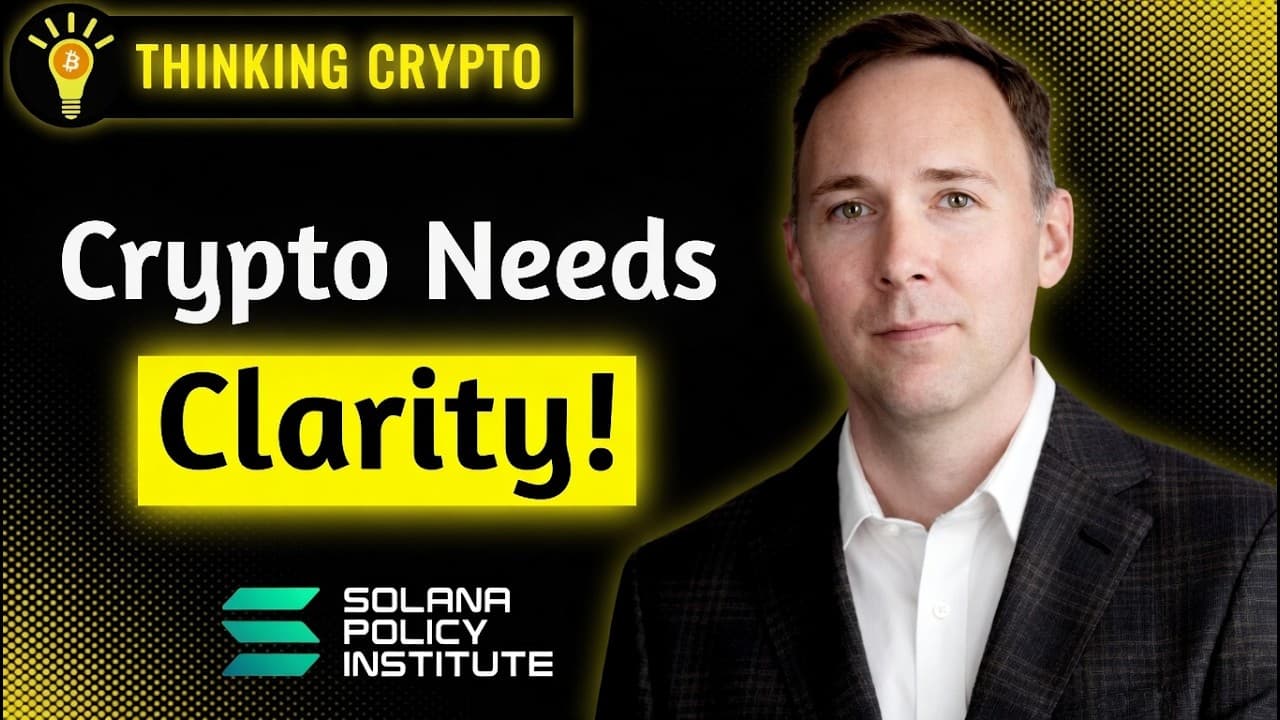
On April 24, 2026, Patrick Wilson appeared on the Thinking Crypto podcast to discuss cryptocurrency regulation, tax policy, and legislative proposals related to digital assets in the United States. During the interview, he addressed regulatory developments, tax-related issues, and the activities of the Solana Policy Institute in discussions with government agencies and lawmakers.
Wilson discussed joint guidance issued by the U.S. Securities and Exchange Commission (SEC) and the Commodity Futures Trading Commission (CFTC), which classified cryptocurrencies including Bitcoin, Ethereum, and Solana as digital commodities and addressed the regulatory treatment of staking. He stated that the guidance reflected coordination between the two agencies regarding digital asset oversight.
A portion of the interview focused on the taxation of staking rewards. Wilson described the current Internal Revenue Service (IRS) approach, under which staking rewards are generally treated as taxable upon receipt, and stated that this creates multiple taxable events for participants. He said that staking rewards could instead be treated in a manner comparable to other newly created assets, with taxation occurring when the assets are disposed of. He also discussed the bipartisan PAR Act and proposals for a de minimis exemption for small cryptocurrency transactions.
Wilson also commented on the CLARITY Act and its relationship to agency guidance. He stated that legislation could establish a statutory framework, while regulatory agencies would continue to develop implementing rules and guidance. The interview also covered the Solana Policy Institute's activities, including meetings with policymakers, regulatory engagement, public comment submissions, and participation in legal proceedings related to digital asset policy. [4]
See something wrong?

Average Rating
No ratings yet, be the first to rate!
How was your experience?
Give this wiki a quick rating to let us know!
Edited By
On June 28, 2026. 17:54 UTC
Edit summary:
Updated tags to Solana, Advisor; changed category from people to People in crypto; updated media (3 -> 3 items)