0% read
Last updated:
Markus Levin
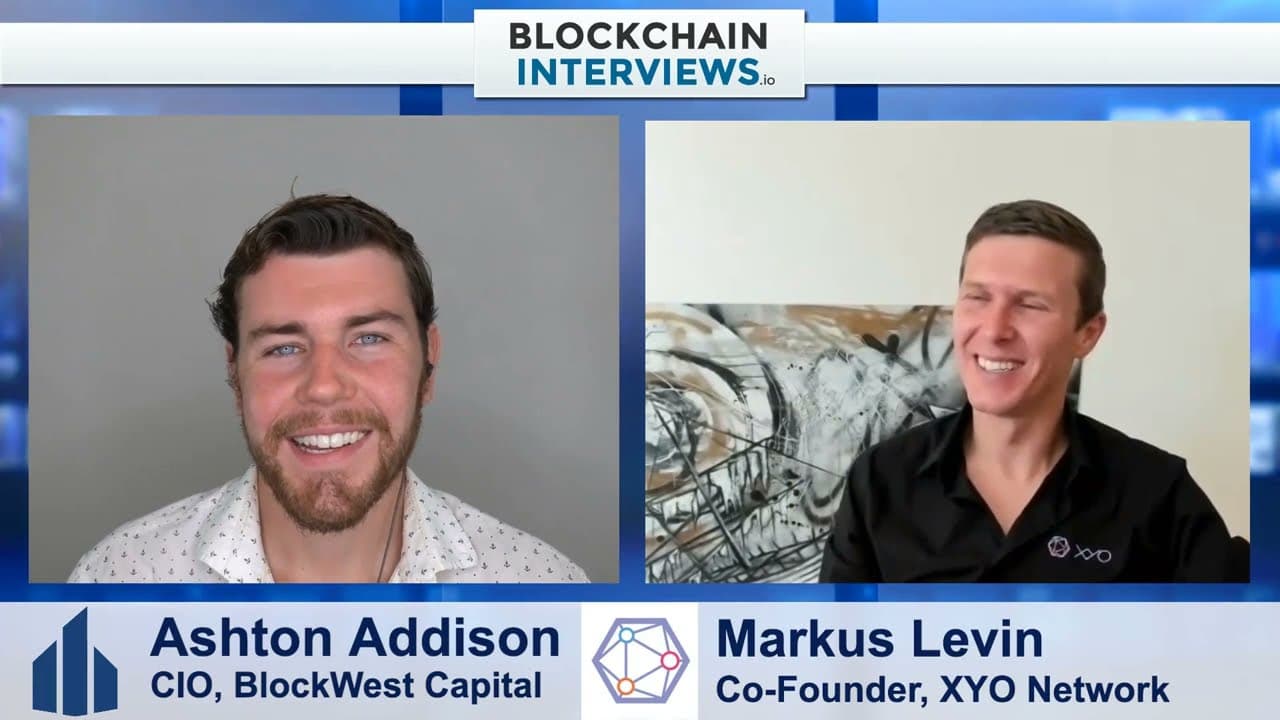
Markus Levin is the co-founder of XYO, a decentralized data network focused on verifying and authenticating real-world data, particularly through its Decentralized Physical Infrastructure Network (DePIN). Levin has been instrumental in building and growing companies within high-growth industries globally, leveraging blockchain and technological innovations to address complex challenges in the data sector. [1] [11]
Early Life and Education
Markus Levin was originally from Germany and had academic pursuits in Italy, where he attended Bocconi University for Ph.D. studies before eventually dropping out to pursue entrepreneurial ventures. This decision marked the beginning of his extensive involvement in technology and innovation-focused industries. [2] [11]
Career
Early Ventures
Markus Levin held leadership positions in companies operating in the media, advertising technology, and data sectors before moving into blockchain. His early professional activities included roles at Novacore, Hive Media Group, and Sterkly Services.
Between 2011 and 2017, Levin served as CEO and Co-Founder of Sterkly Services, an adtech company that was acquired by Avantis Team Technologies. At Novacore, where he was CEO and Co-Founder from 2013 to 2014, his work included Bitcoin mining and large-scale data problem solving. From 2014 to 2017, he served as CEO and Co-Founder of Hive Media Group, a media company that was acquired by OpenWeb.
XYO
Levin co-founded XYO in 2018 with Arie Trouw and others. He had previously mined Bitcoin, with his first Bitcoin mined in 2013, and subsequently became involved in blockchain technology.
XYO developed a decentralized network for the verification of geospatial and other physical-world data. The network combines blockchain technology, cryptographic verification, and Proof of Location to process and validate location-related information. Its architecture distributes data verification across the network rather than relying solely on centralized data sources.
AI and Data Sovereignty
Levin has discussed the use of blockchain-based data verification in relation to artificial intelligence. His discussions have included the reliability of external data used by AI systems and issues such as data spoofing and deepfakes.
He has also addressed data sovereignty, describing a model in which individuals retain control over data and can participate in its monetization. Data ownership and control are among the concepts associated with the development of XYO's network.
DePIN
Levin has discussed decentralized physical infrastructure networks (DePIN) in relation to infrastructure ownership and participation. In this context, DePIN refers to networks in which participants contribute physical infrastructure and can hold a role within the resulting decentralized system.
His discussions of DePIN have also addressed changes in how infrastructure can be organized and how contributors may participate in decentralized networks.
Industry Participation
Levin has participated in publications, conferences, panels, and discussions concerning blockchain technology, artificial intelligence, data privacy, and economics. These appearances have covered topics related to decentralized data systems, data ownership, and the relationship between technology and economic structures. [1] [2] [3] [4] [5] [6] [7] [8] [9] [10]
Interviews
XYO Network Development #01
On April 3, 2022, Markus Levin, co-founder of XYO Network, discussed the development of the project in an interview with the Crypto Coin Show. The discussion covered XYO’s transition from a network focused on location data to a system that also handled other forms of physical-world information. Levin referred to this broader function as a “reality oracle,” describing its use for transmitting data collected from IoT devices and other sources to digital systems.
Levin explained that XYO’s initial focus was location verification. He identified GPS spoofing as a limitation for applications that depend on location data and described XYO’s use of interactions between IoT devices to establish proximity. Within the network, devices exchange cryptographic information that is used to associate collected data with a physical location. According to Levin, this model was intended for applications including supply-chain tracking, autonomous vehicles, smart-city systems, and other location-dependent services.
By 2022, Levin said that XYO was no longer limited to location information. The network could also process data from IoT sensors, including temperature measurements, as well as information collected while devices were offline. He described this broader category of information as data originating from the physical world and being made available to digital applications.
Levin also outlined the components used in XYO’s network architecture. Sentinels collect data, Bridges transmit it, Archivists store it, and Diviners process the available information to produce responses to queries. He said that XYO initially attempted to work with established IoT companies by encouraging them to incorporate the network into their device firmware. After finding this approach difficult to scale, the company developed the Coin application as an alternative means of expanding its network of data-producing devices.
Coin was described in the interview as an augmented-reality application that combines location-based activities with rewards. Levin reported that the application had exceeded four million downloads at the time of the interview and that its user base included people without previous involvement in cryptocurrency. The application supported additional forms of data collection, including location-based surveys and offline data gathering. Levin also described a model in which payments from traditional companies could be received in fiat currency and subsequently used to acquire XYO tokens for participation in the network.
The interview also covered developments planned for 2022. Levin stated that XYO 2.0 had been released several weeks before the interview and described changes related to network accessibility, speed, reliability, and operating costs. He also discussed further development of XYO World, an NFT-based application launched on Ethereum, as well as additional partnerships and listings.
Another topic was Expert Labs, the company associated with XYO. Levin discussed plans for the company to list on the tZERO alternative trading system and said that the structure could allow existing token holders to also hold shares in the company. He described the planned listing as part of the company's efforts to connect its digital-asset ecosystem with a regulated securities market.
For the longer term, Levin described an expansion of the network to obtain data from a wider range of devices and make that information available to systems such as databases, smart contracts, and metaverse applications. He characterized XYO's proposed role as a source of data about physical-world events and conditions for digital systems. [13]
XYO Layer 1 and DePIN #02
On November 25, 2025, Markus Levin, co-founder of XYO, appeared on the Crypto Coin Show to discuss XYO Layer 1, decentralized physical infrastructure networks (DePIN), data verification, and the relationship between physical-world data and blockchain-based systems.
Levin described XYO as a data-oriented DePIN network that has collected information from physical sources since the launch of its mainnet in 2018. He explained that the network can process different types of information, including location, temperature, sensor, offline, and cloud data. In his account, DePIN networks can also coordinate unused or partially utilized resources, such as computing devices, sensors, and other physical infrastructure, allowing those resources to participate in decentralized networks.
During the discussion, Levin associated DePIN infrastructure with applications involving connectivity, energy, environmental monitoring, and other forms of localized physical data. He cited examples involving solar-powered microgrids, internet connectivity, and weather stations in areas where conventional infrastructure may provide limited coverage. He also discussed the use of consumer devices as sources of network data and infrastructure.
Levin explained that XYO developed its own Layer 1 blockchain after determining that existing blockchain infrastructure was not designed primarily for large-scale data operations. According to his explanation, blockchains such as Ethereum and Solana are optimized for transactions and digital assets, while storing substantial quantities of physical-world data can create additional storage and infrastructure requirements. XYO Layer 1 was therefore developed with functions related to data storage, verification, analysis, and immutability.
The Layer 1 network was launched in September 2025 alongside the XL1 token. Levin described the blockchain as an independently developed network rather than a fork of another blockchain. He also explained that the existing DePIN network could be connected to the Layer 1 infrastructure so that data generated by physical devices could be associated with blockchain records and subsequently used by applications requiring verified information.
The interview also covered the network's dual-token structure. According to Levin, XYO is used for functions including governance, staking, security, and participation in the DePIN ecosystem, while XL1 is used for gas, transactions, and decentralized applications operating on the Layer 1 network. XYO holders can stake their tokens on the network and receive XL1 as a reward. Levin stated that XL1 is burned through transactions, while staking XYO reduces the amount of XYO in circulation during the staking period.
Levin discussed the network's node architecture and its approach to participation. He described the staking system as including a mechanism that does not initially require users to operate a node, while validator and producer nodes are responsible for validating transactions and producing blocks. He also stated that the network architecture was designed to keep node requirements relatively lightweight, allowing nodes to operate on conventional computing hardware rather than requiring the infrastructure associated with larger blockchain networks.
Another topic was Proof of Perfect, which Levin described as a consensus mechanism intended to process conflicting data inputs and determine a common representation of information. The mechanism is presented within XYO Layer 1 as part of its approach to handling data originating from physical environments, where multiple sources can provide different observations of the same event or condition.
The discussion also addressed the relationship between DePIN networks and artificial intelligence. Levin described a model in which an AI system could query XYO Layer 1 for existing information and, when the required data was unavailable, request additional collection through the underlying DePIN network. He used localized environmental information as an example, describing how data collected from multiple sources could be used to provide information for applications such as agricultural analysis. The resulting information could also be recorded on the blockchain together with data associated with its origin.
According to Levin, this architecture could also be used to examine the underlying information associated with AI-generated results. In cases where an AI system produces an inaccurate result, the underlying data could be reviewed and additional information could be collected through the DePIN network. This approach was discussed as a method of connecting data collection, verification, and AI processing within the same infrastructure.
The interview further covered the expansion of data sources connected to the XYO ecosystem. Levin mentioned Bluetooth and NFC devices, as well as weather-related infrastructure, as examples of hardware capable of contributing data. He described the use of cryptographic verification to associate information from a weather station with its physical location and source, reducing the possibility of data being attributed to a different location.
Levin also discussed XYO's plans for the period following the Layer 1 launch. These included integrating the existing XYO DePIN network with the blockchain, adding third-party projects, and incorporating data generated by external infrastructure. He cited a partnership with South Korean charging infrastructure company PiggyCell as an example, describing plans to apply XYO's data verification mechanisms to information generated through charging infrastructure and record the resulting data on the Layer 1 network.
The interview concluded with discussion of further development of XYO Layer 1 and the expansion of the types of physical data that could be collected through DePIN infrastructure. Levin described the planned integration of XYO's existing network, third-party participation, and data-related applications as areas of development for 2026. [12]
See something wrong?

Average Rating
No ratings yet, be the first to rate!
How was your experience?
Give this wiki a quick rating to let us know!
Edited By
On August 12, 2026. 07:50 UTC
Edit summary:
Updated wiki content; increased media items 1→3 and added 2 references (11→13)