0% read
Last updated:
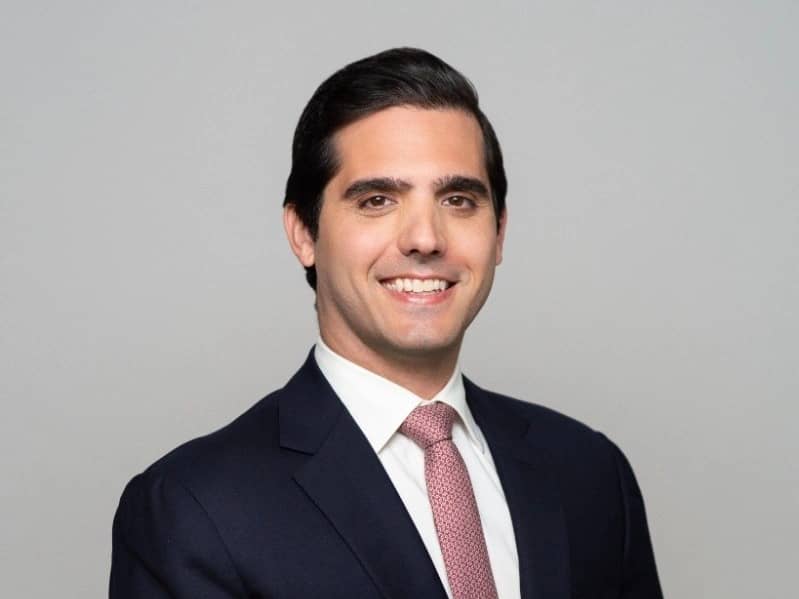
Jonathan Shaffer
Jonathan Shaffer is the co-founder of Fission Labs, also known as Fission, and has served as its chief executive officer since January 2024.[1][2][3] His work has included public-equity research, private investment, consumer electronics, and the development of liquidity services for tokenized investment funds.[1][4]
Education
Shaffer earned a bachelor’s degree in Philosophy, Politics and Economics from the University of Pennsylvania, where he studied from 2006 to 2010, and an MBA from Yale University, completed between 2015 and 2017.[1][2] He attended William Penn Charter School from 1993 to 2006.[1]
Career
Credit Suisse
Shaffer worked as a research analyst at Credit Suisse in New York from January 2011 to January 2015. His responsibilities included serving as an associate analyst covering industrial companies and as the lead analyst for 3D printing.
His listed research publications include “GE and the Rise of 3D Metal Production,” which covered General Electric's exploration of 3D printing across its business segments, and “Global Industrial Automation: The Next Growth Phase,” which examined automation investment in China in relation to labor supply, demographic changes, and wage levels.
Alpha Audiotronics
Shaffer co-founded Alpha Audiotronics and served as its chairman from January 2015 to January 2018. The company developed wireless earbuds marketed as Skybuds and sold through Best Buy. Vi Labs acquired the company in 2018.
Five patent filings related to earbud technology are listed on Shaffer's professional profile. The filings concern an earbud charging case, adaptive battery control for a mobile-device case, a leader-and-follower configuration for wireless earbuds, a magnetic portable charging system, and a wearable charging band. Four are listed as issued patents and one as a patent application.
Point72
Shaffer worked at Point72 in New York from January 2018 to January 2023. From 2018 to 2020, his responsibilities included covering long/short investments in industrial, consumer, and technology companies. Between 2020 and 2023, he worked in strategic investments, focusing on private investments in financial technology and digital assets.
Fission Labs
Shaffer has served as co-founder and chief executive officer of Fission Labs since 2024. The company provides liquidity services for tokenized investment funds, including transactions involving Venture Capital Tokens (VCTs), which represent interests in venture capital investments.
Shaffer has written about liquidity constraints in tokenized financial products and the role of tokenization in private markets. On June 25, 2025, CoinDesk published his article, “The Next Frontier in Finance: Tokenized Access to Private Markets,” which examined the application of tokenization to private market investments.
Fission's platform allows investors to offer tokenized fund shares for sale by connecting a digital wallet and submitting a transaction. The company acts as the buyer and manages the associated legal and trading processes. In an interview with Fortune, Shaffer stated that transactions could be completed in approximately 90 seconds or less, compared with an estimated 200 days through conventional procedures. Investors pay a fee for the service.
The company's operating model involves acquiring assets that may be difficult to resell, exposing its balance sheet to liquidity risk. Its operations also depend on the availability of secondary markets for tokenized funds. Pantera Capital general partner Franklin Bi has discussed the limited attention given to post-issuance issues, including exit mechanisms, in comparison with token issuance and cross-chain transfers.
Shaffer announced partnerships with Midas and Centrifuge. He described the Midas partnership as involving institutional credit from Wellington Management alongside on-chain liquidity. The Centrifuge partnership was announced as a means of providing continuous USDC redemptions for the platform's flagship funds.
In September 2026, Fission closed a $10 million Series A funding round led by Pantera Capital, with participation from Circle Ventures, Borderless Capital, and Ari Rubenstein. The company announced the round on October 15, 2026, bringing its total funding to $11.6 million. Following the investment, Shaffer participated in an interview with Fission chief revenue officer Steve Bendit, hosted by Franklin Bi of Pantera Capital. [1] [2] [3] [4] [5] [6]
Interviews
Private Market Liquidity and Tokenization #01
On October 21, 2026, Jonathan Shaffer, CEO and co-founder of Fission, appeared on Conviction, a YouTube program operated by Serotonin, to discuss the tokenization of private funds and the provision of liquidity for alternative investments.

During the interview, Shaffer described private markets, including private equity, private credit, and venture capital, as an area of opportunity for blockchain adoption. He argued that tokenization could expand access to these markets by digitizing fund shares and enabling additional functions, such as transfers, secondary transactions, and collateralization.
Shaffer outlined Fission's approach to providing liquidity for tokenized funds with periodic redemption schedules. The company facilitates transactions without independently determining the underlying funds' valuations. Instead, its pricing model treats liquidity provision as short-term or extended financing, depending on the expected holding period. According to Shaffer, pricing calculations incorporate factors such as net asset value volatility, capital costs, interest rates, and the possibility of redemption restrictions. Fission uses data-driven models to estimate these costs and smart contracts to support settlement across multiple blockchain networks.
The discussion also covered the relationship between liquidity provision and decentralized finance (DeFi). Shaffer explained that an established mechanism for converting tokenized fund shares into liquid assets could allow these shares to be used as collateral in lending protocols. He maintained that this approach would enable liquidity to be provided separately from the fund manager's investment strategy and redemption policies.
Regarding adoption, Shaffer identified regulatory requirements and the technical implementation process within traditional asset management firms as relevant factors. He referred to regulatory developments concerning tokenized shares in registered investment funds and suggested that broader adoption would depend partly on how quickly asset managers integrate the necessary infrastructure.
Shaffer also described a potential model in which investors could manage diversified portfolios of tokenized private market funds through a single interface. Such a system could support transactions, portfolio adjustments, and borrowing against fund holdings. He characterized the development of liquidity infrastructure as part of the process of integrating private market investments into digital financial systems. [7]
See something wrong?