0% read
Last updated:
Brad Lightcap
Brad Lightcap is a technology executive and investor best known for his leadership roles at OpenAI. He joined the company in 2018 as Chief Financial Officer (CFO), became Chief Operating Officer (COO) in 2022, and later oversaw business operations, global deployment, strategic partnerships, infrastructure, and commercialization. He also managed the OpenAI Startup Fund. [1] [5]
In April 2026, Lightcap moved from the COO position to lead special projects involving complex deals, investments, and enterprise AI deployment. On August 11, 2026, he announced that he was leaving OpenAI to start a new venture, ending an approximately eight-year tenure at the company. [10] [11]

Education
Lightcap graduated from Duke University in 2012 with a bachelor's degree in Economics and History. [3]
Career
Early Career
Lightcap began his career as an analyst in J.P. Morgan's Healthcare Investment Banking group in New York. In 2013, he joined Dropbox, where his responsibilities included product and partnership analytics, corporate finance, and mergers and acquisitions. [2]
In 2016, Lightcap joined Y Combinator Continuity, Y Combinator's investment fund focused on later-stage companies. His experience across finance, operations, and technology companies preceded his move to OpenAI in 2018. [2]
OpenAI
CFO and COO
Lightcap joined OpenAI in 2018 as CFO. In May 2022, he was appointed COO as part of a broader leadership restructuring that also saw Greg Brockman become President and Mira Murati become Chief Technology Officer. [1]
OpenAI stated that Lightcap had played a central role in scaling the company's organizational structure, team, and capital base through his oversight of Finance, Legal, People, and Operations. As COO, his responsibilities expanded to include work with OpenAI's Applied AI teams on business and commercial strategy. He also continued to manage the OpenAI Startup Fund. [1]
Lightcap's role therefore centered primarily on the business and deployment side of OpenAI, including financing, operations, commercialization, partnerships, and translating the company's research capabilities into products and enterprise applications.

2023 OpenAI Leadership Crisis
Lightcap played a visible role during the November 2023 leadership crisis that followed the OpenAI board's removal of CEO Sam Altman.
In an internal memo obtained by Axios and Reuters, Lightcap told employees that Altman's dismissal was not the result of financial, business, safety, security, or privacy misconduct. He instead described the issue as a breakdown in communication between Altman and the board. [4]
Lightcap later joined hundreds of OpenAI employees who threatened to resign unless the board changed and Altman was reinstated. Other senior figures involved in the episode included Mira Murati, Ilya Sutskever, and Greg Brockman. [4]
Expanded Role in 2025
In March 2025, OpenAI significantly expanded Lightcap's responsibilities. CEO Sam Altman announced that Lightcap would oversee OpenAI's business and day-to-day operations while leading the company's global deployment efforts. His remit included business strategy, key partnerships, infrastructure, and operational execution.
The leadership change allowed Altman to devote more attention to research and product development. At the same time, Chief Research Officer Mark Chen received an expanded role connecting OpenAI's research and product organizations.
Lightcap's expanded position placed him at the center of OpenAI's effort to scale the commercial use of its models, develop enterprise partnerships, secure sufficient computing infrastructure, and expand internationally. [5]
Enterprise AI Strategy
A major theme of Lightcap's work and public interviews has been the adoption of artificial intelligence inside companies.
In an interview with McKinsey, Lightcap described enterprise AI adoption as a long-term process rather than a short implementation cycle. He argued that companies should approach adoption from both the bottom up and top down: employees should have access to general AI tools that can improve their individual work, while company leadership should identify specific operations, products, and customer experiences where AI can create measurable value. [3]
Lightcap pointed to customer service and internal business workflows as areas where generative AI could produce early benefits. He cited Klarna's deployment of GPT-4 in customer service and Moderna's use of ChatGPT across clinical trials, research, administrative workflows, and other internal operations as examples of broader enterprise adoption. [3]
He also argued that AI adoption differs from earlier technology transitions because the underlying models continue to improve rapidly. Rather than completing a single migration, companies need repeated cycles of experimentation, deployment, learning, and adaptation as model capabilities advance. [3]
Speaking to Fortune in October 2025, Lightcap said enterprise transformation would take time because large organizations have complex systems and processes. He noted that AI models were beginning to use tools, take actions, and solve increasingly complex problems, but described enterprise AI as still being at a very early stage. [7]
Lightcap also argued that the rapid improvement of AI creates opportunities for startups because assumptions about what models cannot do can become outdated quickly. He advised companies building around AI to account for continuing improvements in underlying model capabilities. [7]

AI Agents and the Future of Work
Lightcap has also discussed the transition from AI systems primarily designed to answer questions toward agents capable of completing more complex work.
During an OpenAI Podcast discussion with Chief Economist Ronnie Chatterji, Lightcap addressed how AI could affect software development, science, businesses, jobs, and economic growth. The discussion focused on increasingly capable systems that could assist people with complex tasks rather than functioning solely as conversational interfaces. [13]
By 2026, Lightcap was describing the shift toward agents as a major part of enterprise AI adoption. In a February 2026 interview with The Economic Times, he said 2025 had produced the first signs of an agent-driven future, while 2026 would increasingly be defined by organizations moving from experimentation to adoption. [9]
He said enterprise demand was becoming more executive-led, with companies exploring AI across sales, marketing, customer support, finance, legal operations, life sciences, energy, healthcare, and other sectors. Lightcap also emphasized that infrastructure would be necessary to deploy agents at large scale. [9]
ChatGPT and Enterprise Products
Lightcap was involved in OpenAI's effort to broaden ChatGPT and its underlying models from consumer applications into enterprise systems.
At Fortune's Brainstorm AI conference in December 2025, Lightcap discussed OpenAI's internal "code red," which had been declared as competition around consumer and enterprise AI intensified. He described the initiative as a mechanism for concentrating company resources and attention on priority areas. [8]
Lightcap said OpenAI was pursuing several layers of enterprise adoption. These included user-facing productivity products such as ChatGPT, APIs that allow developers to create custom applications, and more deeply integrated systems that could connect AI capabilities with a company's internal software, data, and workflows. [8]
He also said OpenAI was prioritizing systems capable of handling longer and more complex tasks, reflecting the company's broader push toward agent-based enterprise applications. ^{[8]}
Lightcap was frequently associated publicly with the adoption of OpenAI Codex and other AI tools, particularly among enterprise and developer users. His role, however, focused on their deployment, commercialization, partnerships, and adoption rather than leading their technical development.
International Expansion
International expansion became a significant part of Lightcap's responsibilities following the expansion of his role in March 2025.
South Korea
During a September 2025 visit to Seoul, Lightcap outlined OpenAI's plans to expand its presence in South Korea. He discussed the country as an important market for business-to-business AI adoption and highlighted opportunities to work with Korean technology companies and semiconductor manufacturers. [6]
His visit included participation in OpenAI activities involving Korean startups and reflected the company's broader effort to develop local partnerships as demand for AI infrastructure and enterprise products increased. [6]
India
In February 2026, Lightcap described India as one of OpenAI's most important global markets. He said the country had approximately 100 million active OpenAI users at the time, making it OpenAI's second-largest market, as well as one of its largest enterprise markets and one of its fastest-growing markets for Codex. [9]
Lightcap said OpenAI planned substantial investments in India across infrastructure, personnel, and AI deployment. He emphasized partnerships with companies such as Tata Consultancy Services as a way of bringing AI systems into large enterprises. [9]
He also argued that infrastructure investment needed to keep pace with adoption. According to Lightcap, OpenAI had repeatedly underestimated demand for computing capacity as usage increased. He said expanding infrastructure in individual markets could also help support local data and privacy requirements. [9]
OpenAI Startup Fund
Lightcap managed the OpenAI Startup Fund alongside his executive responsibilities at OpenAI. When he was promoted to COO in 2022, OpenAI explicitly stated that he would continue managing the fund. [1]
The fund was established to invest in companies developing products and services using artificial intelligence. Lightcap's involvement placed him at the intersection of OpenAI's internal operations and the broader startup ecosystem developing applications around increasingly capable AI models.
In his 2025 Fortune interview, Lightcap argued that rapidly changing AI capabilities created significant opportunities for startups able to adapt quickly to advances in underlying models. [7]
Special Projects
In April 2026, Lightcap transitioned out of the COO position as part of another OpenAI leadership restructuring.
He was assigned responsibility for special projects and reported directly to Sam Altman. The new role included complex deals and investments across OpenAI. Chief Revenue Officer Denise Dresser took over several of the commercial responsibilities previously handled by Lightcap. [10]
The Financial Times also reported that Lightcap's work included efforts to accelerate enterprise adoption by embedding OpenAI personnel more directly with business customers. [11]
The shift reflected Lightcap's increasing focus on major strategic transactions and deployment initiatives rather than OpenAI's general day-to-day operations.
Departure from OpenAI
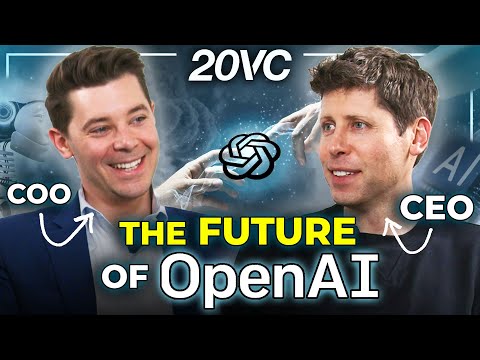
On August 11, 2026, Lightcap announced that he was leaving OpenAI to start a new venture. [12]
At the time of the announcement, Lightcap was serving as OpenAI's special projects lead. His departure concluded an approximately eight-year period at the company during which he had served as CFO, COO, and special projects lead and had helped oversee OpenAI's transition from a research-focused organization into a company operating consumer, developer, and enterprise AI products globally. [1] [5] [12]
See something wrong?