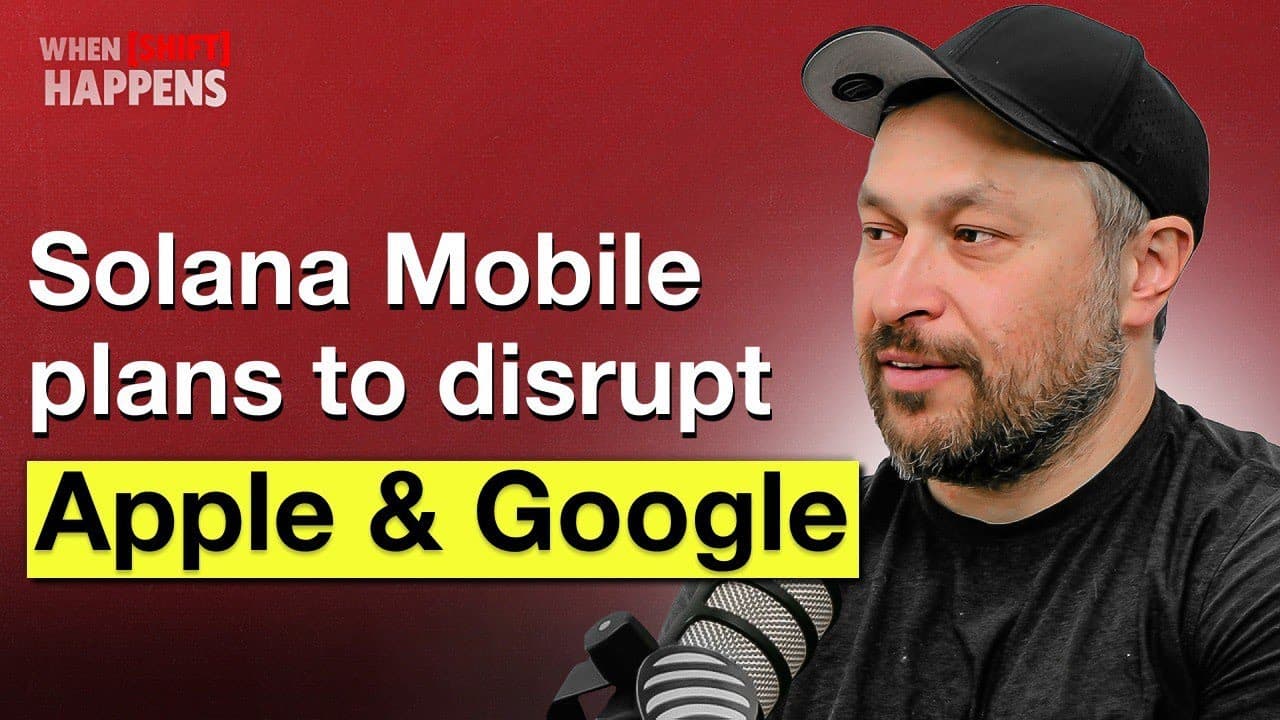
Anatoly Yakovenko
Anatoly Yakovenko is a Ukrainian-born software engineer and entrepreneur, and the Solana Labs CEO and co-founder of the Solana blockchain. He studied computer science at the University of Illinois at Urbana–Champaign and went on to work extensively on Voice over Internet Protocol (VoIP) systems and SIP/RTP protocol stacks, holding senior engineering roles at Qualcomm, Mesosphere (D2iQ), and Dropbox before founding Solana and authoring its original whitepaper. Yakovenko has also become known for his public commentary on Ethereum and blockchain decentralization, his warnings about quantum-computing risk to Bitcoin, and his advocacy for clear crypto regulation and government engagement with blockchain technology.
Education & Personal Life
Yakovenko was born in Ukraine and later immigrated to the United States, where he obtained his degree in Computer science from the University of Illinois at Urbana–Champaign in 2003.While growing up, he enjoyed making bows and arrows, and when he was a teenager, he liked building computers and programming on early versions of Linux. His biggest influences included Kafka, Burroughs, and Godel. He was involved in a project building Voice Over Internet Protocols (VOIPs) in South Central Illinois as a college student. Due to this experience, he received a job interview with Qualcomm, a company that was working on similar technology, and then moved to San Diego.
Career
Yakovenko was one of the Co-Founders of Alescere, a Voice over Internet Protocol (VoIP) startup, where he led the development of SIP and RTP protocol stacks and server components for a VoIP system for small businesses.
Afterward, he continued his career at Qualcomm, joining the company in 2003. After working for 12 years, he was given the role of Senior Staff Engineer Manager, a position he held for almost 3 years which ended in July 2016. At Qualcomm, he performed several roles and carried out several tasks, some of which include:
- Lead Architect on a team of 10 for high-performance Hexagon DSP off-loading software stack on Qualcomm chipsets for next-generation applications.
- Commercial applications including Augmented Reality, Virtual Reality, 3D Camera processing, 4K video post-processing, and GoogleX’s Project Tango.
From July 2016 to April 2017, he was also a Software engineer at Mesosphere, now known as D2iQ, where built a distributed operating system for the firm.
Before the creation of Solana, he worked as a software engineer at Dropbox from May 2017 to October 2017. While at Dropbox, he focused on distributed systems and compression.
Blockchain
Anatoly initially tried mining Bitcoin when it was first released. However, he later became more interested in Ethereum and the Ethereum Virtual Machine (EVM) because he saw it as being more innovative than Bitcoin, although he still saw it as similar to JavaScript. In 2017, he and some friends were considering starting a cryptocurrency mining startup using graphics processing units (GPUs), where they planned to use the GPUs for deep learning tasks to offset the costs of the startup. While Anatoly was originally more interested in deep learning than cryptocurrency, he eventually became interested in the later topic regarding the question of “How do we solve scalability?”.[1]
I started thinking about how we solve scaling for these kinds of problems at Qualcomm with wireless protocols and that’s what really got me to go deep down the rabbit hole.
Solana
Anatoly Yakovenko founded Solana in 2017. He is also the author of Solana's original whitepaper.[6] Although the project has gone through outages and hacks, the ecosystem has attracted a growing number of projects.[2]
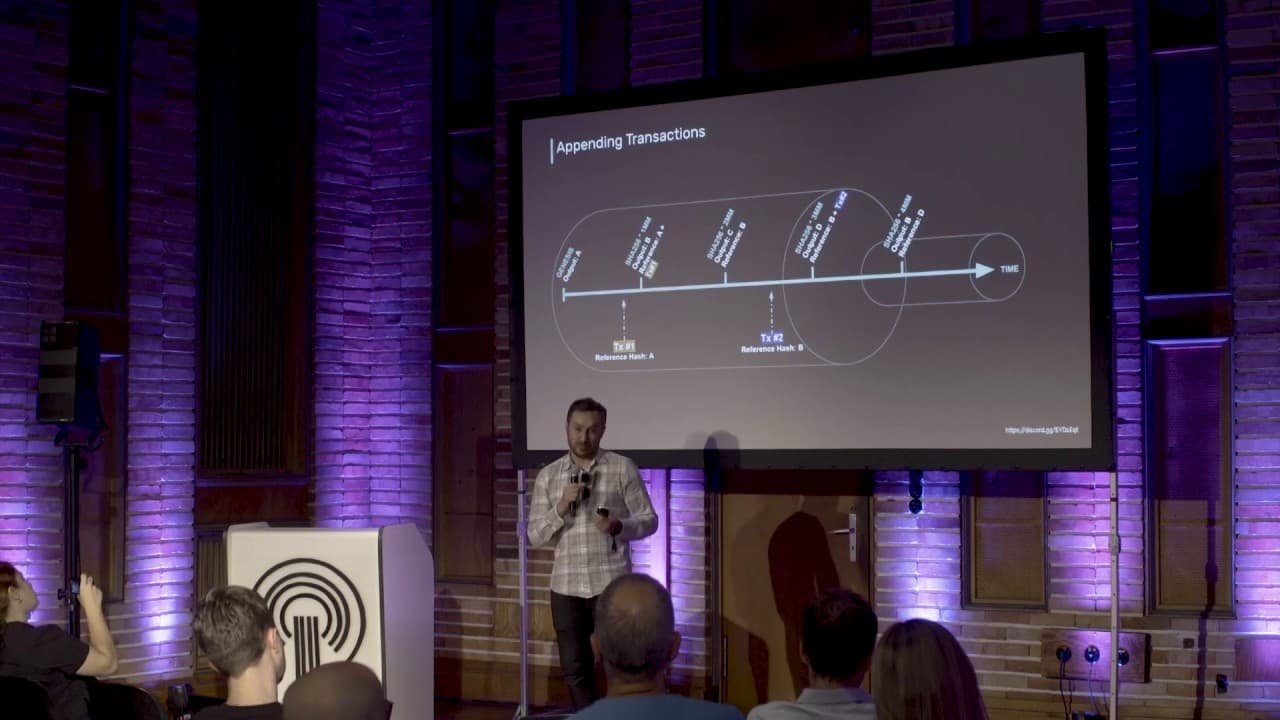
Yakovenko and his team created a new consensus algorithm called Proof of History (PoH) to attain this goal. With the implementation of PoH, the Solana blockchain can handle up to 50,000 transactions per second, making it one of the fastest blockchains globally.[3]
Solana’s roots are linked to Yakovenko’s journey as a computer engineer. Having spent the majority of his career at Qualcomm in San Diego alongside co-founder Raj Gokal, Yakovenko’s idea for the platform was inspired by that period of his life.[6]
Yakovenko was working on a side project where he built hardware for deep learning, deployed graphics processing units, and mined cryptocurrencies to test out the project. This eventually led to the creation of the platform. The idea for this platform was inspired by a concept known as time division multiple access. According to Yakovenko, this technology is related to how cellular towers alternate transmissions based on specific time intervals.
His idea was to build a system based on technology that Stanford University researchers had been working on called a verifiable delay function. Yakovenko jokes that he thought he discovered something truly novel, which prompted him to begin working on a smart contract layer platform.
Yakovenko aspires Solana to set a standard for all financial data worldwide and eradicate inefficiencies in the market.[4]
From 2025 onward, Yakovenko increasingly emphasized permissionless, open-source, formally verified infrastructure and crypto-native mobile distribution, including Seeker, a Solana-aligned crypto-native mobile initiative, and subsequent Solana Mobile efforts. He has described mobile not as a mass-adoption gateway but as a key channel for high-value financial users who need secure self-custody and direct access to on-chain markets.
Percolator Project
In his role as Solana Labs CEO, Yakovenko began designing a protocol for a high-performance, on-chain decentralized perpetual futures exchange (perps DEX) called Percolator in 2025. Built on Solana, Percolator's design features sharded matching engines to split the order book into independent, parallel engines, and an on-chain routing program for position and collateral management. By late 2025 its core data structures were described as complete and "implementation-ready" for deployment on Solana mainnet, while work on the liquidation engine and risk modeling continued.[13]
Yakovenko later used Percolator as the risk engine for an experimental devnet memecoin perpetuals market called Percolator / SOV. In this design, the memecoin itself acts as both collateral and traded asset, with fees routed into a permanent on-chain insurance fund, and the entire system explicitly framed as a prototype rather than a production trading venue. External developers have forked Percolator to build their own experiments, with Yakovenko engaging in public discussions about oracle usage, upgradeability, and containment of failure modes.[15]
An independent audit of Percolator was completed in April 2026, reporting one active bug related to cursor wrap behavior and several hard-to-reach overflow defects in profit and equity calculation paths, alongside 10 new formal “SAFE” proofs and a re-run of an existing Kani harness baseline. The auditors characterized the overflow issues as non-exploitable at default production caps and recommended them as defense-in-depth fixes, while Yakovenko’s team incorporated formal proofs to strengthen assurance around core conservation and closure properties.[16]
On Solana vs Ethereum
In a post on X in December 2023, Yakovenko suggested that Ethereum upgrades hold the key to bringing the 2 technologies closer.
He denounced the 'ETH killer' narrative as “lame.” Stating that he doesn’t anticipate a future in which Solana thrives while Ethereum dies, Yakovenko pointed to technology upgrades that could enhance interoperability between the 2 platforms instead.
From DeFi to NFTs, Ethereum has proven to be a reliable and enduring platform. Therefore, embracing Ethereum interoperability can benefit platforms like Solana and help them establish themselves in the crypto space.[5]
Decentralization Debate
In early 2026, Yakovenko claimed that the Solana network is as, or more, decentralized than Ethereum. He argued that by Satoshi Nakamoto's standards, anyone could run a node to independently verify the Solana ledger and that the system architecture lacks central authorities with control over user funds. Critiques of this position often point to Solana's historical reliance on a single main software client from Solana Labs and the high-performance hardware required to run a validator node. Alternative clients, including Jito and Jump Crypto's Firedancer, are in development to improve client diversity.[14]
Governance and Fee Reform
In August 2026, Yakovenko supported Solana governance proposal SGP-0003, which aimed to replace the network’s flat 5,000-lamport fee per signature with a 2,500-lamport inclusion fee per transaction plus a compute-based resource fee that would be fully burned, leaving priority fees unchanged. The vote concluded with 142.844 million SOL in favor, 50.146 million against, and 72.025 million abstaining out of 265.015 million SOL participating, and ultimately failed because approval stood at 53.90% once abstentions were counted, below the two-thirds supermajority threshold. Observers cited the outcome as evidence that Yakovenko can help set the network’s economic agenda but that stake-weighted governance and supermajority rules limit founder power, requiring broad validator and staker coalitions for major protocol changes.[17]
Protocol Evolution Debate
In January 2026, Yakovenko publicly disagreed with Ethereum co-founder Vitalik Buterin’s thesis that base-layer blockchains should eventually ossify. Responding to Buterin’s “walkaway test,” he argued that protocols such as Solana must continue to iterate to remain “materially useful to humans,” with upgrades driven by real developer and user needs rather than a fixed end state. At the same time, he maintained that most proposed changes should be rejected and that no single organization, including Solana Labs, should be indispensable for protocol evolution, envisioning a future where broader contributors ship improvements funded through governance.[18]
On Memecoins and NFTs
Yakovenko has stated that the rise of memecoins and NFTs on the Solana blockchain was not a planned outcome but rather a consequence of slow regulatory development. He admitted that the Solana team's original mission was to create an infrastructure capable of bringing traditional finance on-chain at high speeds, but speculative assets were the ones that ultimately gained the most traction.[8]
He commented that anyone in the world can create markets for anything, including memecoins and NFTs, and that these took off partly because regulation was slow to adapt. Yakovenko also agreed that it was "annoying" that these assets had become more successful than what he considered Solana's "true mission." Despite his criticism and his view that memecoins and NFTs have no fundamental value, he has acknowledged their ability to generate significant revenue, comparing them to loot boxes in the mobile gaming industry.[8]
On Quantum Threat to Bitcoin
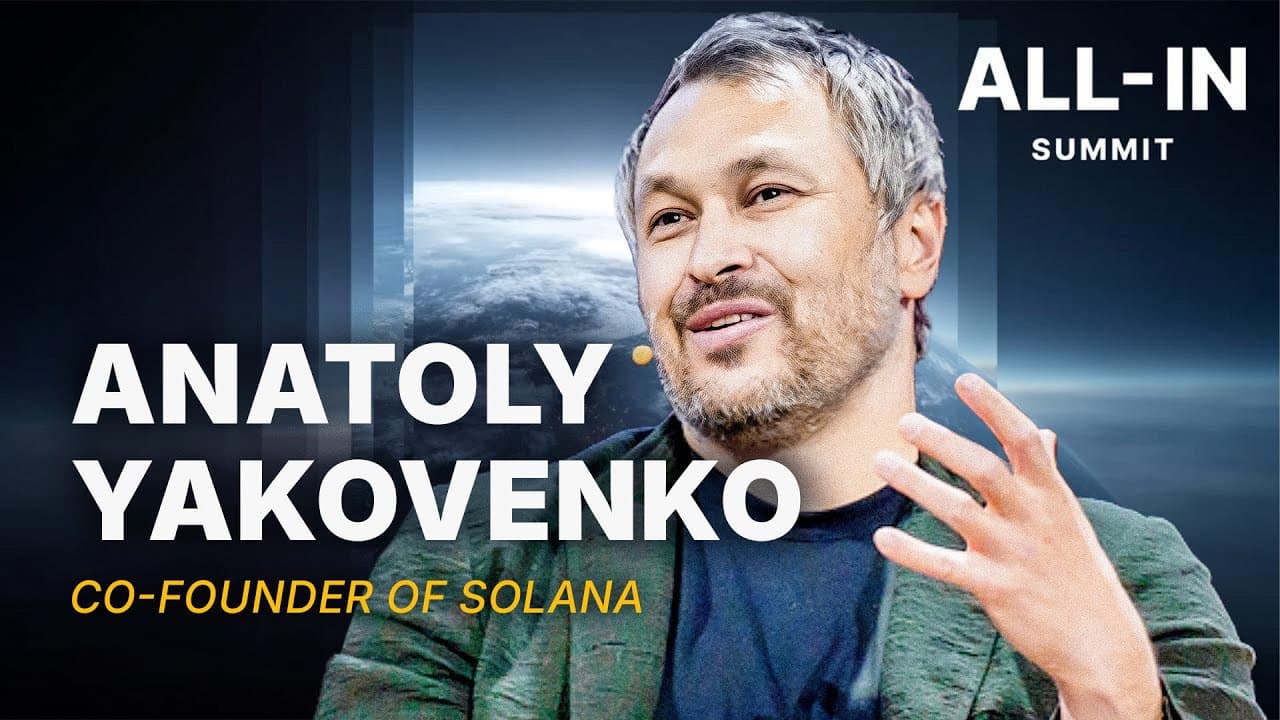
At the All-In Summit in September 2025, Yakovenko issued a warning regarding the potential threat of quantum computing to Bitcoin's security. In 2025, he estimated a "50/50" probability that quantum computers will be powerful enough to break Bitcoin's current cryptographic protections by 2030. He urged the Bitcoin community to begin migrating the network to a quantum-resistant signature scheme to preempt this risk.[9][10][11]
The primary concern is that a sufficiently powerful quantum computer could run algorithms, such as Shor's algorithm, capable of cracking the Elliptic Curve Digital Signature Algorithm (ECDSA) that secures Bitcoin private keys. This would allow attackers to forge transactions and compromise wallets. Yakovenko based his five-year timeline on the rapid acceleration seen in artificial intelligence, where concepts move from research papers to real-world implementation at an "astounding" pace.[9][10]
Implementing such a change would require a hard fork of the Bitcoin network, a technically complex and often contentious process that lacks backward compatibility. The crypto community remains divided on the urgency of this threat. While Yakovenko advocates for immediate action, other figures like Blockstream CEO Adam Back and Jan3 founder Samson Mow believe the threat is further off, estimating it to be one to two decades away.[9][10][12]
Crypto & Lawmakers
On cryptocurrency and the government, Anatoly Yakovenko in an interview with Fortune, urges the government to be at the forefront of investing in blockchain research and development.[7]
He encourages policymakers to experiment with the technology themselves stating that ethics rules prohibit most government officials who regulate digital assets from using them which makes it difficult to craft good policy:
"Imagine trying to regulate social media without having ever opened Facebook!"
Anatoly further listed creative solutions that give policymakers access to the technology:
"For example, the government could take advantage of crypto’s speed and cost-effectiveness to send humanitarian relief funds and launch decentralized communications networks in low-connectivity areas."[7]