0% read
Last updated:
Warden Protocol
Warden Protocol is an infrastructure framework for developing, deploying, and coordinating AI Agents across Web2 and Web3 environments. Its ecosystem includes Warden Studio, Warden Chain, Warden Wallet, and the Warden Agent Hub, which provide tools for Agent development, identity, verification, interaction, and distribution. [7]
Overview
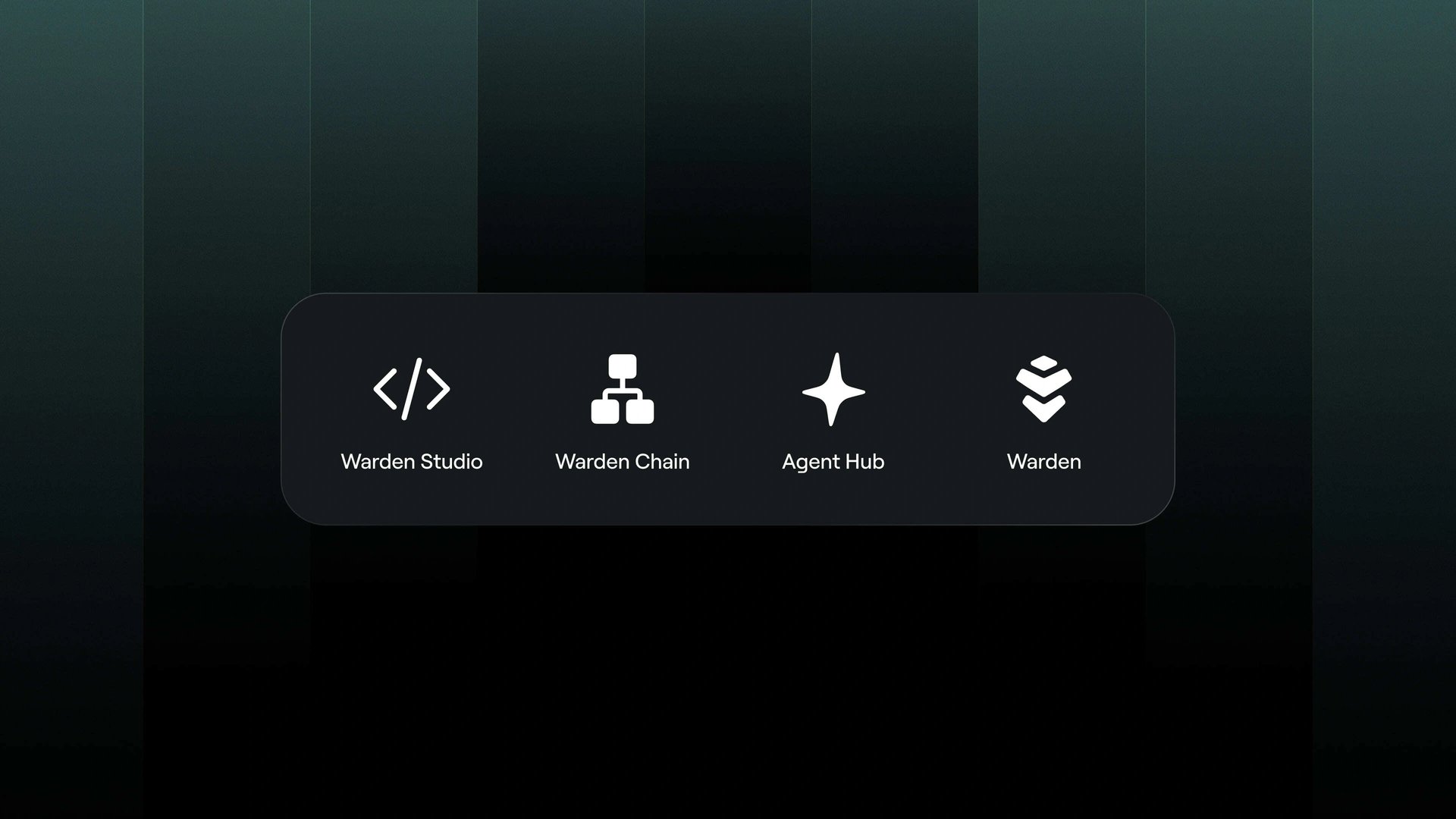
Warden Protocol is a full-stack framework for building, deploying, distributing, monetizing, and governing AI Agents across Web2 and Web3 ecosystems. Its infrastructure includes Warden Studio for developing and publishing Agents, Warden Chain, an EVM blockchain that gives Agents identity, reputation, spending, and security capabilities, and Warden, an Agentic Wallet that lets users discover and interact with Agents, models, and blockchains through natural-language commands. The protocol supports different types of Agents, including financial, autopilot, institutional, ecosystem, and community Agents, and its three-layer architecture includes a blockchain layer for Agent identity and coordination, a verifiability layer for assessing the integrity and execution of AI models, and an application layer for developing and distributing Agents. [1]
Products
Warden Studio

Warden Studio is a platform for developing, publishing, and monetizing AI Agents within the Warden ecosystem. It provides tools to register Agents onchain, establish unique onchain identities, and make them discoverable through Warden's Agent network. The platform supports both onchain and offchain Agents and includes payment infrastructure for services, including stablecoin payments, per-inference billing, and subscription-based pricing. Warden Studio also supports standards including ERC-8004 and x402, allowing Agent identities and payment mechanisms to integrate with broader blockchain and AI infrastructure. Developers can use the platform to build, test, and publish Agents that users can access through Warden's applications. [2] [5]
Warden Chain
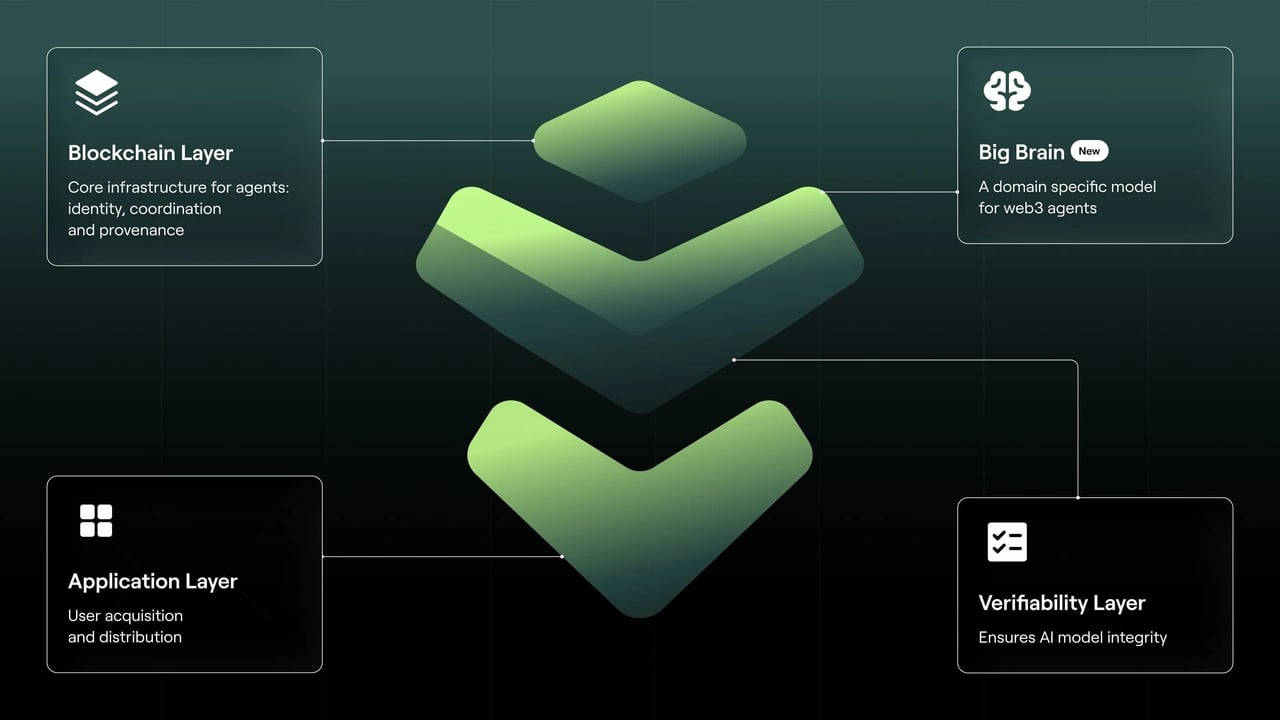
Warden Chain is an EVM-compatible blockchain designed to provide infrastructure for AI Agents and serve as a coordination layer for the Warden Agent Network. Each Agent can receive a unique cryptographic identity used for authentication and signing, while the chain records Agent activity and reputation and supports balances, payments, and service transactions. Warden Chain also provides policy controls for Agent spending and uses Proof of Inference to record interactions related to metered services. The network supports Agent publication across different frameworks and provides onchain identity, discoverability, interoperability, and monetization through payment models such as pay-per-use and subscriptions. It also anchors aspects of Agent activity onchain through Proof of Prompt records, which can support auditing and independent analysis, while its infrastructure supports SPEX, Warden's verification layer for assessing AI model execution and the reliability of Agent outputs. [1] [3]
Warden Wallet
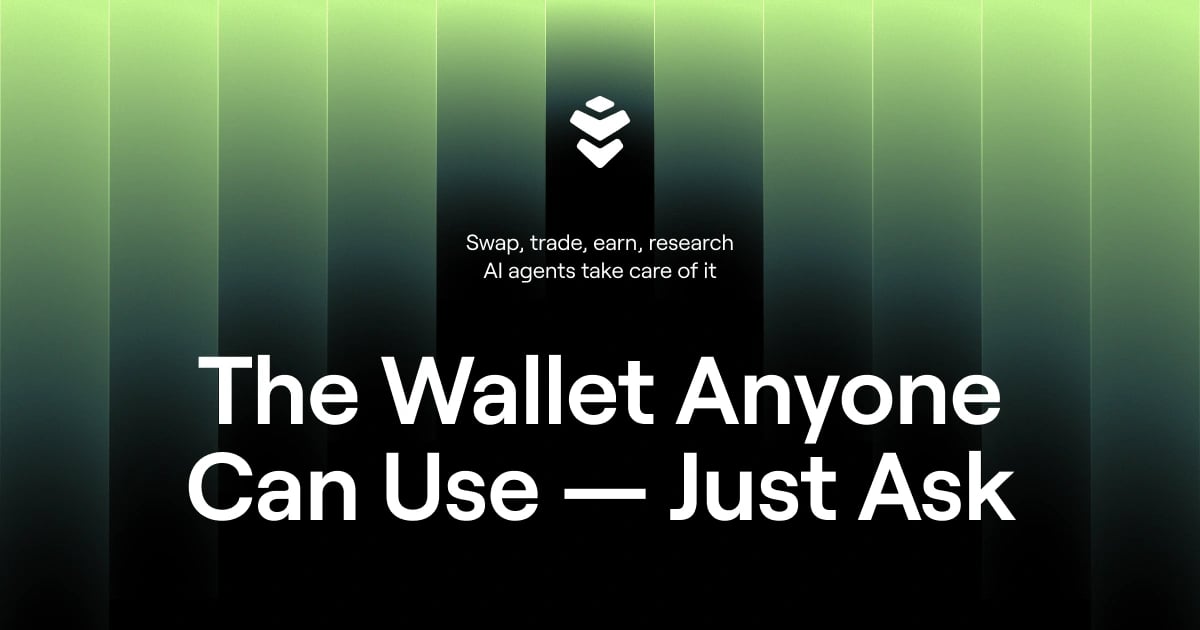
Warden is an agentic wallet built on Warden Protocol that provides a single interface to discover and interact with AI Agents, models, blockchains, and decentralized applications. Users can communicate with Agents through natural-language commands to perform blockchain operations such as bridging, minting, trading, and staking without directly managing the underlying technical processes. The wallet supports networks including Solana, Ethereum, BNB Chain, and Base, along with their associated tokens and applications. Warden also provides access to an Agent Hub where users can discover Agents and interact with their services, while its AI-assisted interface supports activities such as trading, research, prediction, and financial management. [1] [4]
Agent Hub
Warden Agent Hub is a marketplace within the Warden ecosystem where users can discover and interact with specialized AI Agents for activities across Web2 and Web3. Rather than relying on a single general-purpose assistant, the Hub provides individual Agents with dedicated functions and conversational interfaces, allowing users to perform tasks such as trading, portfolio management, blockchain research, market analysis, risk assessment, and creative work through natural-language interactions. Agents can also work together and combine capabilities to handle workflows that may require multiple specialized functions.
The Hub includes Agents connected to services and platforms such as Uniswap, Jupiter, CoinGecko, Messari, Google, and other applications. Its Agent categories include financial Agents for DeFi activities, autopilot Agents designed to operate without continuous user interaction, institutional Agents focused on portfolio management and risk controls, and ecosystem Agents that support blockchain monitoring and governance. The Hub also provides infrastructure for Agent monetization, including configurable pricing models and automated tracking of usage and payments, while enabling developers to publish Agents to the Warden network. [1] [8]
Technology
SPEX
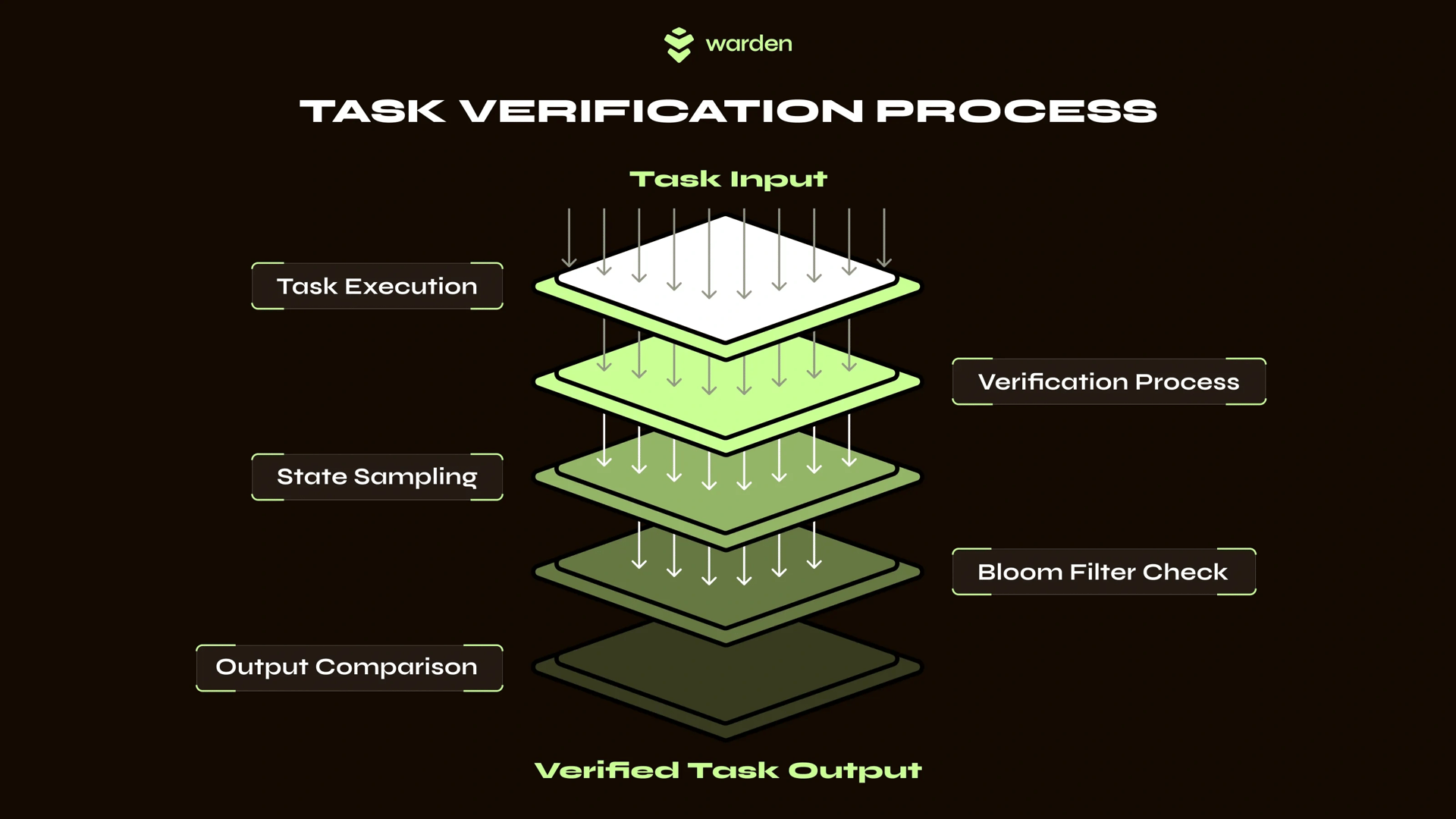
Statistical Proof of Execution (SPEX) is a sampling-based verifiable computing protocol that provides probabilistic guarantees that computational tasks were executed correctly, including tasks with non-deterministic outputs such as those produced by large language models and stochastic machine learning processes. Within Warden, SPEX serves as a verifiability layer for AI by verifying that the intended model was used and that its outputs were not altered during execution. Rather than fully re-executing an entire computation, SPEX samples complete executions and intermediate computational states for selective re-execution, using cryptographic summaries to identify inconsistencies. The protocol uses Bloom filters to encode computational states and is designed for low-overhead, parallelizable verification, with a solver generating a cryptographic proof of execution and a verifier randomly checking portions of the computation against the proof and final output. An open-source reference implementation, warden-spex, is available. [6]
WARD
WARD is the native utility token of the Warden Protocol ecosystem and is used across Warden Chain and the Warden application. Its functions include governance, staking, rewards, and payments for developers publishing AI Agents on the network. Within Warden, WARD is also intended to support gas abstraction and provide access to certain gated features, including future subscription tiers. The protocol uses WARD-based incentive programs to support ecosystem and community development, incentivize developers building and deploying applications, and fund research and development projects that add functionality or integrations to Warden's core infrastructure. [10]
Tokenomics
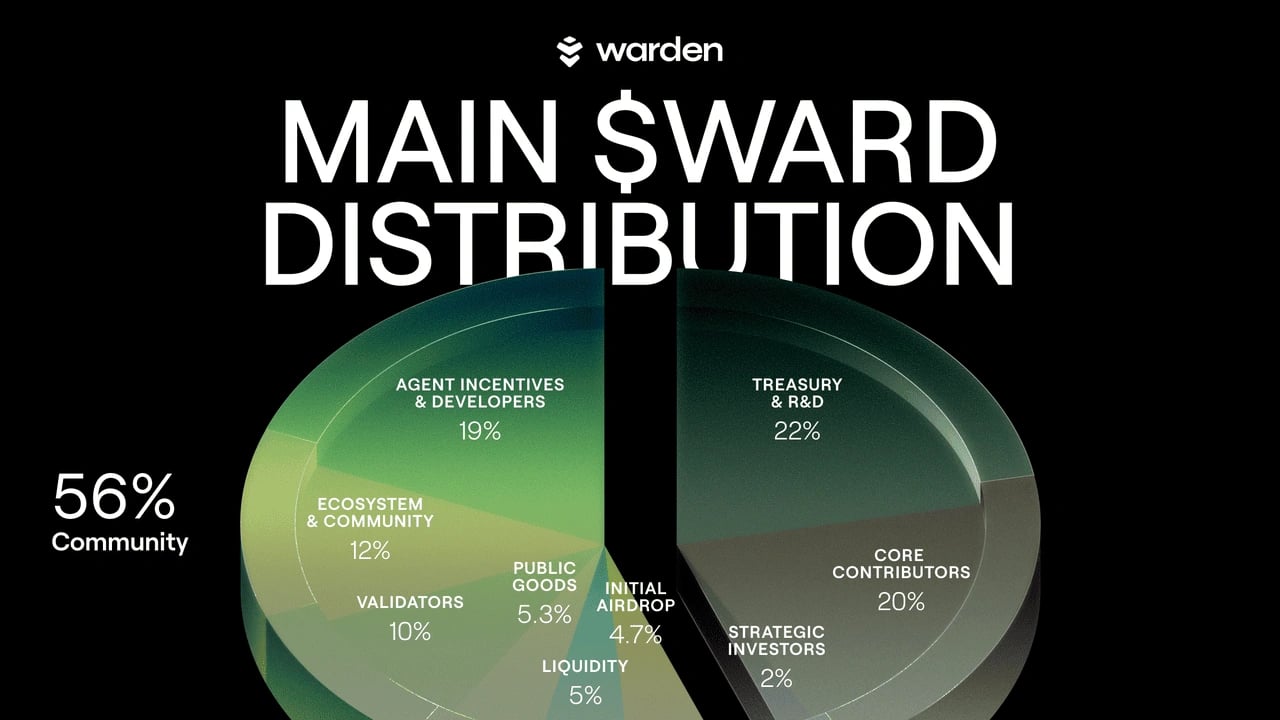
WARD has a total supply of 1B tokens and has the following distribution: [11]
- Treasury & R&D: 22%
- Core Contributors: 20%
- Agent Incentives & Dev: 19%
- Ecosystem & Community: 12%
- Validators: 10%
- Public Goods: 5.3%
- Liquidity: 5%
- Initial Airdrop: 4.7%
- Strategic Investors: 2%
Partnerships
See something wrong?