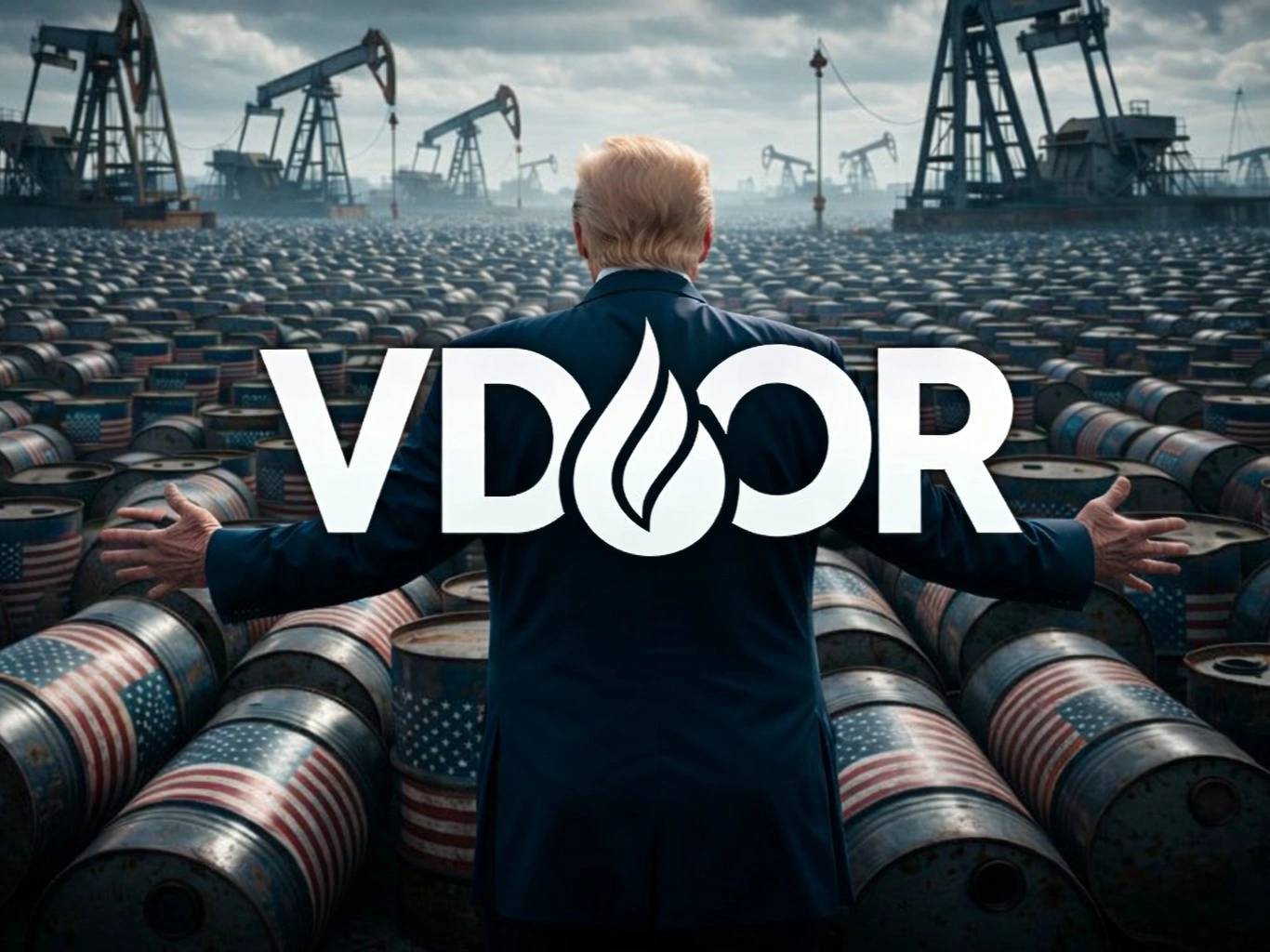
Vanguard Digital Oil Reserve (VDOR)
Vanguard Digital Oil Reserve (VDOR) is a cryptocurrency project on the Solana blockchain that claims to represent a tokenized, decentralized system for managing strategic petroleum reserves.[1][2] The VDOR token launched on Solana as an SPL token in late 2025, with trading activity discussed by exchanges and analytics platforms in early 2026, and is marketed as having a fixed total supply of 1 billion tokens.[3][4][5]
Compare Cryptoassets
Select an asset to compare its price and other stats against Vanguard Digital Oil Reserve (VDOR).
Overview
Vanguard Digital Oil Reserve presents itself, in its own marketing materials, as an independent initiative designed to tokenize and manage physical assets, including crude oil, refined products, and financial derivatives like futures contracts.[1] According to these public-facing materials, the project's primary stated purpose is to offer sovereign institutions and large asset managers a blockchain-based platform for the consolidation, protection, and strategic management of global oil resources. The stated operational model involves using the Solana blockchain to provide on-chain verification of these tokenized assets, with the aim of enabling governance and liquidity.[1][2]
External coverage indicates that VDOR launched on Solana as an SPL token with a stated fixed supply of 1 billion tokens in late 2025, with trading appearing on Solana decentralized exchanges (DEXs) by March 2026.[3][6][5]
BTCC, CoinCodex, Phemex, Bitget, and Webopedia characterize VDOR as a speculative digital asset whose trading activity is associated with meme
- and narrative-driven markets.[2][3][6][4][5] These sources report that there is, as of early April 2026, no independently verified proof of reserves, no confirmed institutional custody arrangements, and no demonstrated linkage between token supply and any documented portfolio of crude oil or futures contracts. Early reporting documented a disclaimer on the VDOR website stating that institutional references were for illustrative purposes only, and independent reviewers continue to report no public confirmation from any of the named institutions, including The Vanguard Group, Deloitte, PwC, or any sovereign wealth fund.[2][4][5]
Project's Stated Goals and Vision
According to its official marketing materials, the Vanguard Digital Oil Reserve mission is built upon four primary objectives that it presents as addressing challenges in the global energy market.[1]
- Energy Sovereignty: The project claims its core purpose is to maintain and manage strategic petroleum reserves across multiple continents. This is intended, according to the project, to provide partner nations with a buffer against market volatility and reduce their dependence on potentially hostile energy suppliers.[1]
- Price Stability: VDOR purports to use its stated physical oil reserves in conjunction with a large portfolio of oil futures contracts. This combined approach is described by the project as being designed to mitigate severe price shocks caused by geopolitical instability and speculative trading in the energy markets.[1]
- Institutional Custody: The project states that it secures its physical petroleum assets through "military-grade" security and custody protocols. It claims to be built on an exclusive framework designed to manage multi-trillion-dollar sovereign portfolios.[1]
- Global Distribution: VDOR claims to operate a decentralized network of storage facilities. This network is described by the project as being designed for the rapid deployment of energy resources, such as gasoline and jet fuel, to any location in the world during a supply crisis.[1]
These stated goals form the foundation of the project's public narrative, which presents VDOR as infrastructure for global energy security and institutional energy management. External analyses by BTCC, CoinCodex, Phemex, Bitget, and Webopedia report that there is no independently verifiable public evidence that the claimed reserves, custody arrangements, or sovereign partnerships exist, and therefore describe these objectives as marketing claims that have not been independently verified or demonstrated in practice.[2][3][6][4][5]
Technical Details
- Token Name: Digital Oil Reserve Token
- Symbol: VDOR
- Blockchain: Solana
- Token Standard: SPL (Solana Program Library)
- Contract Address:
VDoRrZix72Er41foJAdKrwFqYNozPbktuPa4Xy1A7Au[1]
External token trackers and exchange overviews describe VDOR as a Solana SPL token that began trading in late 2025, with market activity visible on Solana decentralized exchanges by March 2026.[3][6][5] These sources state that the total supply is fixed at 1 billion VDOR tokens and that, at launch, the full supply was minted to a single Solana wallet address before being distributed into liquidity pools and secondary-market trading.[3][4]
Analysts note that VDOR trading is concentrated on Solana-based DEXs, with limited liquidity and relatively small volumes compared to major cryptocurrencies as of late March 2026.[3][7] There is no on-chain redemption mechanism, staking system, or oracle-based price link that programmatically ties the VDOR token’s value to spot oil prices or to any verifiable reserve index; these same sources describe price movements as influenced by speculative trading, oil-related headlines, and general meme-token market sentiment.[2][4]
While the VDOR token exists and is tradable as an SPL token, this technical existence on the blockchain does not, by itself, provide independent verification of the project's claims of being an asset-backed commodity token.[2][3] External reviewers in 2025–2026 describe VDOR as a speculative Solana meme or narrative token and state that they have not seen independently verified evidence supporting its presentation as a real-world asset instrument.[6][5]
Tokenomics and Liquidity
Third-party overviews describe VDOR as having a total and fully circulating supply of 1 billion tokens, with no disclosed vesting schedules or lockup periods and no publicly documented token allocation breakdown beyond DEX liquidity and secondary-market holdings.[3][5] Bitget and Webopedia characterize the team as anonymous and note that there is no detailed tokenomics documentation explaining how tokens were initially distributed or how any proceeds are managed.[4][5]
Liquidity is described as low and concentrated in a small number of Solana DEX pools, with relatively modest daily volumes as of late March 2026 and limited order-book depth compared to large-cap cryptocurrencies.[3][6] Analysts report that VDOR is exposed to significant price volatility, slippage, and the potential for price impact from large trades, particularly during periods of heightened retail interest associated with oil-market headlines or search trends.[2][4]