0% read
Last updated:
Thibault Sottiaux
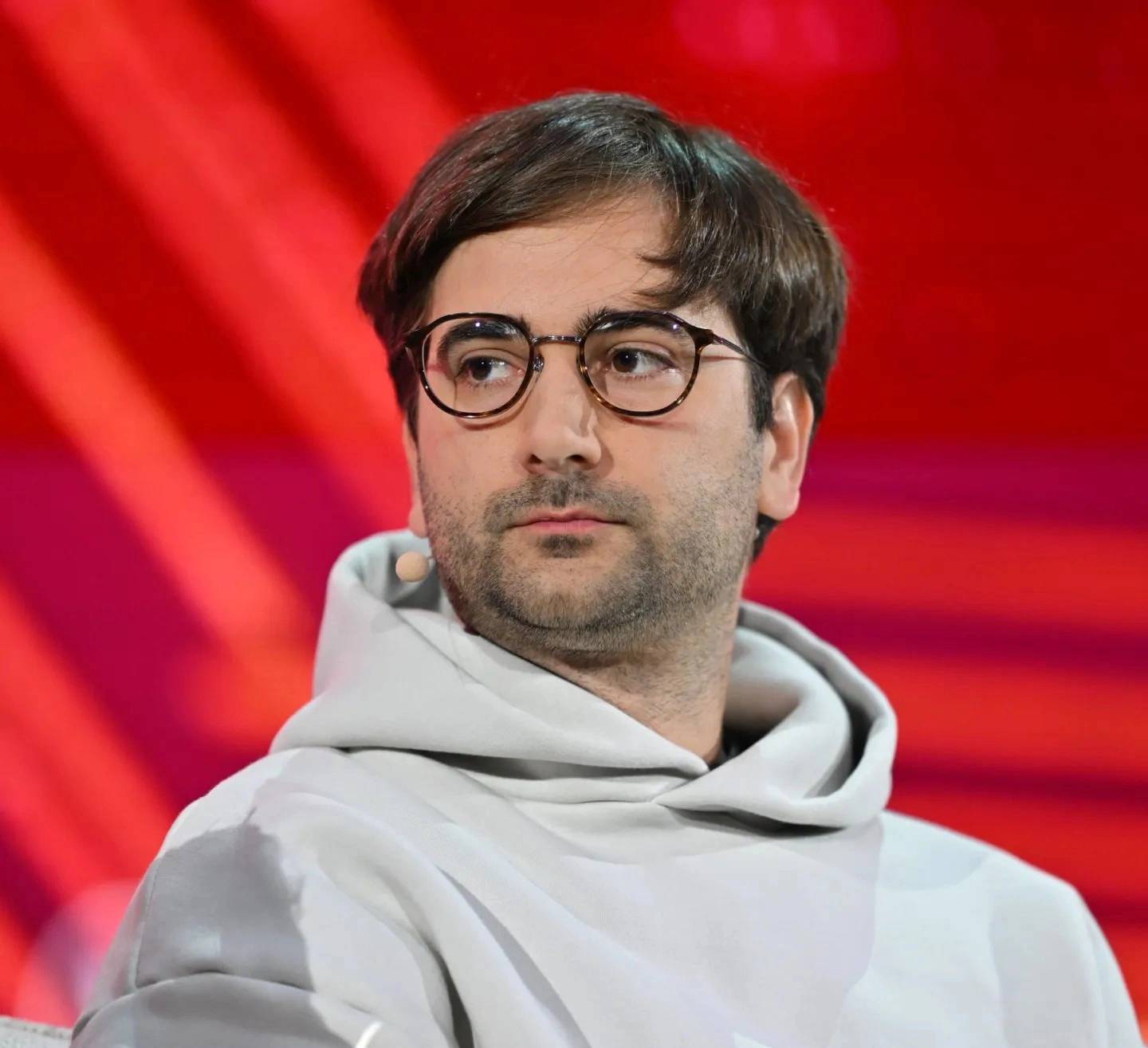
Thibault Sottiaux is a Belgian software engineer and product leader who serves as OpenAI's head of core products and head of product for its core offerings, leading all core products including the public API, agent infrastructure, enterprise tools, ChatGPT (and ChatGPT Work), and Codex.[8][10] In this role he oversees efforts to combine Codex and ChatGPT into a personalized AI agent "super app" that OpenAI describes as one of its biggest consumer bets, reporting directly to OpenAI president Greg Brockman.[8][10]
Education
He earned a Bachelor of Applied Science in Computer Science and Applied Mathematics and a Master of Science in Computational and Applied Mathematics from UCLouvain in Belgium.[1]
Early Career
Thibault Sottiaux began his career in Belgium, working in research and development at N-SIDE, where he contributed to applied optimization and analytics projects. Alongside this early work, he held short-term roles as a junior consultant at ProCapital, a visiting software engineer at LSM Conseil, and a teaching assistant at UCLouvain.[1]
Thibault Sottiaux joined Google in London in January 2015 as a Software Engineer and was later promoted to Senior Software Engineer, holding engineering roles there until April 2018. After leaving Google, he moved to Google DeepMind as a Staff Software Engineer, where he later led a 20+ software engineering team responsible for AI and machine learning workflow infrastructure for DeepMind research, and subsequently a 50+ multidisciplinary team as Gemini Human Data Lead, focused on fine-tuning data and human evaluations for the Gemini model family.[1]
Career
OpenAI — Codex Engineering Lead
In 2025, Thibault Sottiaux joined OpenAI as the engineering lead for Codex, described as OpenAI's agentic coding system.[2] Codex is presented as a software engineering agent that operates in sandboxed environments, collaborating across multiple layers of the software development stack rather than focusing on a single tool or feature.[2] Sottiaux has described the team's "agent-first" approach, in which they prioritize building a broadly capable agent and only then decide which specific product endpoints to surface, positioning Codex as a general-purpose coding agent rather than a narrowly scoped assistant.[4]
Under his guidance, the concept of a "harness" was emphasized — a lightweight software scaffolding that orchestrates tools, context, and safeguards around the agent but is intended to become simpler as model capabilities improve.[2][4] In an OpenAI Forum event, he was introduced as a Member of Technical Staff at OpenAI who leads Codex, described there as OpenAI's software engineering agent evolving beyond code toward broader knowledge work and productivity use cases.[9]
Sottiaux discussed Codex's design and development publicly alongside OpenAI co-founder Greg Brockman on the OpenAI Podcast, in a conversation about the future of coding with AI and Codex's potential beyond traditional programming tasks.[3] He appeared on Software Engineering Daily with Codex product designer Ed Bayes to explain Codex's architecture, the co-evolution of models and harnesses, and its place in the broader shift toward AI coding agents.[2] He also initiated the "100 Days of Codex" program on the social media platform X, highlighting and rewarding individuals who demonstrated creative or impactful uses of Codex.[5]
OpenAI — General Manager, ChatGPT and Codex
By mid-2026, Thibault Sottiaux had become OpenAI's head of core products and head of product for its core offerings, leading all core products including the public API, agent infrastructure, enterprise tools, ChatGPT (including ChatGPT Work), and Codex.[8][10] He reports directly to OpenAI president Greg Brockman and is responsible for integrating OpenAI's foundational models into user-facing applications and platform products.[10]
A Wired profile described Sottiaux as the engineer overseeing a sweeping overhaul of ChatGPT into a personalized AI agent "super app," combining ChatGPT and Codex into a single platform that OpenAI has characterized as one of its biggest consumer bets.[10] In a TechCrunch interview, he characterized his position as leading "all of core products" at OpenAI, including the API, agent infrastructure, enterprise offerings, ChatGPT (and ChatGPT Work), and Codex, in the context of deploying AI agents to a broad base of professional and non-technical users.[8] As the head of ChatGPT and Codex, he also appeared on the Silicon Valley Girl podcast to discuss how AI agents could assist people who do not actively use AI tools, reflecting his focus on turning frontier models into widely accessible assistants.[7]
See something wrong?
Wiki Powered byIQ
Categories
Tags
Verification
Events
Views
1,721
Categories
Tags
Verification
Events
Views
1,721
Official Website:
Social Profiles: