Tarek Mansour
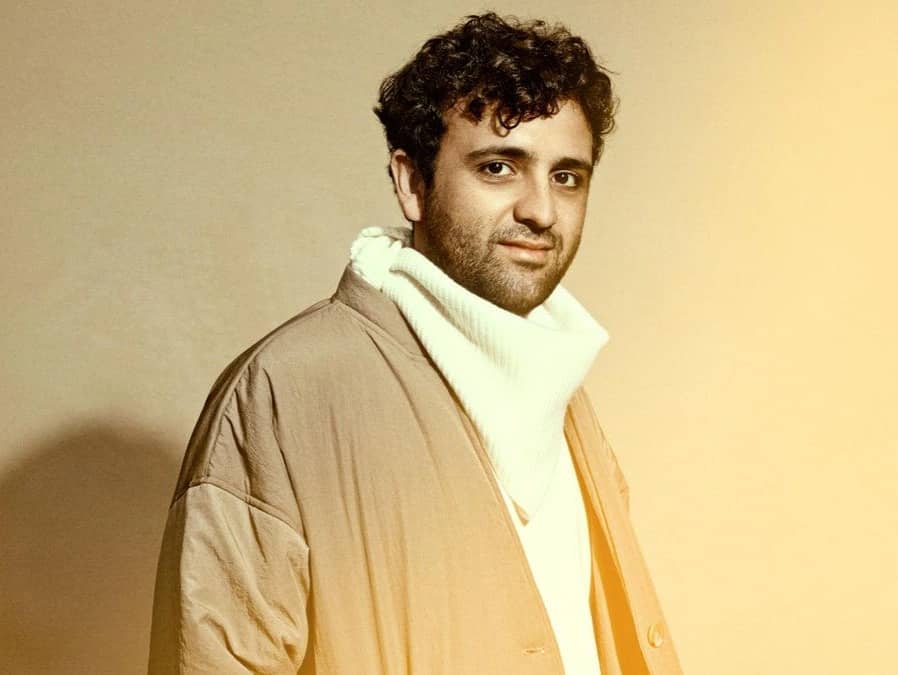
Tarek Mansour is an entrepreneur and financial professional best known as the co-founder and Chief Executive Officer (CEO) of Kalshi, the first financial exchange in the United States federally regulated for trading on the outcome of events. Shaped by his early experiences with political and economic volatility, Mansour's work is driven by the goal of democratizing financial tools, allowing individuals to manage and capitalize on everyday risks. Before founding Kalshi, he worked as a quantitative and algorithmic trader at prominent financial firms, including Goldman Sachs and Citadel. [1] [2]
Early Life and Education
Tarek Mansour was born in California, USA, and spent his childhood in Lebanon. Growing up amidst periods of political and economic instability in Lebanon gave him a firsthand perspective on how real-world events directly impact people's financial well-being, an experience that would later influence his entrepreneurial vision. For his higher education, he returned to the United States to attend the Massachusetts Institute of Technology (MIT). At MIT, he studied mathematics and computer science, and it was there that he met his future co-founder, Luana Lopes Lara. [1] [2]
Career
Mansour's career began in the high-frequency and quantitative trading sectors of the financial industry before he transitioned into entrepreneurship. [2]
Early Finance Career
After graduating from MIT, Mansour started his career at Goldman Sachs, where he worked as an algorithmic and quantitative trader, serving as a structured credit and equities analyst. He later moved to the prominent hedge fund Citadel, where he was a quantitative trader in the Global Quantitative Strategies (GQS) unit, focusing on global macro trading. [1] [2]
It was during his time at these institutions that Mansour developed the idea for Kalshi. He observed that much of the institutional trading activity was dedicated to hedging against or speculating on the outcomes of major global events, such as Brexit. The tools used for this were complex and expensive proxy instruments like swaps and options, which were inefficient and available only to large institutions and sophisticated investors. Mansour believed this was a fundamental market inefficiency; while everyone has opinions and is exposed to the risks of major events, only a select few had the tools to act on them financially. He identified a market gap for a direct, accessible, and less costly platform that would allow individuals to trade directly on the outcomes of these events, effectively democratizing a capability previously reserved for Wall Street. [2]
Kalshi
In 2018, Mansour co-founded Kalshi with Luana Lopes Lara, serving as the company's CEO. Their founding mission was to create a new, regulated asset class based on the outcomes of real-world events. Mansour envisioned an "exchange for everything," enabling people to hedge against everyday risks—such as rising gas prices or flight delays—and capitalize on their knowledge and beliefs about the future. [1] [2]
Kalshi allows users to trade "event contracts," which are structured around a "yes" or "no" question about a future event, such as "Will inflation be above 3% this quarter?" or "Will a hurricane make landfall in Florida?" These contracts trade on a scale from 1¢ to 99¢. If the event occurs (a "yes" outcome), the contract settles at 0. The market price of a contract at any given time reflects the traders' collective belief in the probability of the event occurring, creating a powerful real-time forecasting tool. [1] [2]
As CEO, Mansour led Kalshi through its critical regulatory and growth phases. From the outset, he pursued a regulation-first strategy, engaging in a multi-year process with the U.S. Commodity Futures Trading Commission (CFTC). This culminated in a significant milestone in November 2020, when the CFTC granted Kalshi the authority to operate as a Designated Contract Market (DCM). This federal designation was central to Mansour's vision, providing a robust legal framework for the exchange and distinguishing it from unregulated prediction markets. The platform officially launched to the public in July 2021. Under Mansour's leadership, Kalshi also secured significant venture capital, including a $30 million Series A funding round led by Sequoia Capital, with participation from notable individual investors such as Charles Schwab and Henry Kravis. [1]
By early 2026, Kalshi, along with its competitor Polymarket, represented over 90% of the notional volume in the prediction market industry. [3]
Legal Challenges
In early 2026, Mansour and Kalshi faced a significant legal challenge from the state of Arizona, which initiated a high-profile debate over state versus federal regulatory jurisdiction. [1]
Arizona Indictment (2026)
On February 22, 2026, an Arizona grand jury returned an indictment against Kalshi, with the legal action becoming public knowledge around March 18, 2026. The charges were brought forth by the office of Arizona Attorney General Kris Mayes and the Arizona Corporation Commission (ACC) Securities Division. The indictment included 20 criminal counts, with accusations of selling unregistered securities, illegally operating as an enterprise, and running an illegal gambling business by offering wagers on elections, which is prohibited under Arizona state law. The state's fundamental argument was that Kalshi's event contracts constituted "illegal options" and were not compliant with Arizona's laws. [1] [3]
In response, Mansour became the public face of the company's defense, staunchly denying the charges and affirming that Kalshi would fight them. In interviews with financial news outlets, he stated that he was "very surprised" by the indictment. He characterized the legal battle as a jurisdictional dispute, describing it as a "classic federal-state turf war." [1] [3]
Mansour's core defense rests on the principle of federal preemption. He argues that because Kalshi operates as a Designated Contract Market under the federal authority of the CFTC, it should be immune to conflicting state-level securities or gambling laws. He told Bloomberg in March 2026 that the case was a "total overstep," elaborating, "This is a situation where you have a state regulator who’s trying to expand their turf... We’re a federally regulated entity." [1] [3]
He further explained his position on the conflict between state and federal directives, stating, "The CFTC has said, 'Do it this way,' and the state is saying, 'We don't care what the CFTC said; we want them to do it this other way' ... And that's exactly the kind of situation that federal preemption was made for." [1]
Awards and Recognition
In 2021, for his role in co-founding and leading Kalshi, Tarek Mansour was named to the Forbes 30 Under 30 list for Finance. [1]