0% read
Melanie Shapiro
Melanie Shapiro
Melanie Shapiro is the co-founder of Token, a startup based in Rochester, New York, focused on revolutionizing identity verification through advanced wearable technology. Shapiro has played a pivotal role in the development and leadership of Token, which aims to enhance security in the digital landscape with its innovative products. Her efforts have been instrumental in addressing key cybersecurity challenges, particularly in the sphere of user authentication and identity management. [1] [2]
Education
Melanie Shapiro received a Bachelor of Fine Arts (BFA) from Rochester Institute of Technology, where she studied from 2003 to 2007. During this period, she participated in several student and academic organizations, including Zeta Tau Alpha, Order of Omega, Rho Lambda Honor Society, and Gamma Sigma Alpha.
Between 2007 and 2008, Shapiro completed a Master of Business Administration (MBA) in Marketing at Rochester Institute of Technology. She was also a member of Beta Gamma Sigma during her graduate studies.
Shapiro later attended Henley Business School, University of Reading, where she completed a Doctorate in Consumer Behavior from 2009 to 2013. [1] [6]
Career
Melanie Shapiro has worked in the fields of technology, entrepreneurship, cybersecurity, and education. Her professional experience includes positions in business, research, academia, and nonprofit organizations.
Melanie Shapiro has worked in the fields of technology, entrepreneurship, cybersecurity, and education. Her professional experience includes positions in business, research, academia, and nonprofit organizations.
Early Ventures and Digsby
In 2007, Shapiro co-founded Digsby (dotSyntax, LLC), a messaging platform that combined multiple communication and social networking services within a single application. She remained with the company until 2010. Digsby was acquired by Tagged, Inc. in April 2011.
Academic and Research Roles
Between 2008 and 2010, Shapiro served as an Adjunct Professor at Rochester Institute of Technology. From 2011 to 2012, she worked in a research role at Microsoft.
Token
Shapiro founded Token in 2014 and served as the company's Chief Executive Officer until December 2021. The company, based in the New York City metropolitan area, developed technologies related to digital identity verification and authentication.
Among its products was the Token Ring, a biometric smart ring that incorporated fingerprint-based authentication. The device was designed to provide access to digital credentials and identity-related functions through biometric verification.
Token's technology combined authentication, access management, and identity verification features within a wearable device. The system stored biometric information on the device itself rather than in external databases.
The company received funding from multiple investors, including a $1.75 million investment from New York Ventures. In 2019, Token was involved in litigation related to allegations of financial irregularities.
Nonprofit and Advisory Roles
Since January 2020, Shapiro has served as a Crisis Counselor for Crisis Text Line.
In April 2022, she joined the Board of Directors of Code to Inspire, a nonprofit organization that provides coding education for girls and women in Afghanistan.
Since October 2022, she has served as a National Council Member for the Golisano College of Computing and Information Sciences at Rochester Institute of Technology.
Later Activities
Following her departure from the chief executive role at Token in 2021, Shapiro remained associated with matters related to cybersecurity, digital authentication, and identity technologies. As of 2026, she continues to be connected to the development and application of technologies associated with Token while no longer holding day-to-day operational responsibilities within the company. [2] [1] [3] [5] [4] [6] [13] [12] [10] [11] [9] [8] [7]
Interviews
TED Talk on Digital Identity and Trust #01
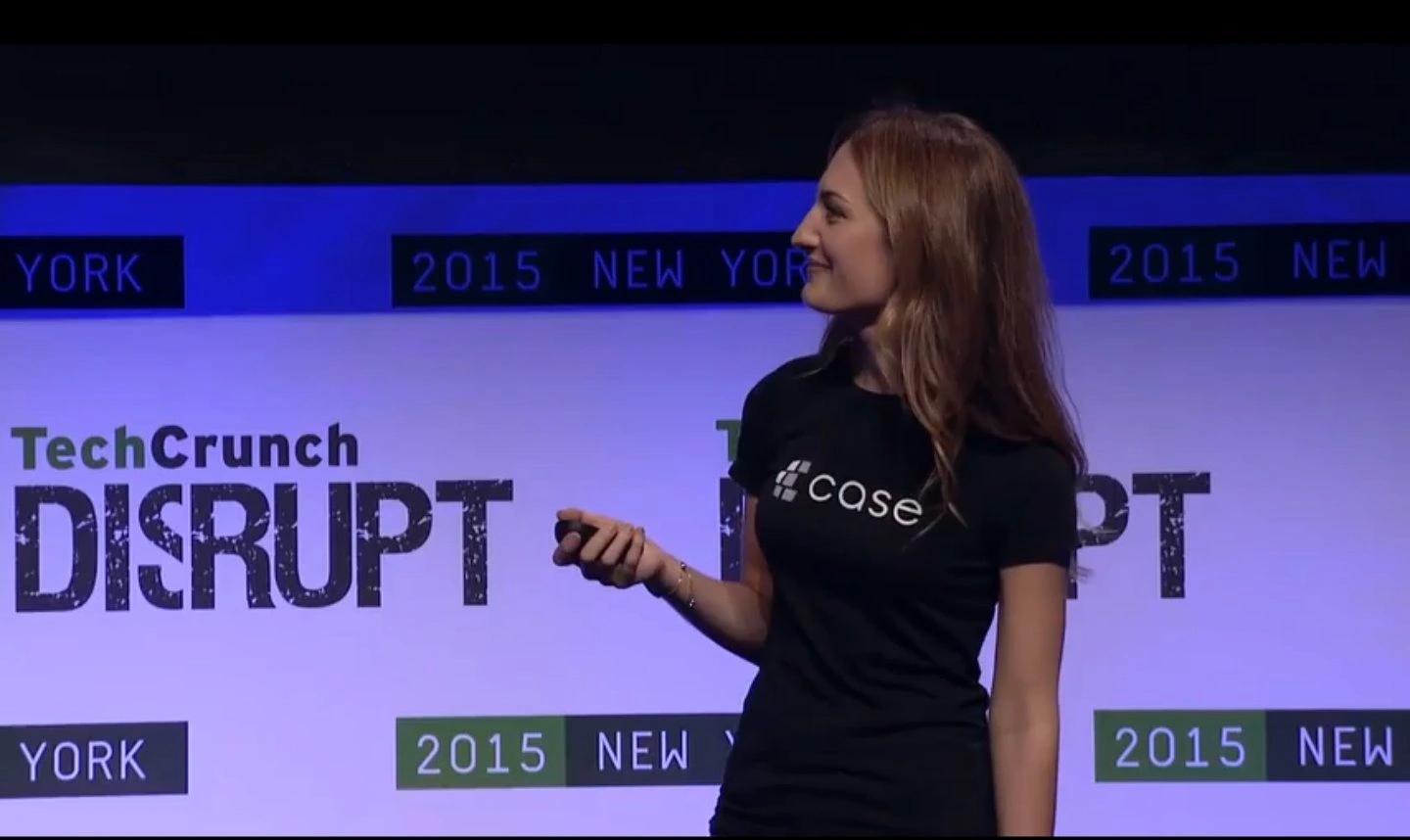
On January 16, 2019, a presentation by Melanie Shapiro titled Technology that Protects Your Identity was published on the TED Archive YouTube channel. The talk was recorded during TED2018 and addressed topics related to digital identity, cybersecurity, and methods of identity verification in online environments.
During the presentation, Shapiro discussed identity theft and examined commonly used security measures, including passwords, password updates, and two-factor authentication. She described these approaches as responses to broader structural issues within digital identity systems and stated that many online systems rely on credentials and identifiers that can be compromised or misused.
Shapiro also presented Token, a biometric ring developed by a company she co-founded. The device was described as a wearable authentication tool designed to store and manage multiple forms of identity credentials, including access keys, payment information, passwords, and identification data. The system incorporates fingerprint authentication and cryptographic mechanisms to verify user identity.
The presentation referenced historical forms of identification, including the use of signet rings in ancient societies, as part of a broader discussion about the role of identity systems in facilitating interactions between individuals and institutions. Shapiro connected these historical examples to contemporary digital identity frameworks and the challenges associated with managing personal information online.
In discussing the technical design of Token, Shapiro stated that identity credentials could be stored on the device rather than in centralized databases. She explained that cryptographic verification methods could be used to authenticate users while limiting the exposure of credential data. The presentation also examined decentralized approaches to identity management and their potential role in addressing security concerns associated with large-scale data breaches.
The talk concluded with a discussion of trust in digital networks and the relationship between identity verification systems, online interactions, and internet-based communication. Shapiro stated that improvements to identity infrastructure could contribute to addressing challenges related to authentication, privacy, and digital security. [14]
AI, Identity, and Trust #02
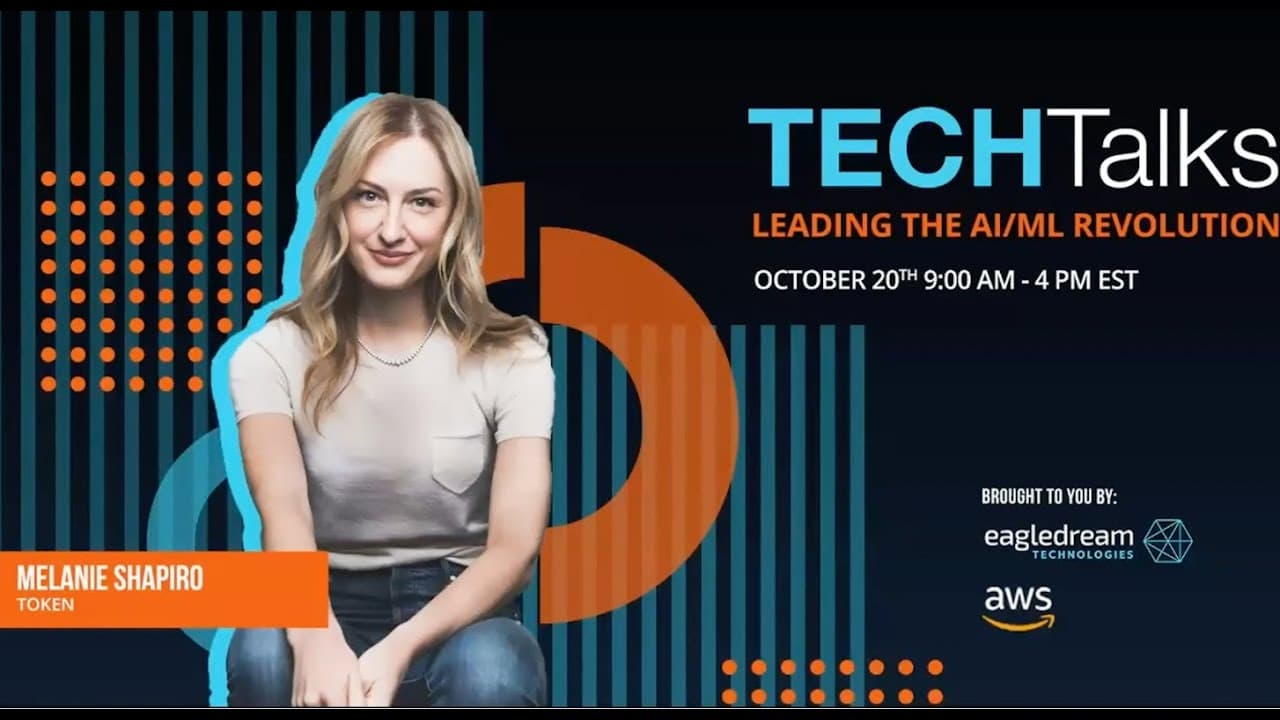
In an interview published on October 27, 2020, on the YouTube channel EagleDream Technologies, Melanie Shapiro discussed topics related to digital identity, artificial intelligence, machine learning, and cybersecurity. During the conversation, she described challenges associated with managing passwords, physical keys, access cards, and other forms of authentication, and explained how these issues influenced the development of Token.
Shapiro stated that Token incorporates fingerprint biometrics and machine learning methods, including convolutional neural networks (CNNs), to process biometric information. She explained that the system is designed to analyze fingerprint characteristics and generate a cryptographic representation of biometric data rather than storing fingerprint records in a centralized database. The discussion included comparisons with cloud-based and device-based biometric storage models.
The interview also examined security considerations involving artificial intelligence and machine learning systems. Shapiro identified issues such as biased training data, data poisoning, and manipulation of algorithmic processes as potential risks associated with AI-driven technologies. She discussed approaches that may be used to address these concerns, including security testing, external audits, and participation from industry organizations, policymakers, and researchers.
Shapiro also addressed methods used to evaluate and disclose security vulnerabilities. She referenced practices such as bug bounty programs, in which independent researchers report identified weaknesses to technology providers through structured disclosure processes.
In discussing possible applications of digital identity technologies, Shapiro noted that identity verification systems may be used in areas such as payments, building access, transportation services, residential access control, and vehicle authentication. The interview concluded with comments on educational pathways into technology-related fields, including the study of mathematics, engineering, and other disciplines. [15]
See something wrong?

Average Rating
No ratings yet, be the first to rate!
How was your experience?
Give this wiki a quick rating to let us know!
Edited By
On June 8, 2026. 05:48 UTC
Edit summary:
Removed Melanie Shapiro biography and education details