0% read
Logan Panchot
Logan Panchot
Logan Panchot is a former professional soccer player who transitioned into blockchain-focused governance and funding initiatives, including work with the Cardano Builder DAO and related ecosystem organizations. His career spans roles in decentralized governance design, DAO frameworks, and blockchain-based organizational structures. [3]
Education
Panchot graduated from Stanford University with a BS in Science, Technology, and Society in 2021. [2]
Career
Panchot began his professional soccer career with Loudoun United FC from January to July 2021. Following his playing career, he served as a volunteer assistant coach at Georgetown University from August to December 2021, contributing to the university's soccer program. In March 2021, Panchot became a co-founder of an independent blockchain-focused venture. Later, in October 2021, he joined Clear Contracts as a Web3 Strategy Consultant, advising organizations and communities on blockchain adoption, smart contracts, and related business applications. During this period, he also participated in the F10 Incubator & Accelerator as a cohort member from February to July 2022.
In April 2022, Panchot co-founded Clarity DAO Protocol, a blockchain-based initiative focused on decentralized governance and related Web3 applications. Alongside his consulting and entrepreneurial work, he remained involved in blockchain and decentralized technology projects. In August 2025, Panchot was elected to the board of the Cardano Builder DAO, where he participated in governance and oversight of funding initiatives for projects developed on the Cardano blockchain. In March 2026, Panchot became Director of Operations and Coach at the Pulisic Foundation. In this role, he has been involved in operational management and programs supporting youth access to soccer opportunities and safe recreational environments. [1] [6]
Interviews
Enterprise Adoption
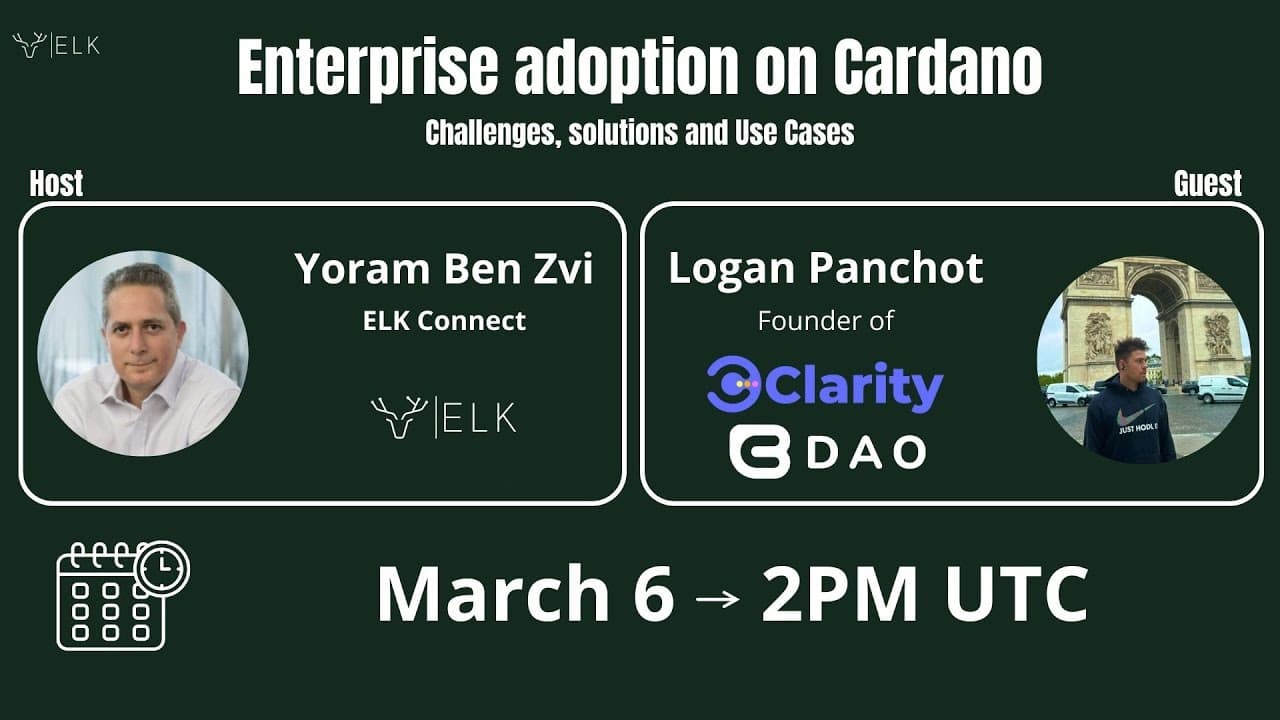
In a March 2026 interview on ElksConnect, Panchot discussed enterprise adoption of blockchain technology on Cardano, framing it within the ecosystem’s broader long-term objectives, including its 2030 performance and adoption targets. He emphasized the increasing focus on measurable on-chain activity, governance participation, and real-world usage as core indicators of ecosystem progress. He described Clarity’s work in building governance infrastructure for decentralized organizations, including DAOs and institutional groups such as sports clubs and public sector entities, with an emphasis on transparent voting systems, treasury management, and auditability. He also discussed the Cardano Builder DAO’s role in funding ecosystem projects aligned with these objectives, using KPI-based evaluation frameworks and dashboards to track progress and outcomes.
The conversation further covered efforts to engage government stakeholders, including planned workshops in Peru focused on exploring blockchain applications in areas such as digital identity and electoral systems, despite the complexity and length of public sector adoption cycles. Overall, Panchot expressed confidence that blockchain would increasingly operate as underlying infrastructure for digital systems, with mainstream adoption emerging as users interact with blockchain-enabled services that improve transparency, privacy, and operational efficiency. [4]
Cardano Builder DAO
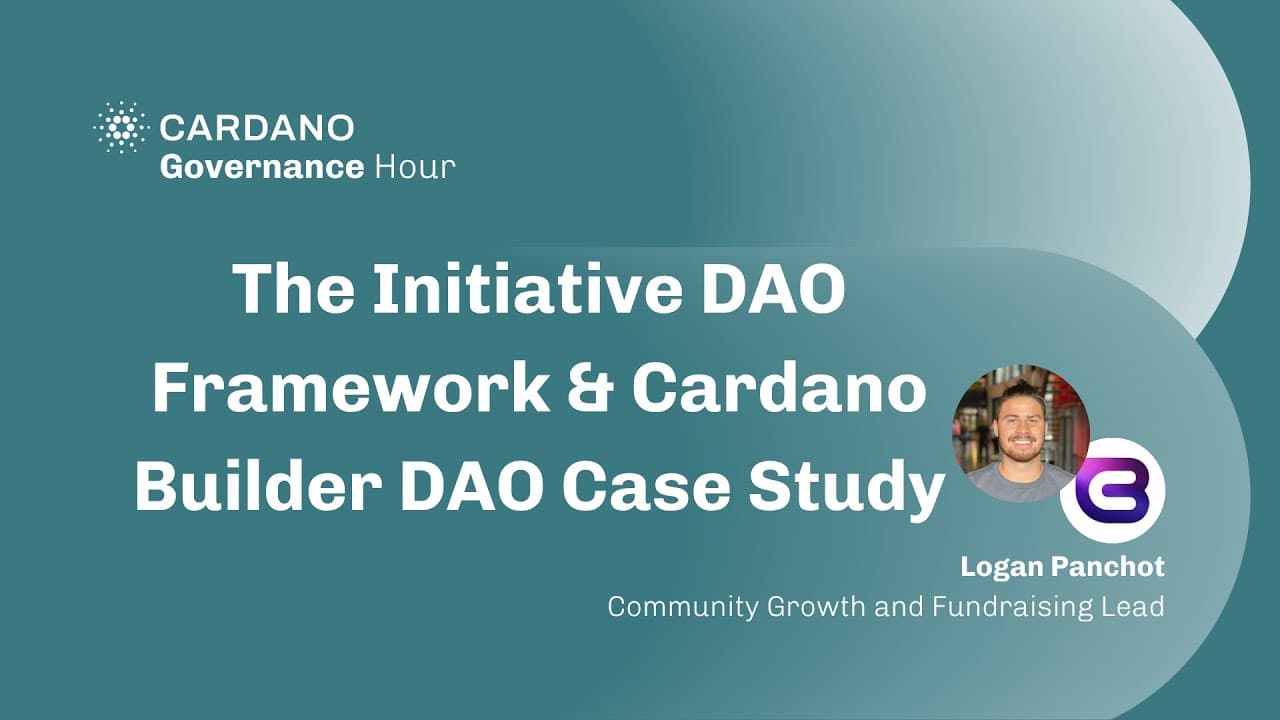
In a May 2026 interview on the Cardano Governance Hour, Panchot discussed the Initiative DAO framework and its implementation through the Cardano Builder DAO as an example of structured, community-driven governance within the Cardano ecosystem. He described the framework as a bottom-up system designed to improve the execution of delegated authority by organizing funding and decision-making into domain-specific DAOs, each operating under clearly defined mandates and governance rules.
He explained that the Cardano Builder DAO serves as the first treasury-funded instance of this model, allocating capital to development teams based on measurable performance indicators such as on-chain activity, total value locked, and user engagement. Governance is structured around a one-member-one-vote mechanism, supported by hybrid oversight groups that combine elected and delegated representatives, and by independent milestone verification. The framework emphasizes transparency through public KPI dashboards, on-chain treasury management, and governance documentation, with most funding directed toward builders and infrastructure providers. Overall, the discussion framed the model as an effort to reduce bureaucracy, strengthen accountability, and enable more data-driven and competitive ecosystem funding decisions. [5]
Blockchain Entrepreneur
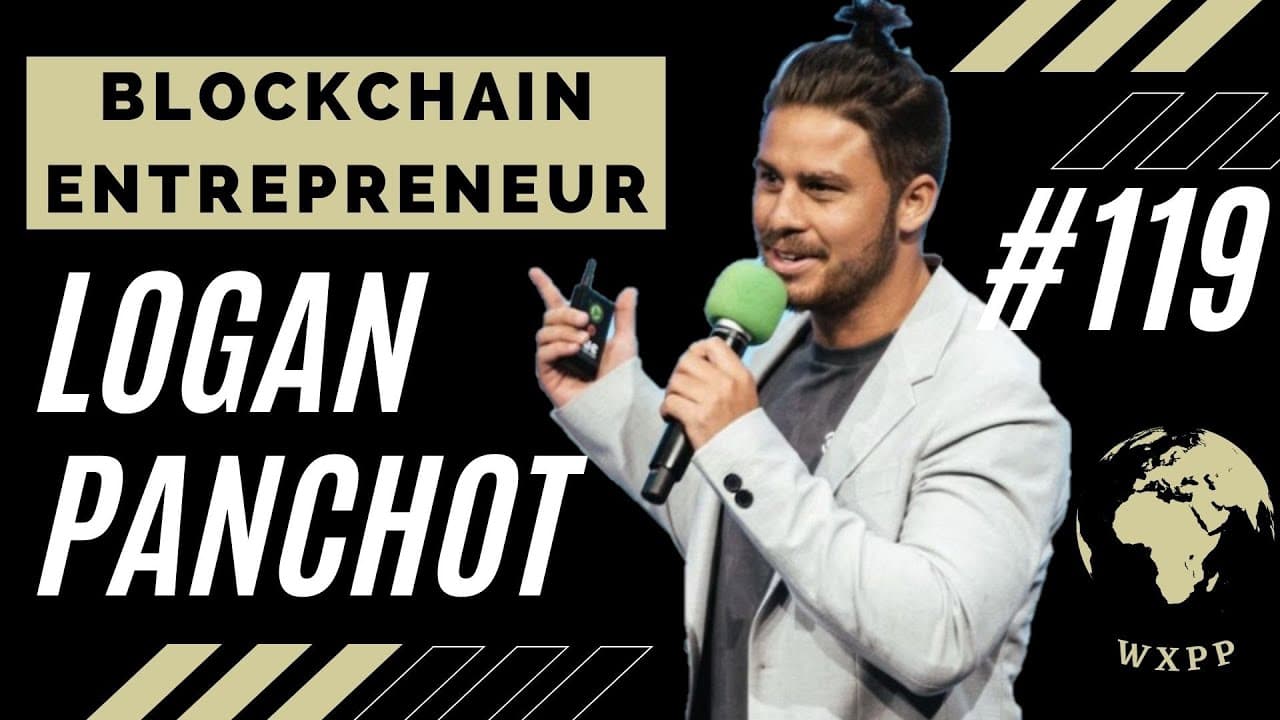
In a June 2023 interview on the World XP Podcast, Panchot discussed his transition from professional soccer and Stanford University into the blockchain and Web3 sector, describing his interest as stemming from an emphasis on transparency, decentralization, and user ownership of data. He characterized blockchain as a decentralized database architecture that enables peer-to-peer ownership and transfer of digital assets, in contrast to centralized systems controlled by large corporations or governments. He traced his early interest in the space to an academic policy course prior to the COVID-19 pandemic, where he began considering potential applications such as decentralized health records and transparent voting systems. The discussion also covered foundational blockchain concepts, including proof-of-stake and proof-of-work consensus mechanisms, as well as the broader framing of Web3 as an “internet of value” that enables direct asset exchange without intermediaries.
Panchot also described his work on blockchain-based governance systems, including decentralized autonomous organization (DAO) structures intended to improve transparency and operational efficiency in governance and nonprofit contexts. He acknowledged regulatory and technical constraints facing the industry, including enforcement actions affecting major exchanges, while maintaining a generally optimistic outlook on blockchain adoption and its potential to expand financial access and improve transparency in both developed and underserved regions. [7]
Presentations
Funding Cardano
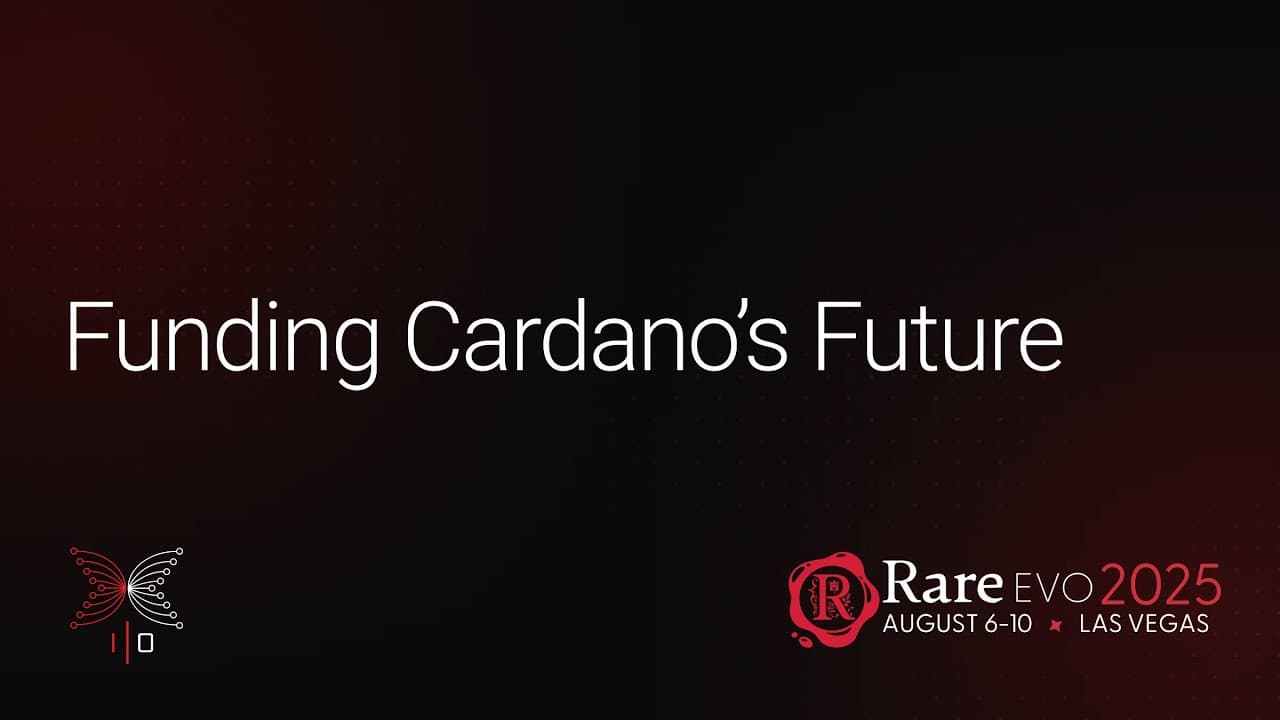
At Rare Evo Dev & Gov Day in August 2025, Panchot participated in a presentation alongside Arisa Euno and Daniel Ribar focused on funding mechanisms within the Cardano ecosystem. Panchot discussed the Cardano Builder DAO and its role in introducing a decentralized governance-based funding model designed to support growth-stage projects through a structured, community-driven allocation process. He described a funding approach centered on recurring capital deployment cycles, emphasizing the use of performance metrics and key performance indicators rather than one-time milestone completion to evaluate projects. The model also incorporated semiannual reviews and membership cycles to align incentives between builders and the broader ecosystem and improve continuity of funding support.
Other speakers contextualized the broader ecosystem funding landscape, including accelerator programs supporting startups building on or adjacent to Cardano, as well as community-led funding systems such as Project Catalyst, which distributes capital through decentralized voting and proposal evaluation. The presentation collectively highlighted the role of community participation, governance structures, and structured funding pipelines in supporting ecosystem development and adoption. [8]
See something wrong?

Average Rating
No ratings yet, be the first to rate!
How was your experience?
Give this wiki a quick rating to let us know!
Edited By
On June 17, 2026. 15:26 UTC
Edit summary:
Added Logan Panchot biography and people category