Hong Kim
Hong Kim is a technology executive and software engineer known for his work in cryptocurrency asset management and security research. He is a co-founder and Chief Technology Officer of Bitwise Asset Management, where he focuses on building infrastructure that connects digital asset markets with traditional financial systems. [2] [5]
Education
Kim graduated from the University of Pennsylvania with a BS in Computer Science in 2016. [1]
Career
Kim served in the Republic of Korea Army from 2011 to 2013, where he worked as a software security researcher. In this role, he contributed to efforts to improve cybersecurity testing infrastructure and related defense systems. In November 2016, Kim co-founded Bitwise Asset Management, a firm focused on crypto index and investment products. As CTO, he has been responsible for the company’s technical architecture and product development, supporting its efforts to provide institutional-grade exposure to cryptocurrency markets. Since its founding, Bitwise has expanded its offerings across crypto asset management and indexing products, positioning itself at the intersection of digital assets and traditional finance. Kim has remained focused on developing the firm’s technical systems and supporting its broader institutional adoption efforts in the crypto sector. [1]
Interviews
Onchain Vault Strategies
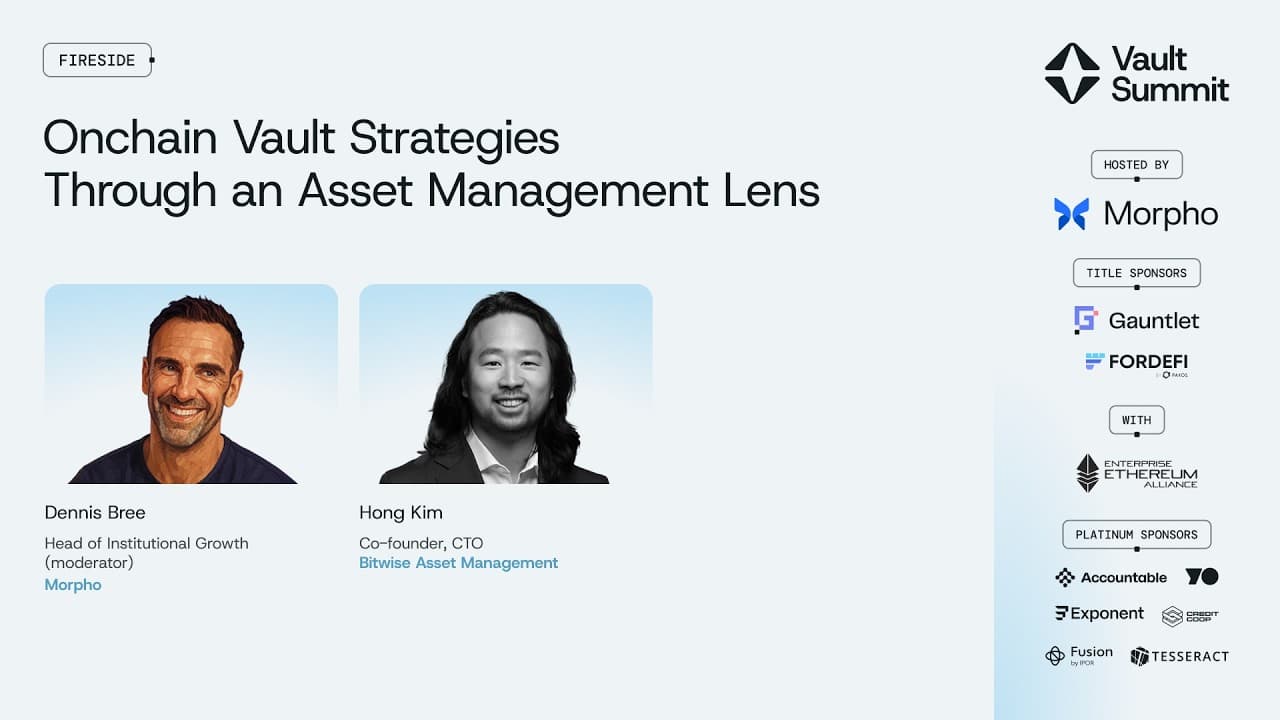
In an April 2026 fireside chat at Vault Summit, Kim participated alongside Dennis Bree of Morpho in a discussion on the evolution of onchain vault strategies viewed through an asset management lens. Kim discussed how Bitwise, drawing on its multi-year track record and institutional-scale assets under management, has expanded into onchain vault strategies as stablecoins and yield-bearing digital asset products have grown in importance. He noted that this expansion has been influenced by improving regulatory clarity in the United States, as well as increasing interest from both traditional financial institutions and crypto-native participants seeking structured onchain yield products. Kim emphasized that Bitwise’s approach is grounded in systematic, technology-driven risk management capabilities, enabling real-time portfolio analysis and operational oversight. He also described vaults as a longer-term strategic extension of asset management infrastructure rather than a purely demand-driven product, with broader adoption expected as issues such as custody, compliance, and standardization are addressed. [6]
Future of Crypto Adoption
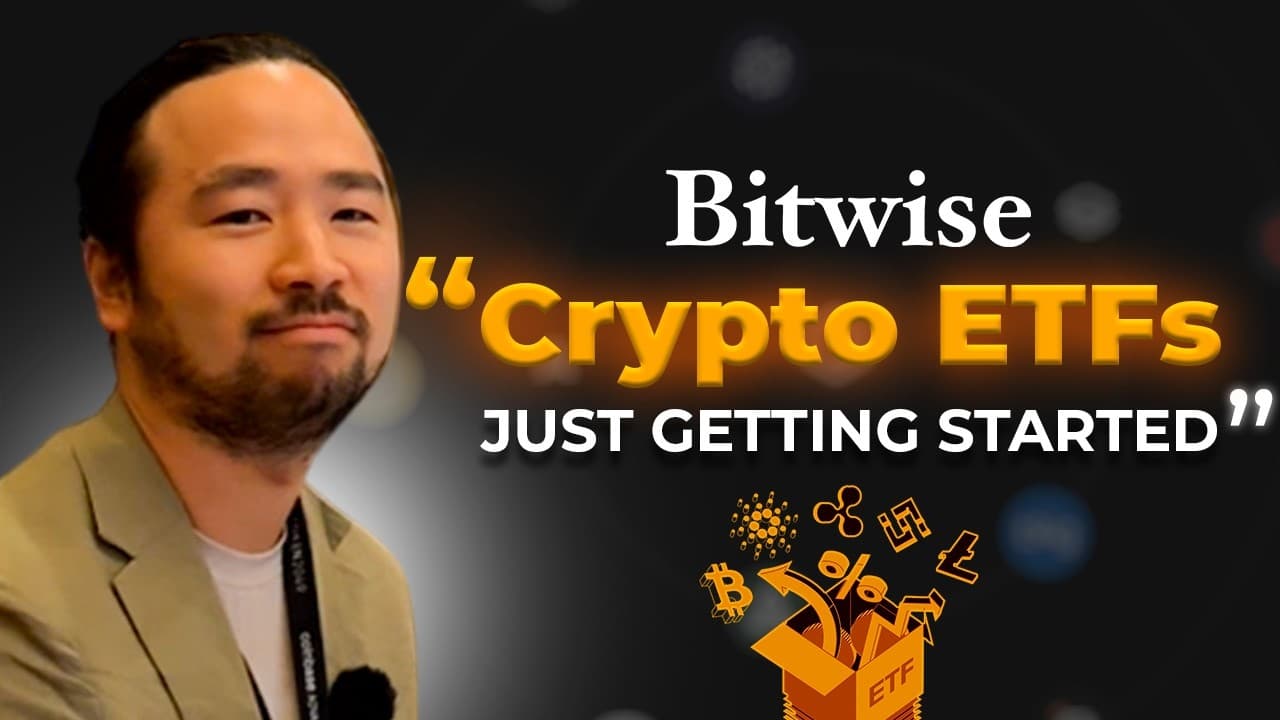
On the Talking Tokens podcast in October 2025, Kim reflected on the evolution and potential of cryptocurrencies, noting that Bitcoin has been around for 15-16 years but has only recently gained substantial public market attention, with a decade still needed to fully realize its opportunities. He highlighted that crypto asset management was in its early stages, similar to gold's adoption timeline, and emphasized that institutional involvement and regulatory clarity were gradually increasing, especially in regions like the US, Korea, and Europe. Kim explained that Bitwise had pioneered regulated crypto investment vehicles, such as ETFs, to make digital assets more accessible to mainstream investors, with a focus on expanding product distribution and investor education. He anticipated that tokenized assets, on-chain asset management, and innovations such as staking and derivatives would shape the future landscape, with major institutions like BlackRock and JPMorgan entering the space. Kim advised maintaining perspective amid market volatility, reminding investors of the rapid growth in areas such as stablecoins and decentralized protocols over the past few years, and expressed optimism about continued progress and broader adoption in the coming years. [7]
Presentations
Raising the Bar
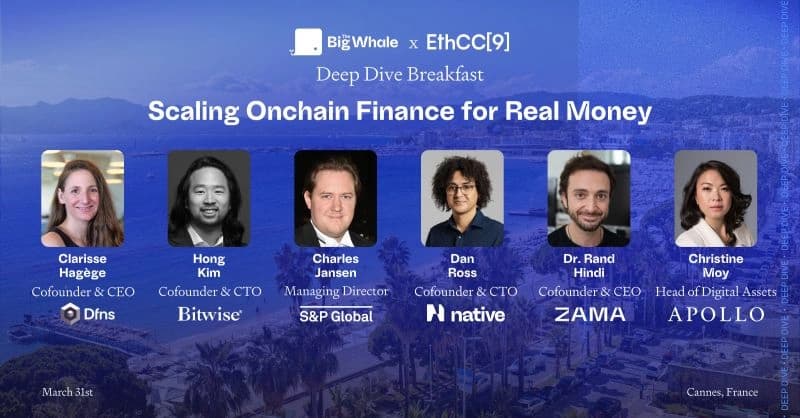
At EthCC[9] in April 2026, Kim provided an in-depth overview of how institutional Ethereum staking differs from retail setups. He explained that Bitwise, known for managing over $10 billion in regulated financial products such as ETFs, is also highly active in Ethereum staking and contributes to open-source projects. He highlighted the Ethereum Foundation's adoption of open-source technologies such as Dirk and Vouch for their staking infrastructure, emphasizing their benefits in security, redundancy, and flexibility. Vouch enables multi-node validation with configurable strategies to mitigate client diversity risks, ensuring higher resilience against client bugs and improving network security through diversified consensus validation. Dirk, a distributed threshold signer, enhances security and redundancy by generating keys in a distributed manner, eliminating single points of failure, and safeguarding against both malicious attacks and technical failures. These architectural choices reflect a commitment to robustness, safety, and the responsible management of staking operations at the institutional level, demonstrating significant advancements over typical home staking practices. [8]
Panels
Institutional-Grade Staking
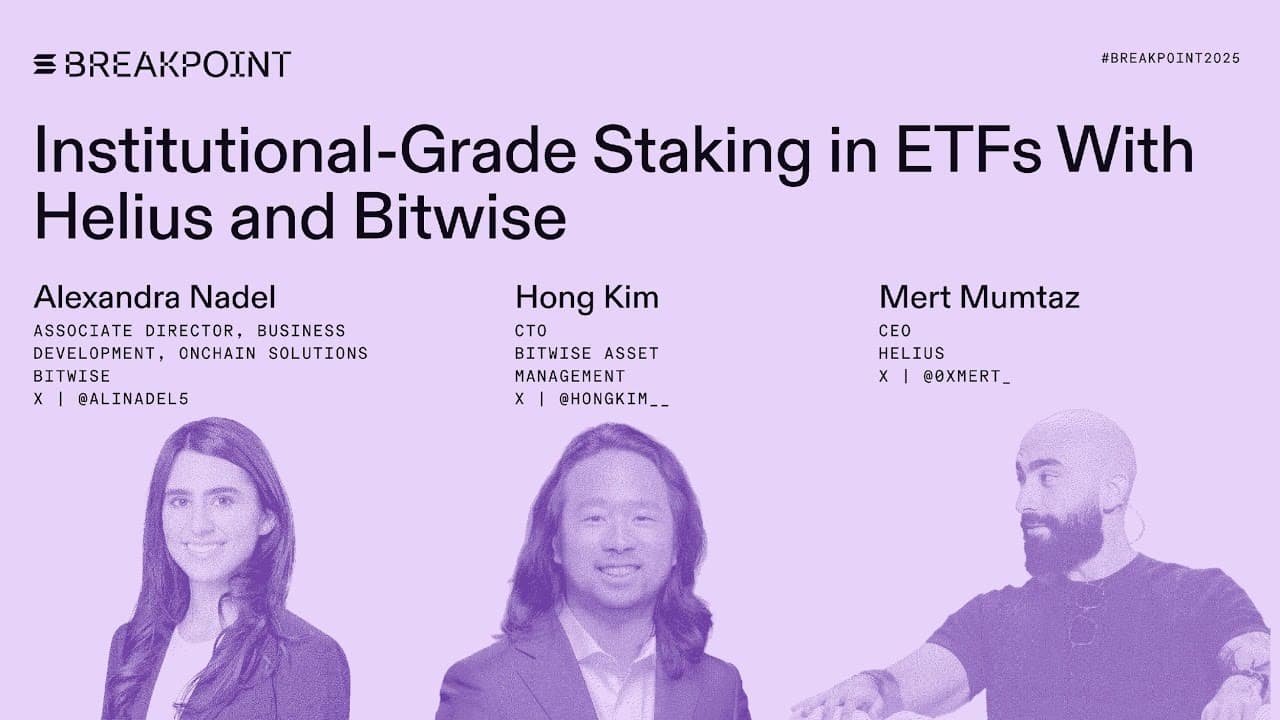
At Solana Breakpoint 2025 in December, a panel moderated by Alexandra Nadel of Bitwise featured Kim, who joined Mert Mumtaz of Helius to discuss the development of institutional-grade staking products within exchange-traded funds, including the recently announced Solana staking ETF initiative. The discussion covered the integration of staking mechanisms into regulated ETF structures and the associated technical and regulatory requirements, including data integrity, reporting standards, liquidity management, and slashing-risk controls. Kim emphasized the complexities of bringing onchain staking into traditional financial product frameworks, particularly in meeting institutional expectations for transparency and operational reliability.
Mumtaz described Helius’s role in supporting Solana network infrastructure through distributed validator operations, with a focus on decentralization, security, and performance. Both speakers highlighted the collaboration as an effort to make staking accessible through regulated investment vehicles while maintaining network integrity and user protections. Looking ahead, the panel discussed broader implications for tokenization and onchain market infrastructure, including the potential expansion of tradable digital assets such as prediction markets and tokenized equities. They suggested that continued improvements in blockchain scalability and financial infrastructure could enable more seamless access to a wider range of assets through standardized, mobile-first trading systems. [9]