0% read
Last updated:
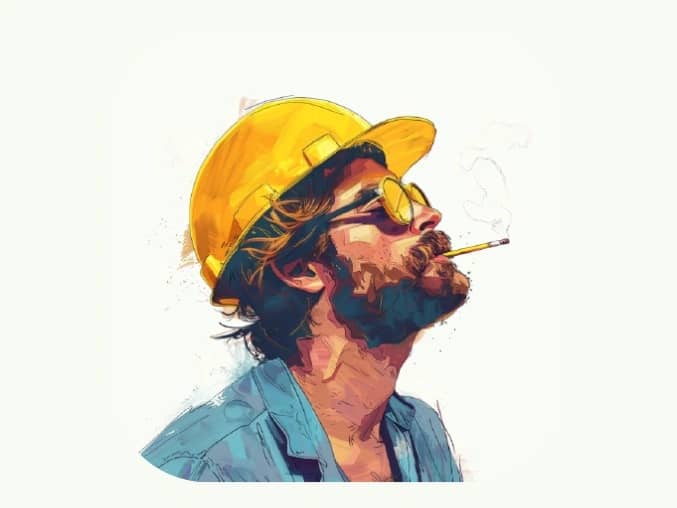
Hardhat Chad
Hardhat Chad is a pseudonymous Solana developer and the founder and lead developer of ORE, a Solana-based token and mining protocol. ORE launched on April 2, 2024. It uses proof-of-work to distribute tokens on Solana, not for network consensus. Hardhat Chad has described his role at ORE as “Foreman.”[1][2][3][6][4]
Career and ORE
Hardhat Chad is an anonymous developer whose work is associated with the GitHub account HardhatChad. A profile of his repositories identifies Rust as his primary language and reports more than 18 public repositories, including projects related to ORE and Solana tooling.[2]
ORE Origins and Evolution
ORE grew out of conversations with friends about Bitcoin bridges and Layer 2 systems that could bring Bitcoin to Solana. After joking about rewriting Bitcoin as a Solana smart contract, Hardhat Chad said he continued considering the idea for six to seven months and began seriously exploring proof-of-work on Solana in January. ORE was founded in April during a Solana hackathon, and development of its first version took about three months before launch.[4]
The project’s central idea was to use proof-of-work to distribute a token on Solana without using proof-of-work for network consensus. Solana already relies on proof-of-stake consensus, so ORE applied computational work to token distribution instead. Hardhat Chad presented the approach as an alternative to launches based on initial coin offerings or airdrops, which he argued could favor insiders or early adopters.[4]
Hardhat Chad described ORE’s original aim as building a Solana-native version of Bitcoin. Unlike wrapped Bitcoin, ORE could be mined directly on Solana without a bridge. The project’s initial design attracted enough transaction demand to expose a bug in Solana’s networking layer and contribute to congestion and failed transactions. Hardhat Chad said ORE transactions aggravated and exposed the problem.[5][4]
ORE’s V1 launched on April 2, 2024, and mining was paused on April 16, 2024, while the team redesigned the system and developed ORE V2. Solana developers also made network changes during the pause. ORE V2 launched and mining resumed on August 6, 2024, with improved success rates and stability. At the time of an August 2024 interview, ORE transactions occupied about 9% of Solana block space and ORE V2 had approximately 5,300 holders. The interview also reported that ORE attracted people who had been adjacent to crypto but not active in its ecosystem, while generating demand for Solana block space.[6][4]
Mining Design and Token Distribution
ORE V2 used DrillX, a proof-of-work hash function designed to be more suitable for central processing units (CPUs) and less parallelizable than Bitcoin’s SHA-256. Hardhat Chad said this design reduced the advantage of specialized application-specific integrated circuit (ASIC) mining hardware and allowed mining on commodity devices such as phones, laptops, and Amazon Web Services EC2 instances.[4][2][7]
Under the V2 process described in the 2024 interview, miners ran hardware for about 50 to 55 seconds and submitted their best hash to the ORE contract every 60 seconds. Hashes with more leading zeros represented more difficult work and qualified for greater rewards. The system was designed to give every miner some reward, including those with less powerful devices, rather than leaving smaller miners waiting for long periods as can occur in Bitcoin mining.[4]
The 2024 account described ORE V2 as having a maximum supply of 21 million tokens, a cap added in response to community feedback and modeled on Bitcoin’s supply limit. The contract minted one token per minute. Hardhat Chad said the supply cap and the contract’s immutability after it was frozen were intended to protect the rules for supply and distribution. ORE did not contribute directly to Solana consensus.[4]
ORE V2 also allowed miners to stake mined ORE for a multiplier on mining rewards, an incentive Hardhat Chad said was intended to encourage holding rather than immediate selling. Mining required transaction fees, which could exceed the value of rewards for miners with limited computing power. The ORE client included dynamic priority-fee calculations to respond to network conditions, and the team explored mining pools as a way for smaller miners to combine resources and potentially lower individual costs. The team also examined browser throttling of mining scripts as a constraint on mining.[4]
ORE later moved from its original computational proof-of-work design to a grid-based mining system. Current official terms describe users deploying SOL across a 5-by-5 grid, with one tile selected per round and ORE rewards going to miners on the winning tile. The protocol collects SOL and deploys it in automated, permissionless buybacks. The current official mint API sets a maximum supply of 3 million ORE.[8][9]
In a September 28, 2026 interview, Hardhat Chad described V4 changes to the grid system, including partial claims, adjustments to the “motherlode” system of occasional larger rewards, and removal of pari-mutuel payouts. Removing pari-mutuel payouts ended the redistribution of losing-tile SOL to winning miners and reduced that source of downside for miners. Hardhat Chad said miners welcomed the changes, while the team intended to pause further V4-style adjustments unless community requests made additional changes necessary.[5]
Protocol Revenue and the ORE Reserve
ORE’s grid-based mining system generates SOL revenue that the protocol collects and uses for automated, permissionless buybacks. Hardhat Chad said the team had previously used buyback revenue to make market orders through Jupiter as soon as fees arrived, an approach he called “top blasting.” The ORE Reserve was created to seek more favorable buyback prices.[8][5]
The Reserve consists of single-sided liquidity positions hosted by Meteora across markets paired with ORE. Hardhat Chad described the positions as functioning like limit orders: each market can use its paired asset to absorb ORE sold into that market. At the time of the interview, the Reserve covered SOL, USDC, gold-backed tokens, and Zcash. An ORE announcement dated September 9, 2026, said the Reserve would initially use 1% of protocol revenue to place buy-side liquidity below ORE’s then-current market price.[5]
Hardhat Chad described the Reserve as open-ended, with the potential to include any tokenized asset on Solana, including assets not yet created. He said that sufficient Reserve liquidity could allow ORE’s supply to reach zero before its price did. Community members nicknamed ORE the “store of value of store values,” referring to the Reserve’s basket of assets.[5]
Development Tools and Other Projects
Hardhat Chad’s work extended beyond the ORE protocol to developer tools and Solana infrastructure. Steel is a Solana smart-contract development framework in Rust, and HardhatChad is listed among its leading contributors.[10][11]
DrillX is a proof-of-work algorithm for smart-contract-based cryptocurrency mining. It builds on Equix and adds Keccak hashing; HardhatChad is listed as a leading contributor.[7]
The legacy ORE command-line interface provides a command-line miner for ORE and is marked deprecated.[12] The ore-api crate is a Rust package for ORE, and its crate metadata identifies HardhatChad as an owner.[13]
Regolith Labs was described as a software company spun out of ORE. In September 2024, Blockworks reported that it raised $3 million in seed funding to expand ORE and build a proof-of-work token-distribution platform.[14]
Hardhat Chad and his team at Regolith Labs also worked on Check Wars, a planned territory-control game inspired by the web experiment “1 Million Checkboxes.” The concept used blockchain technology and Solana transactions; Hardhat Chad anticipated that simple rules could produce complex strategies and sophisticated bots or machine-learning algorithms. The team also explored mining efficiency, mining pools, and other applications and games for the ORE ecosystem.[4]
MINE Test-Token Discovery
While working on a fork of Solana’s Solana Program Library (SPL), Hardhat Chad had test metadata for a token named “MySuperCoolToken,” with the ticker MINE, in Token-2022 metadata tests. The test was identified in token-2022-test/token_metadata.rs; a separate file, token_metadata_update_authority.rs, was also cited in connection with the metadata.[2]
Crypto community members found the test while examining Hardhat Chad’s GitHub repositories. Crypto Twitter discussions and decentralized-exchange trackers subsequently linked the test token to ORE’s founder. The MINE entry originated as developer test code, not as an official public token. A community token using the same name later launched on Solana through Pump.fun, turning the discovery into part of ORE-related community lore.[2]
Community and Governance
ORE’s development involved contributions from its community. In the week after ORE V2 launched, community members submitted at least a dozen pull requests, including retry logic and dynamic priority-fee calculations for different remote procedure call (RPC) providers. At the time of the 2024 interview, Hardhat Chad and one other person worked full-time maintaining ORE software. He described receiving feedback through Discord, GitHub-related messages, tweets, and other communications, and said handling the volume of messages and email had become a challenge as the project grew.[4]
In 2026, Hardhat Chad said ORE holders should have input into Reserve asset selection and limit-order pricing because the Reserve consists of protocol-owned liquidity. ORE identified a potential partnership with MetaDAO, whose decision markets could help inform Reserve allocations, including which assets to add and potentially how to set prices across venues. At the time of the September 2026 interview, the collaboration remained proposed. MetaDAO was founded by pseudonymous Proph3t and Kollan House and offers “Futarchy as a Service” to Solana protocols including Drift, Jito, and Marinade.[5]
Hardhat Chad said he had maintained a close relationship with the MetaDAO team and that the organizations had identified a scope for collaboration. MetaDAO’s decision-market approach uses market prices to indicate expected outcomes of proposals before they take effect. The proposed use in ORE was to help manage decisions about Reserve assets and pricing.[5]
Integrations and Community Projects
Hardhat Chad said the StonkFun team approached ORE about working together. StonkFun is a Solana launchpad that pairs meme tokens with tokenized stocks, exchange-traded funds, and commodities; its flagship token is STONK. The collaboration allowed users to pair meme coins with ORE as well as SOL. Trades and transfers of those meme coins generate a small tax in ORE, which is returned to meme-coin holders.[5]
After ORE-themed meme coins appeared, users requested a way to lock their supply permanently. Hardhat Chad and the Raydium team built a vault contract for that purpose. Creators can deposit ORE-paired meme coins into the vault, and fees it collects are automatically removed from circulation. The interview reported that the vault’s upgrade authority was frozen after launch, preventing later changes to its rules.[5]
See something wrong?