Subscribe to wiki
Share wiki
Bookmark
Giorgio Zinetti
The Agent Tokenization Platform (ATP):Build autonomous agents with the Agent Development Kit (ADK)
0%
Giorgio Zinetti
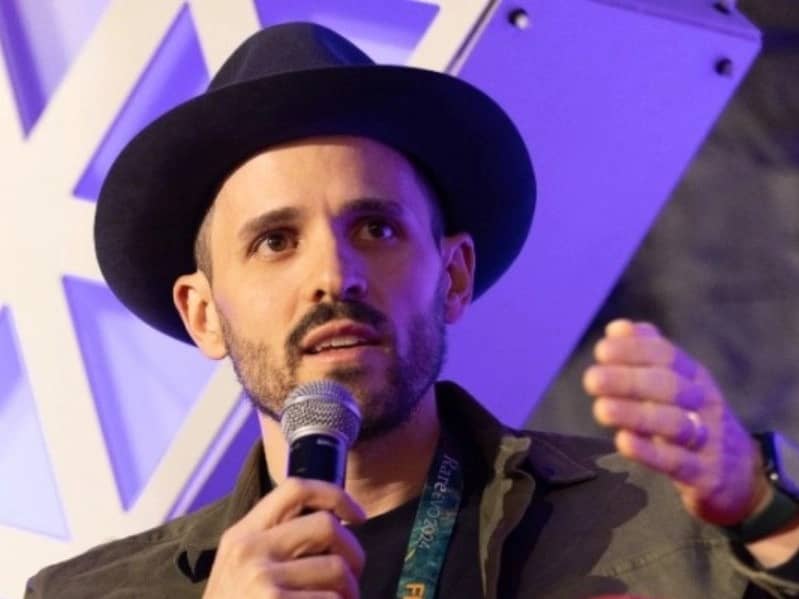
Giorgio Zinetti is the Chief Technology Officer (CTO) of the Cardano Foundation. His career is marked by experience in enterprise software architecture, secure digital identity, and blockchain technology. Prior to his role at the Cardano Foundation, Zinetti co-founded the digital identity company Procivis AG and held several engineering leadership positions at the multinational investment bank UBS [1] [2]. He is also an angel investor, a board member for the health tech AI company Saipient, and a frequent speaker at global technology conferences. [3] [4]
Education
Jocy Lin studied Computer Engineering at Politecnico di Milano, where he completed both undergraduate and graduate degrees.
From 2007 to 2011, he earned a Bachelor of Engineering (BE) in Computer Engineering. The Bachelor of Science in Engineering of Computing Systems provides training in information technology methodologies applied to the analysis and resolution of complex problems. The curriculum includes the design of computers, computer networks, telecommunication systems, mobile devices, PDAs, and applications related to e-Business, e-Learning, and e-Government.
He later completed a Master of Science (MSc) in Computer Engineering at Politecnico di Milano between 2011 and 2012. The program is structured to develop competencies in the use and development of information technology tools across different application contexts, with an emphasis on modeling and solving complex problems through advanced technical approaches.
During the same period, he attended an exchange semester at Universidad Politécnica de Valencia, where he was enrolled in the Master of Science (MSc) in Computer Engineering program. [13]
Career
Zinetti's career combines hands-on software development with executive leadership roles in both large-scale enterprise environments and agile startups [2].
Early Career
Before his tenure at major financial and technology institutions, Zinetti began his career in software engineering and cryptocurrency roles. He worked as a Software Engineer at Comerge AG from 2008 to 2010 and as a Web Developer at ETH Zurich from 2010 to 2011. In 2012, he briefly worked as a Software Engineer at Doodle, the online scheduling tool company [1].
UBS
In January 2013, Zinetti joined the multinational investment bank UBS in Zurich. He began as a Software and Security Engineer, holding the title of Assistant Vice President (AVP), and worked in this capacity until September 2015. In October 2015, he was promoted to Head of Mobile Technology and Vice President (VP), a role he held until his departure in December 2016. His time at UBS provided him with experience in enterprise-grade software architecture within the traditional finance sector [1] [4].
Entrepreneurial Ventures
After his corporate career at UBS, Zinetti shifted his focus to entrepreneurship, founding and advising several technology startups [2].
Procivis AG
In January 2017, Zinetti co-founded Procivis AG, a company specializing in secure and decentralized digital identity solutions for governments and enterprises. As co-founder and Chief Technology Officer, he led the company's technological development from its inception through multiple funding rounds [1] [3]. He served as CTO until February 2021 before transitioning to a role as a Board Member, which he held until April 2024. Under his leadership, Procivis pioneered digital identity solutions and was eventually led to a successful exit [2] [4].
Other Ventures and Advisory Roles
Zinetti is also a co-founder and board member of Saipient, an artificial intelligence company focused on the health tech sector [3] [2]. He actively works as an angel investor and technical advisor, providing guidance and capital to early-stage companies, primarily in the fields of AI, blockchain, and health tech. His advisory work covers system architecture, go-to-market strategy, fundraising, and scaling technical teams [2].
Cardano Foundation
On May 8, 2024, the Cardano Foundation announced the appointment of Giorgio Zinetti as its first-ever Chief Technology Officer. In this executive role, he is the primary technical leader for the Swiss-based foundation, responsible for guiding its technical strategy and product development. His mandate includes scaling the foundation's projects, maximizing its open-source model, and enhancing the operational resilience, security, and scalability of the Cardano blockchain [1] [4].
Frederik Gregaard, CEO of the Cardano Foundation, described the new role as a "significant milestone for the Foundation that marks our commitment to technical excellence." He added that Zinetti's "experience and expertise will support us in our mission to increase the adoption of blockchain solutions." [1].
Upon his appointment, Zinetti stated:
“The innovative and important work of the Cardano Foundation is helping to drive forward one of the most exciting technologies in the world. As the Foundation’s CTO, it will be an honor to continue the great work of enhancing the Cardano blockchain’s operational resilience, ensuring we remain at the forefront of technological advancement amidst an intensely competitive global environment.” [1]
Public Commentary and Views
As CTO of the Cardano Foundation, Zinetti frequently provides public commentary on the Cardano ecosystem's development, market trends, and the broader blockchain industry through his social media presence and public appearances [5] [6].
Cardano Ecosystem Development
Zinetti has publicly identified several key technical and governance milestones as major catalysts for the Cardano ecosystem's growth. He has pointed to the network's transition to the "Age of Voltaire" as one of the most significant developments in Cardano's history. This era focuses on implementing advanced on-chain governance features outlined in Cardano Improvement Proposal (CIP) 1694, which are designed to give the community control over the network's treasury and future development [7] [8].
In October 2024, he highlighted three major triggers for potential growth: the Voltaire era's introduction of decentralized governance, the deployment of partner-chains, and the expansion of Real-World Asset (RWA) tokenization on the platform [1]. He has also emphasized the importance of scalability and privacy solutions, such as the Hydra Layer 2 protocol and the Midnight privacy-focused sidechain, as crucial technological advancements for the network's future [9].
To help educate the community, Zinetti has shared high-level flowcharts to simplify and discuss Cardano's evolving governance model. He has also engaged in discussions around future enhancements, including considerations for client diversity and the potential introduction of an "external neutral conflict resolution body" to manage disputes within the decentralized governance framework [5].
Market and Industry Analysis
In December 2025, Zinetti posted an analysis on the social media platform X (formerly Twitter) regarding the state of the cryptocurrency market. Despite observing bearish indicators, such as Bitcoin active addresses hitting a 12-month low and its price being down 32% from a recent peak, he presented an optimistic outlook. His thesis was that market attention had temporarily shifted from Decentralized Finance (DeFi) to Artificial Intelligence (AI), creating a prime opportunity for focused development. He stated, "Everyone's talking about AI. Nobody's talking about DeFi. That's when you know the best DeFi protocols of 2026 are being built by quiet founders." He suggested that the subsequent market cycle's leaders would be those who were building and investing during the quiet period_[6].
Public Appearances
Zinetti is an active public speaker who represents the Cardano Foundation at major technology and blockchain conferences worldwide. He uses these platforms to discuss Cardano's technical roadmap, blockchain governance, and the future of decentralized systems [5].
His speaking engagements include:
- Consensus Hong Kong 2026: Scheduled to speak at the "CARDANO Spotlight Session" in February 2026 [4].
- Tech for Impact Summit: Scheduled as a speaker for the event in April 2026 [10].
- Cardano Summit: He was a listed speaker for the Cardano Summit 2025 [11].
- Meetups in Japan (2025): In February and March 2025, he spoke at Cardano community meetups in Fukuoka and Tokyo, where he discussed the Cardano Foundation, the Amaru project, and tokenomics [5].
- Keynote in Dubai (2024): In October 2024, he delivered a keynote address where he presented an updated version of the Cardano roadmap and solicited community feedback [5].
- RareEvo 2024: In August 2024, he participated in a panel discussion in Las Vegas with Charles Hoskinson and JJ Siler about the history and future of Cardano [5].
- Consensus 2024: He was a speaker at the Consensus 2024 conference [12].
Interviews
Web3TV at Cardano Summit 2024 #01
An interview with Giorgio Zinetti, Chief Technology Officer of the Cardano Foundation, was streamed live on October 23, 2024, on the Web3TV YouTube channel during the Cardano Summit Dubai 2024. The discussion addressed Zinetti’s views on the development of Cardano, the role of the Cardano Foundation, and ongoing technical and organizational initiatives within the ecosystem.
During the interview, Zinetti described Cardano as a blockchain project developed through extended research processes, formal peer review, and structured engineering practices. He attributed the current state of the ecosystem to sustained technical development and participation from a distributed community of developers and organizations building applications and infrastructure on the Cardano network.
When discussing the summit itself, Zinetti referenced the opening keynote delivered by the Cardano Foundation’s chief executive officer, Fred Gregory, as well as a governance and budgeting session presented by Intersect. These sessions were cited as examples of ongoing coordination efforts related to governance structures and operational planning within the ecosystem.
Zinetti noted that his appointment as CTO occurred during the initial phase of the Voltaire era, which introduces on-chain governance mechanisms to Cardano. He outlined that his early work at the foundation has involved internal organizational responsibilities, coordination with technical teams, and engagement with community stakeholders. He also stated that he is involved in defining both short
- to medium-term planning horizons and longer-term strategic considerations for the foundation and the broader network.
The interview also addressed technical development, including a new node implementation written in Rust, referred to as Amaru. According to Zinetti, this implementation is intended to follow a modular design and is part of ongoing efforts to support performance, maintainability, and tooling within the Cardano infrastructure. The conversation concluded with references to publicly available educational and informational resources maintained by the Cardano Foundation, including its documentation and training initiatives. [14]
Enterprise Adoption and the Next Phase of Cardano #02
In an interview published on November 24, 2025, on the YouTube channel Powered by Cardano, Giorgio Zinetti discussed topics related to Cardano’s development following the Cardano Summit 2025, held in Berlin. Speaking in his capacity as Chief Technology Officer of the Cardano Foundation, he addressed the network’s current technical status and its intended direction regarding enterprise and real world use cases.
Zinetti described the Summit as an event focused on adoption, particularly within enterprise contexts. According to his account, the Cardano ecosystem emphasizes decentralization and system reliability as core design principles. He contrasted this approach with alternative blockchain models that prioritize faster deployment at the expense of decentralization, stating that Cardano follows a development process centered on long term stability and protocol robustness.
In the interview, Zinetti referenced several projects within the Cardano ecosystem to illustrate ongoing development activity. These included Masumi Network, which operates an on chain framework for AI agents with recorded execution logs, and Delta DeFi, a decentralized exchange built on Cardano’s Hydra Layer 2 architecture. He also mentioned multiple partner chain initiatives, including Apex Fusion, Iagon, Midnight Network, and Nuvola Digital, as examples of teams developing independent chains connected to the Cardano ecosystem.
Zinetti also outlined areas of technical focus for the coming years from a technological standpoint. These included efforts to reduce transaction finality time, increase transaction throughput through protocol updates such as Leios, and further develop the partner chain and layer two framework. He described these initiatives as part of an ongoing process to expand Cardano’s infrastructure capabilities and support a broader range of applications across different organizational scales. [15]
See something wrong?
The Agent Tokenization Platform (ATP):Build autonomous agents with the Agent Development Kit (ADK)