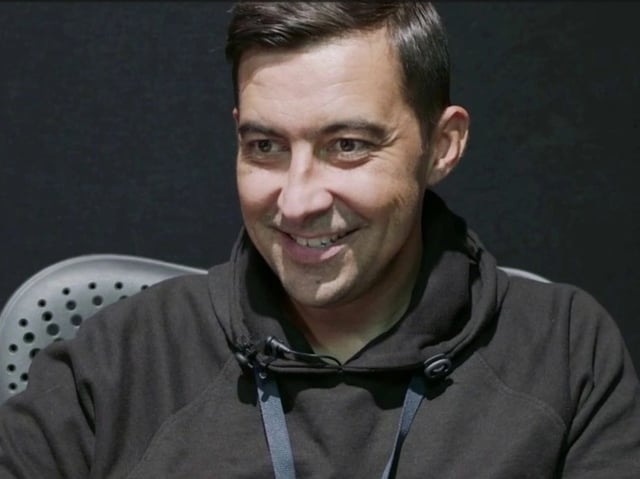
David Tse
David Tse is the co-founder of Babylon, a protocol designed to extend Bitcoin's security to other decentralized networks through a novel staking mechanism. Prior to his work in blockchain, Tse invented the proportional-fair scheduling algorithm, a core technology used in 3G, 4G, and 5G cellular networks. [1] [2]
Education
Tse earned a Bachelor of Applied Science in Systems Design Engineering from the University of Waterloo in 1989. He continued his studies at the Massachusetts Institute of Technology (MIT), where he received a Master of Science in Electrical Engineering in 1991 and a Ph.D. in the same field in 1994. [3]
Career
Academic Career and Wireless Communications
Tse began his academic career as a professor at the University of California, Berkeley, from 1995 to 2014, where he received an Outstanding Teaching Award from the Department of Electrical Engineering and Computer Sciences in 2008. [2] In 2014, he joined Stanford University as the Thomas Kailath and Guanghan Xu Professor of Engineering, which served as a basis for working with digital assets. [3]
In the field of wireless communications, Tse is best known as the inventor of the proportional-fair scheduling algorithm. This algorithm became a fundamental component of 3G, 4G, and 5G cellular technologies, significantly improving the speed and efficiency of mobile networks used globally. [1] He is also the co-author of the seminal textbook Fundamentals of Wireless Communication. His research has garnered over 77,000 citations. [2]
Beyond telecommunications, Tse has also designed assembly software used for processing and analyzing DNA and RNA sequencing data, which has been adopted by researchers for human genome analysis. [2]
Transition to Blockchain
Tse shifted his research focus to blockchain technology, driven by the belief that the "current control of information infrastructure by a handful of companies is detrimental to society." [1] At Stanford, he initiated and leads a research group focused on blockchain scalability and security. The group has received over $6 million in research funding and collaborates with prominent industry organizations, including the Ethereum Foundation, Protocol Labs, and Cardano (IOG). [2] His team made contributions to enhancing the security of the Proof-of-Stake (PoS) Ethereum consensus protocol. [1]
On his continual drive, Tse posted on X in July 2025, "Many professors my age have mentally retired. I worked 19 hours straight the other week, according to my wife. I'm too old for this. But we're breaking new ground at 2 AM while others play it safe. Don't know why I'm still grinding like a 25-year-old PhD student." [4]
Babylon
Tse co-founded Babylon with cryptography expert Fisher Yu to build a secure and decentralized world by extending Bitcoin's security to other blockchains. [5] He also serves as an advisor to the investment firm Bain Capital Crypto. [2]
Founding and Mission
The central mission of Babylon is to transform Bitcoin from a passive store of value into a productive, yield-generating asset. [6] The project aims to unlock Bitcoin's large capital base to secure emerging PoS chains and other decentralized systems. This is achieved through a "Bitcoin staking" protocol that allows Bitcoin holders to stake their BTC and earn yield without moving their assets to another chain via a bridge, which can introduce security risks. [1] The project was built using the Cosmos SDK to leverage its modularity and sovereignty for implementing the protocol's unique security mechanisms. [4]
Technology and Innovation
Babylon's protocol is designed to be "Trustless by Design," operating as a non-custodial system. [5] It utilizes advancements from Bitcoin's Taproot upgrade, including Tapscript and Schnorr signatures, to create secure staking contracts directly on the Bitcoin blockchain. Key cryptographic innovations include: [5]
- Extractable One-Time Signatures (EOTS): A mechanism that ensures validators can be held accountable, making malicious behavior like double-signing slashable.
- Signature Aggregation: A technique to optimize on-chain data and reduce transaction costs.
- Adaptor Signatures: A primitive that enables the trustless slashing of a malicious staker's assets.
In October 2025, Tse announced that Babylon had created a proof-of-concept for a "Bitcoin trustless vault" system. This system uses BitVM3 to allow users to lock native Bitcoin and use it as collateral on other chains, such as Ethereum. The process is controlled by cryptographic proofs of external smart contract states, which are verified on the Bitcoin network. An experimental version of the resulting asset, an NFT called VaultBTC, was tested on the lending protocol Morpho. While the system aims to be trustless, reports noted that its early design relied on whitelisted liquidators and external price oracles like Band Protocol and Pyth Network. [7]
Funding and Milestones
Babylon has secured significant funding through multiple rounds:
- March 2023: Raised 8.8 million). The previously-listed 70 million Series B (May 2024, led by Paradigm) remain unchanged and are retained in the article. [8]
- May 2024: Raised $70 million in a round led by Paradigm. [1]
- January 2026: a16z crypto led a BABY. [6]
Babylon commenced its phased mainnet launch in August 2024. The initial staking cap of 1,000 BTC was filled within hours. [8] A subsequent duration-based staking round in October 2024 attracted 24,000 BTC in stakes in under two hours, with Tse calling the demand "way beyond our expectations." [8] In December 2024, a single anonymous user staked 10,000 BTC. [4]
The project's codebase has been audited by security firms including Coinspect, Zellic, and Cantina, and it has integrated with institutional custodians like Anchorage Digital, Ceffu, HexTrust, and Cobo. [5]
Research and Publications
BABE Protocol
On January 18, 2026, Tse and his team announced the BABE (BAbylon-BErkeley) protocol, a new method for verifying Groth16 zero-knowledge (ZK) proofs on the Bitcoin network. [3] The protocol was developed to reduce the initialization and storage costs of Groth16 verification by over a thousandfold compared to existing solutions. It achieves this by simplifying complex pairing operations into a single scalar multiplication using a technique based on witness encryption and the Argo MAC obfuscation primitive. Tse announced that BABE was scheduled to launch in February 2026 alongside the alpha testnet of the Babylon Trustless Bitcoin Vault. [3]
Collaborative Research
Tse is an active participant in the BitVM Alliance, a group focused on advancing Bitcoin's computational capabilities. He has praised the "open and collaborative research culture" of the alliance, which involves public iteration of ideas and rapid feedback, viewing it as a challenge to traditional, more closed-off academic cryptographic research methods. [9] In June 2025, the Babylon team conducted a successful experiment on the Bitcoin mainnet to test the full dispute resolution process ("unhappy path") for BitVM, completing the procedure in under eight hours. [4]
Awards and Recognition
Tse has received numerous awards for his contributions to engineering and information sciences.
- 2008: Outstanding Teaching Award, Department of Electrical Engineering and Computer Sciences, U.C. Berkeley [2]
- 2009: Frederick Emmons Terman Award, American Society for Engineering Education [2]
- 2017: Claude E. Shannon Award, IEEE Information Theory Society [1]
- 2018: Elected a member of the U.S. National Academy of Engineering [2]
- 2019: IEEE Richard W. Hamming Medal [1]
- 2024: Named to CoinDesk's "Most Influential" list for his work on bringing staking to Bitcoin. [8]
Influence and Mentorship
Through his professorship at Stanford, Tse has taught and mentored numerous individuals who have become prominent figures in the crypto industry. Guy Wuollet of a16z crypto, a former student, described him as having "one of the broadest coaching trees in crypto." His former students and post-doctoral advisees include Sreeram Kannan (founder of EigenLayer), Dionyzis Zindros (founder of Common Prefix), and several members of the a16z crypto research team. [6]
Interviews
Bitcoin Staking and Babylon #01
In an interview published on May 16, 2024, on the YouTube channel Coinage, David Tse, co-founder of Babylon, discussed Bitcoin staking, the research background of the project, and its proposed role within the Bitcoin and broader Web3 ecosystem.
Tse described Babylon as a project originating from academic and technical research rather than a venture defined by branding labels such as “professor chain”. According to him, the project was developed from a research-oriented approach aimed at addressing structural and protocol-level questions within Web3. He referenced his prior academic work in wireless communications and explained that his involvement in blockchain research began approximately five years earlier after studying the Bitcoin whitepaper, which he characterized as a protocol designed with simplicity as a core attribute.
During the interview, Tse stated that Bitcoin differs from Ethereum primarily in its consensus model. While Ethereum transitioned from proof-of-work to proof of stake, enabling native staking functionality, Bitcoin continues to operate under proof-of-work and does not include a native staking mechanism. He explained that Babylon seeks to enable Bitcoin staking through a protocol design that does not require users to transfer custody of their Bitcoin, distinguishing it from earlier yield-generating platforms that relied on centralized custodial structures.
Tse addressed comparisons between Babylon and Ethereum-based restaking protocols, noting that Babylon focuses on introducing staking as a base-layer function for Bitcoin rather than restaking existing staked assets. He emphasized that, from his perspective, this distinction is relevant for protocol design and for the development of applications that may rely on staking as an underlying mechanism.
Regarding ecosystem integration, Tse discussed Babylon’s interaction with the app-chain model and its collaboration with projects in the Cosmos ecosystem. He explained that Babylon’s staking mechanism is intended to allow Bitcoin to contribute security to other blockchain networks, supporting application-specific chains without requiring changes to Bitcoin’s base protocol.
The interview also addressed adoption challenges following the collapse of centralized yield platforms. Tse acknowledged that some Bitcoin holders remain cautious about yield mechanisms and stated that Babylon’s approach prioritizes gradual adoption and education, particularly among users familiar with non-custodial staking systems in other networks. He cited the launch of Babylon’s Bitcoin staking testnet in February 2024, which recorded participation from more than 100,000 users within the first two days.
In outlining future development, Tse referenced plans for a mainnet launch with controlled participation parameters intended to support security testing. He also mentioned ongoing research into additional protocols that could leverage Bitcoin’s security, including data availability solutions and cross-chain asset bridges. Throughout the interview, Tse characterized Babylon as a research-driven project focused on protocol development rather than short-term deployment objectives. [10]
Bitcoin Staking and Economic Security #02
In an interview published on August 21, 2025, on the YouTube channel Ninepoint Partners, David Tse, co-founder of Babylon, discussed his interpretation of Bitcoin’s role within blockchain infrastructure and its use in staking-related mechanisms.
Tse stated that Bitcoin’s large monetary base, long operational history, and decentralized security model allow it to be used as collateral for securing proof-of-stake blockchains, even though Bitcoin itself relies on proof of work. According to his explanation, Babylon’s protocol is designed to enable Bitcoin staking without custodial intermediaries, wrapped assets, or native smart contracts on Bitcoin. Instead, the system uses cryptographic techniques and Bitcoin’s scripting capabilities to replicate functions commonly associated with staking, including conditional penalties.
He further explained that, from his perspective, Bitcoin staking can be applied to provide additional economic security to other blockchains and rollups. In this context, proof-of-stake networks may compensate Bitcoin holders for contributing collateral, while Bitcoin remains under self-custody. Tse indicated that this model can be used alongside existing consensus mechanisms rather than replacing them.
The interview also addressed the interaction between Bitcoin and smart contract platforms, including Ethereum. Tse described potential integrations in which Bitcoin functions as collateral for applications deployed on such platforms, while maintaining separation between Bitcoin’s base protocol and external execution environments.
Overall, Tse characterized Babylon’s approach as an infrastructure-focused effort to enable the use of Bitcoin as collateral across multiple blockchain systems, without modifying Bitcoin’s underlying protocol or governance structure. [11]