0% read
Last updated:
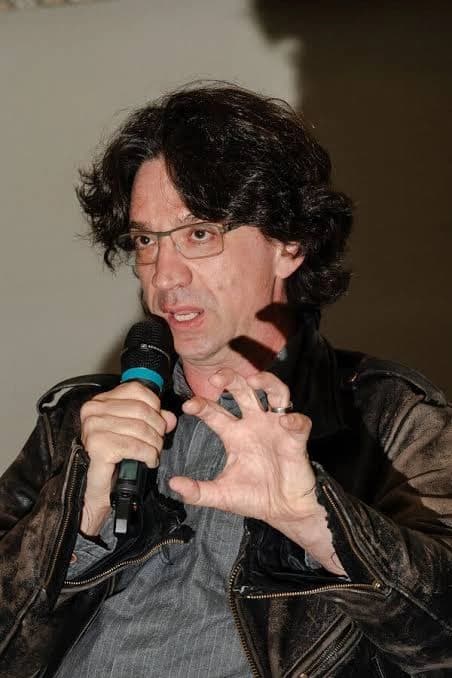
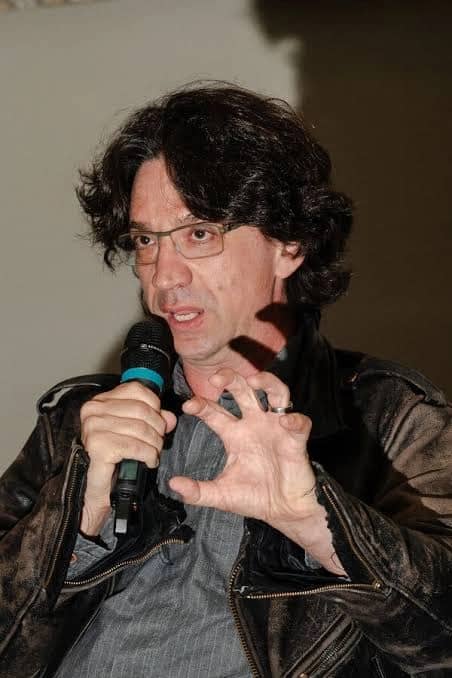
Curtis Yarvin
Curtis Yarvin is an American software developer and political blogger known for creating the decentralized personal computing platform Urbit and for his role under the pen name Mencius Moldbug as a political theorist in the Neoreactionary Movement. Yarvin's work in the tech and crypto industries has focused on developing Urbit and co-founding Tlon Corporation to advance its development. He has a background in computer science and political theory, combining both technical work and controversial political writings.
Education and Early Technical Background
Curtis Yarvin displayed exceptional mathematical talent from an early age. In 1985, he was admitted into the Johns Hopkins' Study of Mathematically Precocious Youth, a program aimed at nurturing mathematically gifted children. Subsequently, he pursued higher education at Brown University, earning a Bachelor of Arts in 1992. Yarvin later attended the University of California, Berkeley, as a graduate student in computer science, although he left the Ph.D. program to work in the technology sector. [2]
During his time at university, Yarvin was involved in research on operating systems, network primitives, and compiler optimization. These research efforts resulted in peer-reviewed conference papers, forming part of his technical background. [1]
Creating Urbit
Urbit emerged from Yarvin's desire to redesign the landscape of personal networked computing, starting from a "clean-slate" approach. He initiated its development in 2002 as a personal project. For almost a decade, Yarvin worked alone before releasing the initial codebase to the public in 2010. His vision for Urbit was to create a decentralized platform for personal servers, which led to its particular approach to computing infrastructure. [3]
The platform is built around a set of programming languages—Hoon for high-level functional programming and Nock for low-level computations—paired with an operating system named Arvo. Urbit runs on a peer-to-peer network designed using these technologies and uses a hierarchy of "planets," "stars," and "galaxies" to represent different levels of participation. [3]
Tlon Corporation
In 2013, Yarvin co-founded Tlon Corporation in San Francisco with Galen Wolfe-Pauly to develop Urbit commercially and released its code under an open-source license. [3]
Tlon received funding from Peter Thiel's venture fund, Founders Fund. [3]
Yarvin led Urbit development at Tlon until January 2019, when he stepped down from his leadership role while remaining financially and intellectually involved in the project. In 2024, Yarvin returned to Tlon as an informal "wartime C.E.O." following a leadership change involving then-CEO Josh Lehman; several senior staff subsequently resigned in protest of Yarvin's return. [2] [3]
Conference Controversies Tied to His Technical Work
Yarvin's presence in the tech community has been associated with controversy due to his political writings. In 2015, he was invited to speak about Urbit at the Strange Loop programming conference; his invitation was rescinded after complaints from attendees about his political views. [2]
In 2016, he was invited to present on the functional programming aspects of Urbit at LambdaConf; this resulted in the withdrawal of five speakers, two sub-conferences, and several sponsors from the event. [1]
See something wrong?
Average Rating
No ratings yet, be the first to rate!
How was your experience?
Give this wiki a quick rating to let us know!
Edited By
On July 31, 2026. 17:28 UTC
Edit summary:
Updated wiki content