0% read
Last updated:
Andrew Ambrosino
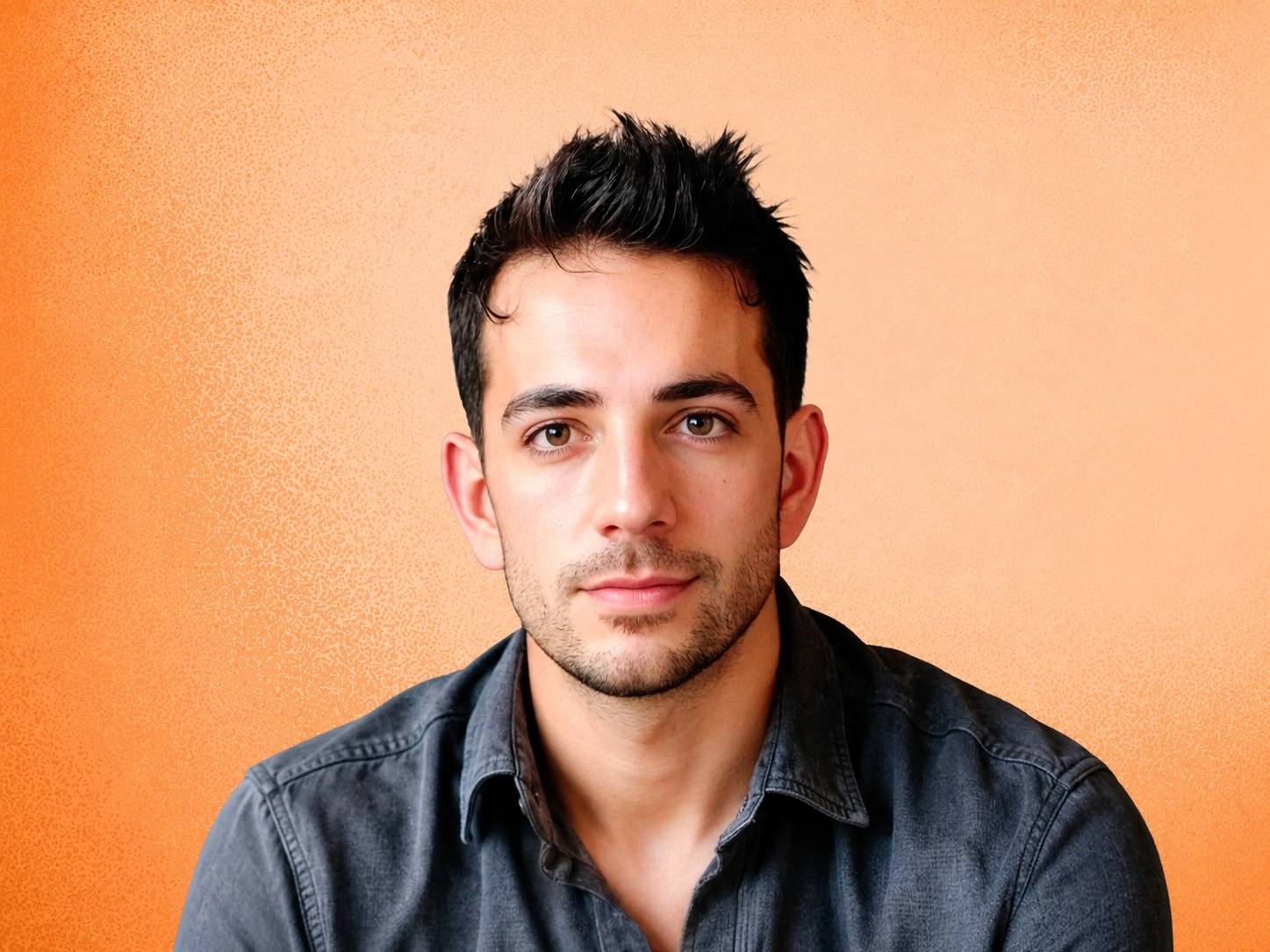
Andrew Ambrosino is an American founder, design engineer, and product leader known for co-founding Catch, a fintech platform, and for his role at OpenAI. He leads product and engineering for the Codex desktop application, and by October 2026 had also described working on ChatGPT Space and the broader ChatGPT desktop experience.[8] With a background in software engineering and product design, his early career included roles at Microsoft, MITRE Corporation, and Upthere.[1]
Early Career
Andrew Ambrosino began his career as a Senior Design Engineer at MITRE Corporation from 2011 to 2015, a federally funded research and development centre. He also interned as a Software Engineer at Microsoft in 2013 during this period.[1][2]
In 2014, Ambrosino further enhanced his design credentials by taking on a product design role at Upthere, a cloud storage company, where he was recognized as a Kleiner Perkins Caufield & Byers (KPCB) Design Fellow. During this period, he also obtained a FINRA/SEC Investment Advisor/Representative license (CRD: 6984304) and an Insurance Agent license from the Massachusetts Division of Insurance (NPN: 18946575), which were both achieved in connection to his subsequent work at Catch.[2]
Career
Catch (2016–2023)
In 2016, Ambrosino co-founded Catch, a fintech platform, with Kristen Anderson. The company was accepted into Y Combinator's Winter 2019 cohort (YC W19), marking a significant milestone in its development. Catch was designed to provide essential financial services such as health insurance, retirement savings plans, and tax withholding tools directly to freelancers, gig workers, and independent contractors who were not covered by employer-sponsored benefits. Ambrosino served as the CTO and CPO, overseeing product and technology development throughout the company's operations. Catch raised $6.1 million in seed funding in 2019, with investors including Khosla Ventures, NYCA Partners, Kindred Ventures, and Urban Innovation Fund.[3][4]
Under his leadership, Catch raised 18.1 million. This funding was aimed at supporting distribution partnerships and relocating the company’s headquarters from Boston to New York. Catch distinguished itself by becoming one of only three companies approved to sell benefits directly to consumers across 38 states on the federal marketplace. The company’s user base tripled over the year before raising its Series A, partly due to strategic partnerships with companies like DoorDash.[3]
Ambrosino eventually ceded the position of CEO to Kristen Anderson and left Catch before joining Noyo.[5]
Noyo (2023–2025)
In 2023, Ambrosino joined Noyo, a software company, initially as Head of Frontend Engineering and Product Design, and later assumed the role of Head of Product. At Noyo, he led a product team of approximately eight people and an engineering team of about twenty-five within a larger team of eighty. Ambrosino led the development and launch of several products such as BenefitsOS, AI Canvas, and Unified Issues. Under his leadership, Noyo doubled its customers and experienced a 50% growth in policies year-over-year on existing products.[2]
One of his notable accomplishments at Noyo involved creating an AI team focused on leveraging generative AI within the product and developing initial AI prototypes. He also designed and developed a new customer-facing web application and introduced a new architecture to consolidate multiple generations of React codebases.[2]
OpenAI (2025–present)
Ambrosino joined OpenAI in 2025 as a Member of Technical Staff, where he currently leads the product and engineering efforts for the Codex desktop application. Released in February 2026, the Codex desktop app saw rapid adoption, growing sixfold from January 2026 to over 5 million weekly active users. Codex was originally a developer tool but has since garnered use by almost 100% of OpenAI's staff across non-engineering roles, demonstrating its versatility.[6]
At OpenAI, Ambrosino employs a "zone defense" team model, reducing traditional role boundaries by having designers write code and product managers own infrastructure. This structural change aims to maximize the integration and capability of the Codex app. He was featured in a June 2026 episode of Lenny's Podcast, where he discussed the impact of AI on product work.[7]
ChatGPT Integration and Collaborative Work (2026)
On July 9, 2026, OpenAI announced ChatGPT Work, an agentic offering built with Codex technology for complex, multi-step knowledge-work tasks. OpenAI said the Codex app was merging into the ChatGPT desktop app, which included distinct Chat, Work, and Codex views while retaining Codex workflows. The announcement reported that more than five million people used Codex weekly and more than one million used it for work outside software development.[9]
At DevDay on September 29, 2026, OpenAI introduced cloud-based Codex access, allowing developers to use Codex on a computer, remotely from a phone, or in cloud environments. It also announced ChatGPT Space, a shared team workspace where people and AI agents collaborate using shared knowledge and artifacts, including collaborative pages and slides.[10]
In an October 20, 2026 interview, Ambrosino said he worked on the desktop app, Space, and Codex. He described Space as a collaborative environment where teammates and their agents work together on shared pages and other artifacts, and said the team built a real-time collaborative document system using conflict-free replicated data types (CRDTs) in five to six weeks. He also described continued development of a unified ChatGPT desktop experience that retained distinct Chat and Codex areas and workflows while the teams worked toward making them function seamlessly together.[8] These developments show Ambrosino’s work extending from a developer-focused desktop product toward a broader collaborative desktop and knowledge-work environment.
See something wrong?
Official Website:
Social Profiles: