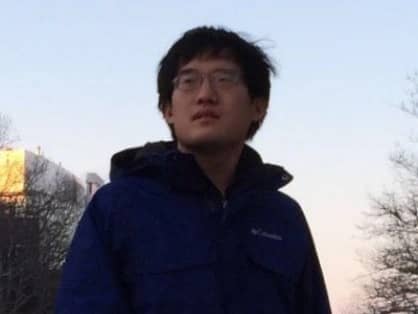
Zhang began his career in academic research at MIT's CSAIL, where his work primarily focused on machine learning applications for speech recognition, speaker verification, and language identification. He was an active participant in the IARPA Babel Program, a research initiative aimed at advancing multi-lingual speech recognition capabilities, particularly for low-resource languages.[1] His research during this period explored the use of advanced deep learning architectures, such as deep neural networks and Recurrent Neural Networks (RNNs), to solve complex problems in speech processing. Specifically, his work investigated techniques like Long Short-Term Memory (LSTM) for distant speech recognition, the extraction of deep neural network bottleneck features for improved acoustic modeling, and the use of i-vector based approaches for normalizing speaker and environmental variability in audio signals.[1]
After his tenure in academia, Zhang transitioned to research roles in the technology industry. He worked as an intern at Microsoft Research Asia from 2010 to 2012 and later as a Research Intern at Microsoft in 2014, contributing to speech and language technology projects.[3] From 2017 to 2023 he was a Staff Research Scientist at Google DeepMind, where his work included large-scale automatic speech recognition, text-to-speech synthesis, self-supervised and semi-supervised speech learning, and multilingual and multimodal speech–text systems. This work is reflected in publications such as SpecAugment, Conformer, LibriTTS, WaveGrad, w2v-BERT, ContextNet, Google USM, and FLEURS.[4] He then served as a Member of Technical Staff at OpenAI from October 2023 to July 2025, before joining Meta in July 2025 as a Research Scientist on the Superintelligence team, focusing on advancing foundational models for speech and multimodal understanding.[3][4][2]
Throughout his career, Yu Zhang has co-authored numerous research papers that have been presented at major machine learning and signal processing conferences, including the International Conference on Acoustics, Speech, and Signal Processing (ICASSP) and Interspeech. His publications reflect work on deep learning for speech recognition, feature extraction, and acoustic model training.
A selection of his published works includes:
- "Highway Long Short-Term Memory RNNs for Distant Speech Recognition" (2015): This paper investigated the application of Highway LSTM networks, a variant of recurrent neural networks, to enhance the accuracy of speech recognition systems when the audio is captured from a distance.
- "Prediction-adaptation-correction Recurrent Neural Networks for Low-resource Language Speech Recognition" (2015): This work introduced a specialized RNN architecture designed to improve speech recognition performance for languages with limited training data.
- "Language ID-based Training of Multilingual Stacked Bottleneck Features" (2014): This research explored a method for training multilingual acoustic models by using language identification to inform the extraction of stacked bottleneck features from a deep neural network.
- "Extracting deep neural network bottleneck features using low-rank matrix factorization" (2014): This publication proposed an efficient method for extracting compact, information-rich bottleneck features from deep neural networks by applying low-rank matrix factorization.
- "Joint Learning of Phonetic Units and Word Pronunciations for ASR" (2013): This paper focused on a method for simultaneously learning phonetic units and their corresponding word pronunciations to improve the performance of automatic speech recognition (ASR) systems.
- "A new i-vector approach and its application to irrelevant variability normalization based acoustic model training" (2011): This work introduced a novel approach using i-vectors, a low-dimensional representation of audio segments, to normalize for variabilities such as speaker characteristics and channel noise in acoustic model training.
- "An evidence framework for Bayesian learning of continuous-density hidden Markov models" (2009): This early work presented a Bayesian framework for learning the parameters of Hidden Markov Models (HMMs), a foundational statistical model used in speech recognition.
His later research includes contributions to methods and datasets for speech recognition and synthesis, such as SpecAugment for data augmentation, convolution-augmented and context-aware architectures like Conformer and ContextNet, and the LibriTTS text-to-speech corpus. It also covers transfer learning from speaker verification to multi-speaker TTS, WaveNet- and diffusion-based speech generation with works like WaveGrad, self-supervised and semi-supervised speech models including w2v-BERT and large-scale semi-supervised ASR, and multilingual speech systems and benchmarks such as Google USM and FLEURS.[4] The full list of his publications spans topics in automatic speech recognition, speech synthesis, self-supervised learning, and multilingual and multimodal speech processing.[1][2][3][4][5][6]