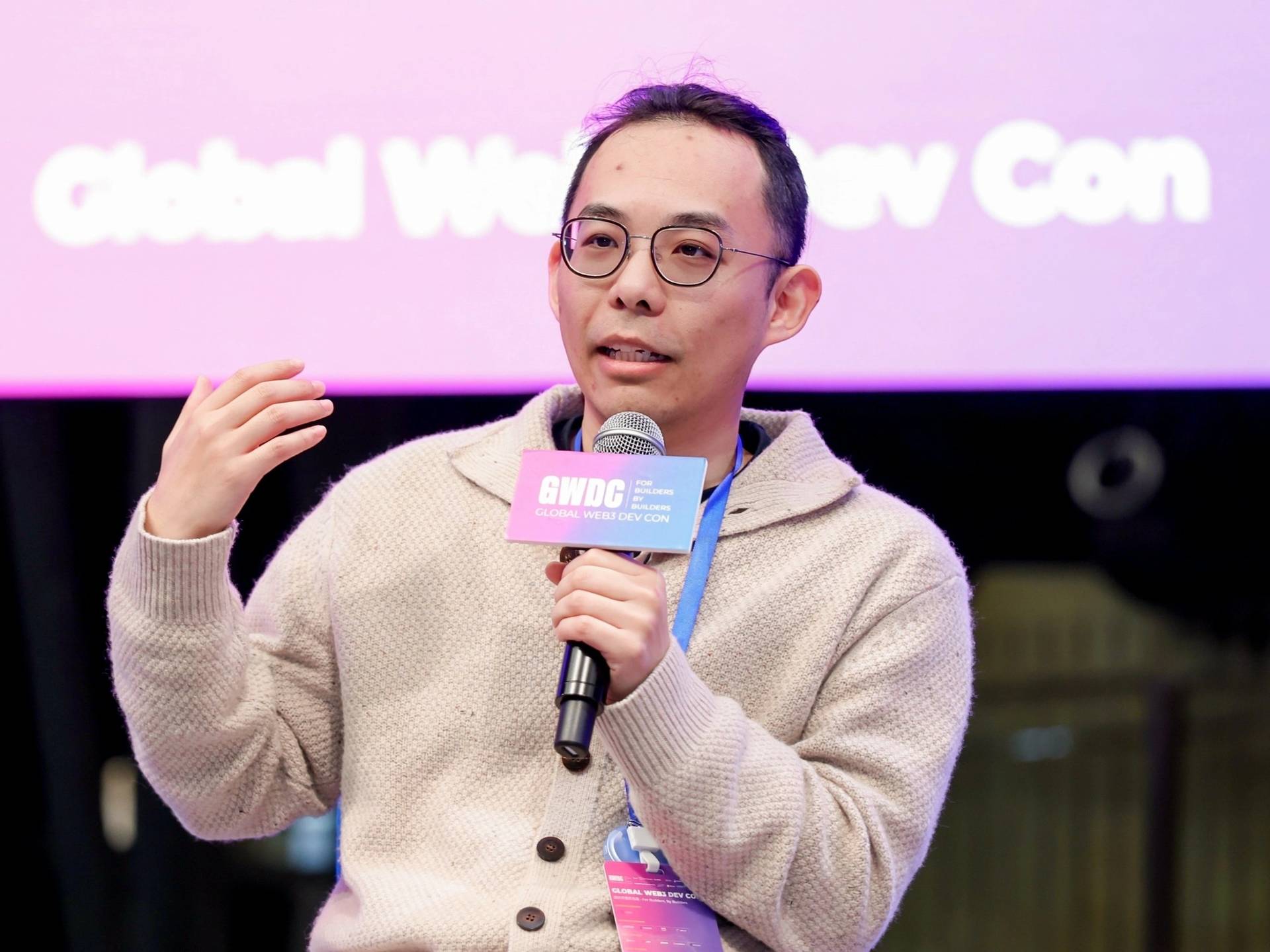
Wish Wu worked as a Research Assistant at Virginia Tech from August 2014 to May 2019 in Blacksburg, Virginia. During this period, she also completed a summer internship at Microsoft Research Asia in Beijing, China, between May and August 2016, which served as a basis for later work with blockchain.
In July 2019, Wu joined Ant Group as a Security Expert, a position she held until May 2022. She subsequently served as Senior Security Expert from May 2022 to July 2024. From June 2023 to July 2024, she concurrently held the position of Chief Security Officer of ZAN, a Web3 technology company operated by Ant Group Digital Technologies.
As Chief Security Officer of ZAN, Wu worked with institutional clients implementing blockchain-based financial applications. Her responsibilities included security, privacy, and regulatory compliance related to on-chain financial systems. The role also involved addressing technical and compliance considerations associated with institutional use of public blockchain infrastructure.
In July 2024, Wu co-founded Pharos Network and has served as its co-founder and CEO. His work includes blockchain architecture and smart contract development.
At Pharos Network, Wu has been involved in the development of blockchain infrastructure intended to support real-world asset (RWA) applications while incorporating compliance and privacy features. His work has also included topics related to token distribution, institutional compliance requirements, and blockchain interoperability.
During his time at the company, Pharos Network announced a $44 million Series A funding round. According to the company, the funding is intended to support the expansion of its on-chain infrastructure for real-world asset applications in Asia.[2][3][4]
Mainnet and RealFi Deployment
On April 28, 2026, Pharos launched its Pacific Ocean Mainnet and native $PROS token, following its Atlantic testnet.[7] At launch, USDC and Circle’s Cross-Chain Transfer Protocol (CCTP) were live on mainnet. CCTP uses a burn-and-mint mechanism to transfer USDC between supported blockchains.[8]
On July 14, 2026, Pharos announced the Axil Prime Credit Vault, with public access beginning July 15. The three-month USDC private-credit strategy was capped at $100 million, distributed through Pharos and deployed through R25, with Axil managing the portfolio. Its announced target of up to approximately 14.3% APY comprised underlying private-credit yield and $PROS incentives.[9]
On September 30, 2026, Wu presented Pharos’s Agent Native direction at Korea Blockchain Week. A testnet feature called Sponsored Transactions separates the party initiating a transaction from the party paying its gas. Pharos also introduced a Port Agent Widget for natural-language interaction with RWA information and actions, initially alongside Harbor, and an AI portal for developers that brings together Pharos tools. Wu described the direction as giving agents accounts, authorization, and payment capabilities.[10]
Pharos has supported native proof-of-stake (PoS) staking since mainnet launch. By November 6, 2026, eligible validators and delegators were receiving protocol rewards allocated under protocol rules from inflation and network transaction fees. Pharos’s then-current announced annual inflation parameter was 5%; this parameter is distinct from an individual holder’s staking return, and rewards are variable rather than a fixed APR or APY.[12]
On November 22, 2026, Pharos announced the Native Staking Workbench through Anvita Mate. After one-time operator authorization, it automatically compounds eligible native $PROS staking rewards approximately once each four-hour epoch, adding rewards to the user’s existing native stake. The workbench does not issue a separate token or change protocol reward issuance.[13][14] The authorization is specific to a staking pool and permits compounding into the user’s own stake, but not withdrawals.[15]
Pharos’s announced roadmap also included agent accounts and related capabilities for 2027, and integrated agent-native workflows targeted by 2028; these remained future milestones. The strategy broadened Pharos’s focus from RWA and RealFi infrastructure to tools intended to let agents interact with onchain financial applications.[10]
On November 10, 2026, Pharos announced an integration with Fireblocks covering three tokenized credit products—the Raffaello NYLIM HYB Vault, the NYLIM Anemoy fund, and Axil Prime Credit—as well as $PROS. Fireblocks customers could hold, transfer, and manage these supported assets using existing custody and transaction-control workflows. Wu said institutions adopt new networks through infrastructure already in their operational stack.[11]