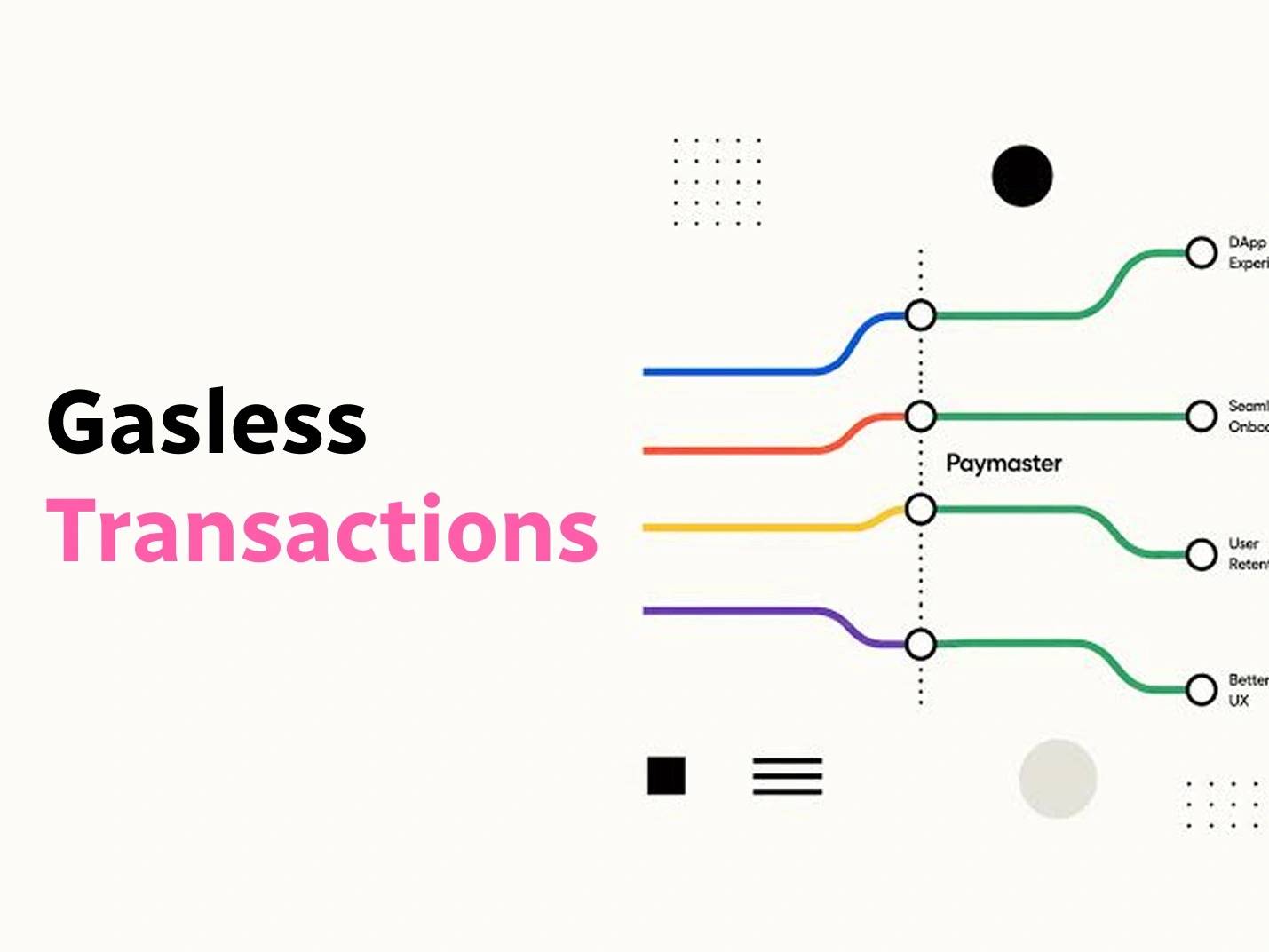
Gasless transactions are built on a meta-transaction architecture, a pattern in which the user authorizes an action without directly submitting or paying for it on-chain.[2]
The user signs the action they want—for example a transfer, swap, or mint—using their private key off-chain, but does not sign the fee payment.[1][2] Because the signing happens off-chain, the user does not need to hold any cryptocurrency for gas at the moment of authorization.
The signed message is then forwarded to a relayer, which can be an automated smart contract or a manual user.[3] The relayer, or a paymaster contract, attaches the gas payment and submits the transaction to the network.[1] The sponsor either absorbs the cost—as a promotion or an application expense—or charges the user in another token the user already holds.[1]
Finally, the smart contract verifies the user's signature and the network processes the transaction through its usual validation process, executing the intended action on the user's behalf and finalizing it; fees are paid, but not directly by the user in the native coin.[2][3]
The model therefore depends on a funding source. In one common design, a third-party gas fee pool exists into which owners deposit a certain amount of crypto; the pool balance is deducted after every transaction, so users appear to transact at no cost.[3]
The discussion of gasless transactions generally applies to public blockchains, defined as blockchains that require no permission to create an address, in contrast to private blockchains that can only be joined with prior permission.[3] Separately, Layer-2 networks, which operate on top of a base blockchain, use a different method to reduce gas fees rather than the meta-transaction relayer model.[3]