Last updated:
Money Legos
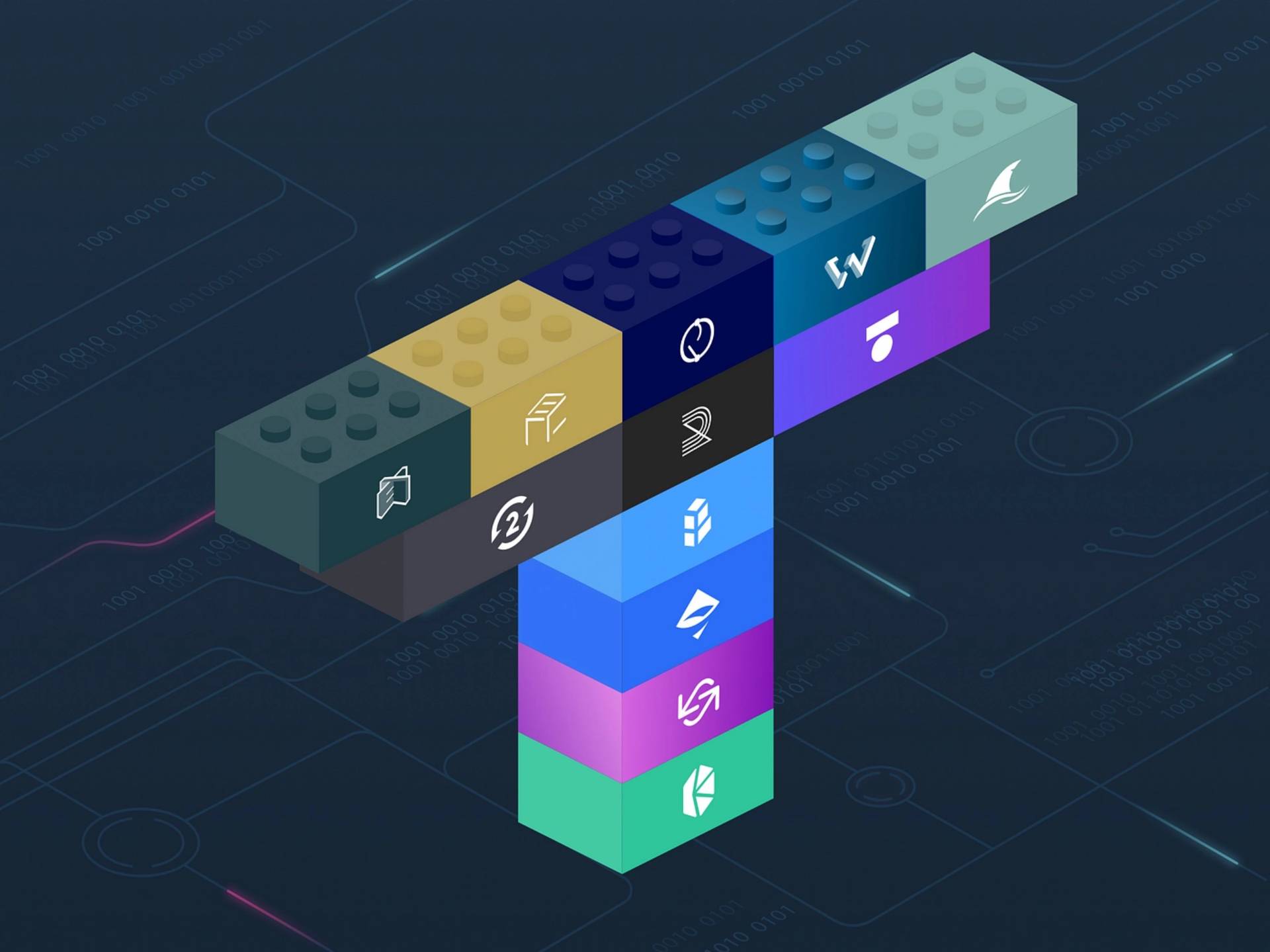
Money Legos is a concept in decentralized finance (DeFi) that involves composing new applications from existing DeFi protocols on the same blockchain network.
Updated · 6 min read
Loading the full wiki…
Last updated:
Money Legos is a concept in decentralized finance (DeFi) that involves composing new applications from existing DeFi protocols on the same blockchain network.
Updated · 6 min read
Loading the full wiki…
Last updated:
Money Legos is a concept in decentralized finance (DeFi) that involves composing new applications from existing DeFi protocols on the same blockchain network.
Updated · 6 min read
Money Legos is a composability concept in decentralized finance (DeFi) in which protocols and tokens act as building blocks that can be combined permissionlessly to create decentralized applications (dApps).
This reuse can improve capital efficiency and support innovation, while also allowing failures in one component to affect others that depend on it.[1][7][2][9]

In this wiki
Radix Dlt
Box Mining
Phemex
The Medium handle of Monolith
Moon Pay
DeFi platforms and tokens provide functions such as lending, borrowing, swapping, and issuing stablecoins. Because many are open-source smart contracts, developers can reuse them rather than rebuild core primitives, supporting capital efficiency and innovation across the ecosystem.[3][7]
Most Money Lego activity originated on Ethereum and has expanded to its layer 2 networks and alternative smart-contract chains, where similar primitives are deployed.[2][8]

In systems design, composability refers to the property of individual components that can be selected, combined, and reused in different arrangements to build more complex systems without changing the underlying parts. Highly composable systems expose clear interfaces and predictable behaviors, allowing developers to assemble new applications by connecting existing modules rather than redesigning them from scratch.[8]
In DeFi, protocols and tokens can function as interoperable building blocks, such as when lending markets, decentralized exchanges, and stablecoins are combined into a strategy or application.[7][8] Protocols can compose when they share an execution environment and state.
Common interfaces, including ERC-20 and contract ABIs, let one protocol consume another’s outputs, while publicly callable contracts permit permissionless interactions.[9] A related idea is atomic composability: when multiple smart-contract calls occur in a single transaction within a shared execution environment, they can be bundled so that the transaction either succeeds or reverts in full. If a step fails, the transaction can revert, avoiding partially executed states. This enables patterns such as flash loans and multi-step strategies in which users or protocols borrow, trade, and repay, or move collateral across platforms, within one transaction. This transaction-level atomicity does not automatically extend across separate blockchains.[7][9]
Some examples of well-known money legos in DeFi are MakerDAO, Curve, Compound, Synthetix, Yearn, Sushi, and other protocols that can be stacked together in different combinations. Newer building blocks include liquid staking tokens such as stETH and cross-chain bridges or messaging layers, which let Money Legos interact across multiple blockchains rather than only on a single network.[8]
Illustrative composability flow: A user could stake ETH for a liquid-staking receipt token, use that token as collateral in a lending protocol, borrow a stablecoin, and place the stablecoin in a liquidity pool. Combining reward sources in this way can also compound borrowing, liquidation, smart-contract, and market risks; the flow is an example, not a recommendation or guarantee of profit.[9]
Across these and other Money Legos, composability introduces several risks and limitations. Smart-contract vulnerabilities, oracle failures, and bridge exploits can affect stacked strategies that depend on them, increasing systemic risk as layers are added.
Deeper stacks can be harder for users to assess, may inherit governance and upgrade risks from component protocols, and can make aggregate TVL harder to interpret when the same capital is represented at multiple layers.[2][8][9] To mitigate these risks, developers and communities use measures such as independent audits, bug bounties, conservative collateral and risk parameters, and gradual integration of new assets or cross-chain connections before they become core building blocks in wider DeFi stacks.[8]
MakerDAO is an Ethereum-based DeFi platform that allows anyone to create a vault and receive DAI, a highly composable stablecoin, as debt against digital asset collateral. Over time, MakerDAO has expanded beyond early collateral types such as ETH, BAT, and USDC to support a diversified set of on-chain assets, subject to governance-defined risk parameters. DAI, which is minted on the MakerDAO platform, is integrated into a wide range of decentralized applications (dApps), including Curve and Uniswap, where it can be used for trading, lending, liquidity provision, and other DeFi strategies.[3][5]
Curve, an automated market maker (AMM), focuses on low-slippage liquidity pools of closely correlated assets, such as different wrapped versions of the same token or groups of stablecoins. Its design makes it a key Money Lego for efficient stablecoin and wrapped-asset swaps, and it incorporates protocols like Synthetix and Yearn into its ecosystem to maximize incentives for liquidity providers. Some Curve pool assets include wBTC, tBTC, and various stablecoins, which can then be used as collateral, yield-bearing positions, or building blocks in other DeFi protocols.[5]
Compound is a DeFi money market protocol that lets users supply assets to earn interest and borrow against their deposits, making it a reusable lending and borrowing Lego. The platform is designed so that both borrowers and lenders can earn a yield from their holdings, with interest rates set algorithmically by supply and demand for each supported cryptocurrency. Developers can integrate Compound’s markets into other protocols, where users may take out collateralized loans in any asset offered by Compound or supply liquidity and receive interest-bearing tokens that can themselves be used in additional DeFi strategies.[3][6]
Aave is a DeFi lending protocol that allows users to lend and borrow ETH and ERC-20 tokens permissionlessly, with newer Aave markets such as v3 deployed on multiple chains and layer 2 networks in addition to Ethereum. Aave integrates with many DeFi protocols and issues flash loans that rely on atomic composability, allowing users or integrated applications to borrow and repay within a single transaction. Flash loans are used for profit-maximizing strategies such as collateral swapping, arbitrage, and complex refinancing, as well as for managing risk in other protocols. Stablecoins like DAI on the Aave platform can be exchanged for aDAI, a token that accumulates interest while deposited and can sometimes be reused as collateral or liquidity elsewhere in DeFi.[4][5]
Synthetix is a liquidity protocol that creates synthetic assets, known as "synths." Its native token, SNX, can be used to mint synths of assets, including the following: [5]
Synthetix employs Chainlink oracles to obtain accurate price feeds and leverages the composable nature of DeFi protocols. This allows for synths to be swapped with zero slippage, even for large quantities of BTC or ETH, using Curve, and for synth positions to be integrated into other DeFi strategies such as lending, liquidity provision, or structured products.[4]
Across these and other Money Legos, composability introduces several risks and limitations. Smart contract vulnerabilities, oracle failures, and bridge exploits can affect not only a single protocol but also any stacked strategies that depend on it, increasing systemic risk as more layers are added.[2][8] To mitigate these risks, developers and communities use measures such as independent audits, bug bounties, conservative collateral and risk parameters, and gradual integration of new assets or cross-chain connections before they become core building blocks in wider DeFi stacks.[8]
IQ.wiki is written by its community. Suggest an edit and an editor will review it.